dyton mupawaenda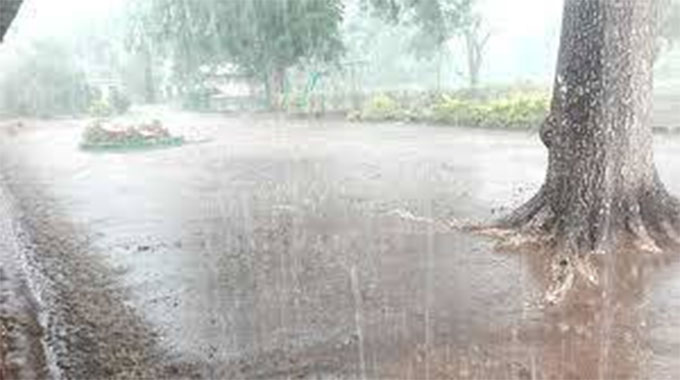
Patrick Chitumba-Midlands Bureau Chief
Heavy rains recorded in some parts of the Midlands Province over the past few days have rekindled hope for farmers, some of whom have started planting while others are finalising land preparation.
Districts such as Gweru, Shurugwi, Mberengwa and Zvishavane have been experiencing heavy rains almost daily bringing relief to farmers most of whom had delayed planting their crops.
The rains are coming at a time when over a million villagers in the Midlands province have successfully potholed their plots under the Government-funded Pfumvudza/Intwasa programme.
Farmers across the province were trained in conservation agriculture popularly known as the Pfumvudza/Intwasa.
Farmers in the Midlands province who participated in the Pfumvudza/Intwasa programme during the 2022/23 season recorded a good harvest as their crops were not affected by the dry spell.
This year, the programme is supporting five Pfumvudza/Intwasa plots per household with an agro-ecological region-specific crop input package for maize, sorghum, pearl millet, soya beans, sunflower, groundnuts, vegetables and African peas.
Government distributed agricultural inputs under the Pfumvudza/Intwasa programme to match the agro-ecological regions to ensure optimum production and guarantee food security and an income for all families.
Midlands provincial agronomist, Mr Innocent Dzuke, said the rains had come as a huge relief to some farmers across the province.
“Farmers are planting, but due to uneven rainfall distribution, it’s affecting maize planting. We have over a million farmers in the province who were trained on Pfumvudza/ Intwasa ahead of the summer cropping season. So the rains are coming as a relief to the farmers,” he said.
Mr Dzuke said last year, a total of 1 070 025 farmers received Pfumvudza/Intwasa training and subsequently potholed their fields.
Chief Ngungumbane from Mberengwa District said villagers were busy working on their fields following the rains.
“Mberengwa has been receiving average rainfall over the past three days. Farmers who had not finished land preparations are busy in their fields,” he said.
Mr Ronnie Chigombe, a sales agronomist at SeedCo, urged farmers to finish planting as soon as possible.
“Farmers planting maize should consider short-season varieties that mature early. We urge others to plant short season traditional grain varieties,” he said.
Mr Foster Nduku, an urban farmer from Mkoba Village 6, said he has been busy working on his piece of land capitalising on the heavy rains that pounded the city.
“The rains have come as a relief to us farmers because now we can finish planting.”
Meanwhile, farmers have been urged to intensify dipping and application of tick grease to their livestock as a prevention measure against Theileriosis, better known as the January disease.
More than 130 cattle in the Midlands province early this year succumbed to Theileriosis with Shurugwi district the worst affected.
Theileriosis is caused by a parasite (Theileria Parva) found in the blood which is transmitted between cattle by ticks.
The disease is responsible for huge economic losses in cattle assets and farm savings in Zimbabwe as it accounts for more than 60 percent of cattle deaths in the country.
Signs of an animal affected by January disease include swelling of the lymph nodes under the ears and on the shoulder, cloudiness of the eyes and difficulty in breathing with froth from the nose and mouth.
The affected animal collapses and dies within a few days.
The hallmark in the control of theileriosis, like all other tick-borne diseases, is to control the tick sector.
Midlands provincial veterinary officer, Doctor Martin Sibanda said there is a need for farmers to maintain healthy herds and boost animal husbandry production.
“Farmers are being urged to intensify dipping and application of tick grease to their livestock as a prevention measure against Theileriosis, better known as the January disease,” said Dr Sibanda.
He said there will be a rise in tick populations due to increased rainfall.


 Online Reporter