admin
admin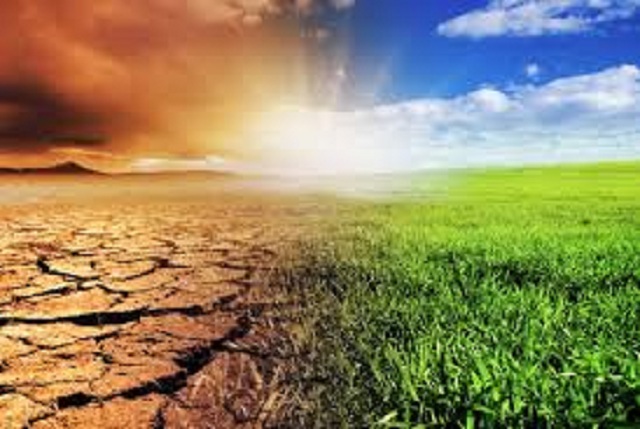
Fungai Muderere
THE increasingly dire situation brought by climate change has awakened the world to the realities of changing weather patterns, unpredictable agriculture seasons and worst, a massive change in bio-diversity.
Therea��s no denying that we live in a world increasingly affected by climate change and that climate change is one circumstance that humanity is only now just learning to cope with, but at a slow pace.
The Southern African Development Community (Sadc) region is expected to experience higher land and ocean surface temperatures than in the past, which will affect rainfall, winds, and the timing and intensity of weather events. Climate change poses a number of risks to Sadc goals for regional economic development due to a higher risk of increased frequency of floods, cyclones, and droughts that may damage infrastructure, destroy agricultural crops, disrupt livelihoods, and cause loss of life.
In some countries, in particular developing countries like Zimbabwe, the effects are severe. The United Nations Framework Convention on Climate Change defines climate change or global warming as a�?a change of climate which is attributed directly or indirectly to human activity that alters the composition of the global atmosphere and which is in addition to natural climate variability observed over comparable time periodsa��a��.
The question is how do communities mitigate and adapt to this reality?
It is against that background that in June 2016 last year negotiators from almost 200 countries in the world gathered in Marrakech, Morocco for the COP22 summit and took bold steps to fight climate change.
The summit was touted as an opportunity to showcase progress and start the important process of turning the United Nationsa�� Paris Agreement into a detailed blueprint for action. Just like its preceding meetings, COP22 sought to promote sustainable development by prioritising climate change responses that have significant mitigation benefits and have significant economic growth, job creation and poverty alleviation benefits.
Developing countries, like Zimbabwe for example, known to be largely dependent on the natural environment, find it more difficult to mitigate the disastrous effects brought by climate change. It is because of lack of proper and timely awareness on what climate change really entails.
In that regard, the Zimbabwe Climate Change Coalition (ZCCC) is on a rigorous programme to get schools talking about climate change. The move has been well received by climate change activists across the divide who feel that children are the custodians of the future and must be the focal point for environmental awareness.
ZCCCa��s forthcoming Schools Climate Change Awareness Campaign Programmes are to be held in Bulawayo, Beitbridge and Lupane, under the theme a�?a�?Empower the child, Empower Humanitya��a��.
The campaigns are not to be underestimated as they seek to raise climate champions in academic institutions. ZCCC and other like organisations believe awareness in schools is the best way to go.
ZCCC programmes co-ordinator Mr Justice Zvaita said the United Nations Intergovernmental Panel on Climate Change (IPCC), in its fourth assessment report (published in 2007), warned that a�?warming of the climate system is unequivocal,a�? and that without reducing greenhouse gas emissions considerably, the global average surface temperature was likely to rise by 1,8-4,0 degrees Celsius this century, with harmful consequences for ecosystems and societies.
a�?Addressing the growing concerns of climate change call for nationwide educational awareness campaigns and may go as far as reform of the current educational curricula in formal education. The climate change information and communication campaign at the heart of the project heavily consider teachers and students as strategic information multipliers,a�? said Zvaita.
Zvaita suggested that one such tool was the use of research projects and competitions motivated by the challenges and extent of thinking required in these games.
a�?The level of effort they put in to win or complete a game is substantially higher than that in completing a task in school. The goal is to create a community that is well informed about climate change and thus able to make globally responsible choices. The awareness-raising campaign would target school teachers, and pupils and other relevant stakeholders,a�? he said.
There is no doubt that promoting opportunities for dialogue on environmental issues among the pupils, children and students can help foster an attitude of environmental stewardship.
Unesco also recommends that education is the most effective means to confront future challenges because education is needed not just in institutions but in every aspect of life. This is so because of the world belief that climate change is primarily caused by unsustainable man-made factors such as greenhouse gas emissions and rapid deforestation.
Wits Universitya��s Fossil Collections manager, Mr Sifelani Jirah, who is also a former Geography and Science teacher at Manama High School in Gwanda and currently studying towards a PHD in Teratology in neighbouring South Africa, said early education could be considered to have high impact in changing attitudes of people in their lives compared to adult education.
a�?It will be a good idea to sensitise the minds of young children on climate change. It tends to have a very huge impact because primary and secondary children easily absorb concepts as compared to adults. With adults there is bound to be some resistance. Some adults already possess a poor mindset about climate change hence the need to start these campaigns at the grassroots because at times you cannot teach an old dog new tricks,a�? said Jirah.
He concurred with Zvaita that it was also imperative to identify more effective methods in delivering climate change awareness that have a lasting impact on the minds of students and makes them act towards confronting the future challenges of resource scarcity and climate change among other things.
Schools Climate Change Awareness Campaign programmes thus seek to raise awareness on climate change and its impacts, and mitigation or adaptation strategies, particularly in relation to different backgrounds of schools in Zimbabwe, and their cultural context.
He added: a�?It will be prudent to see these programmes build capacity among school teachers to teach and raise awareness on climate change and other environmental issues to schoolchildren and communities. These programmes have all the ability to make pupils more aware of possibilities for environmentally-friendly lifestyles and consumption habits.a�?
In that regard Zvaita noted that these school campaigns would help a�?improve local environmental governance by promoting and supporting a bottom-up participatory model that involves key information multiplier citizens (teachers and pupils) and encourages them to share perspectives on climate change mitigation and adaptationa�?.
Accordingly climate champions will be raised in schools through debate, drama or role plays, arts, quiz and song to school children on the impact of climate change.
While there is still a need to cut gas emissions and other harmful activities that affect climate it remains to be seen if countries would commit to those pledges. Political discord hinders efforts greatly. This also concerns every individual, group, organisation and nation as it is one of the most serious challenges of the 21st century.
The drive to accrue and satisfy capital gains has overridden the need to conserve the natural environment. Weather patterns are now erratic and communities in Zimbabwe have felt the unfriendly effects that has come with prolonged periods of very hot and dry weather that bring heat waves and cause drought.
The adverse effect on agriculture and bio-diversity has also necessitated the need for extensive community awareness programmes and instead of concentrating on finding solutions to climate change at high level platforms such as the United Nations, information has to cascade to the grassroots. .



 derick.khumalo