


 Vusumuzi Dube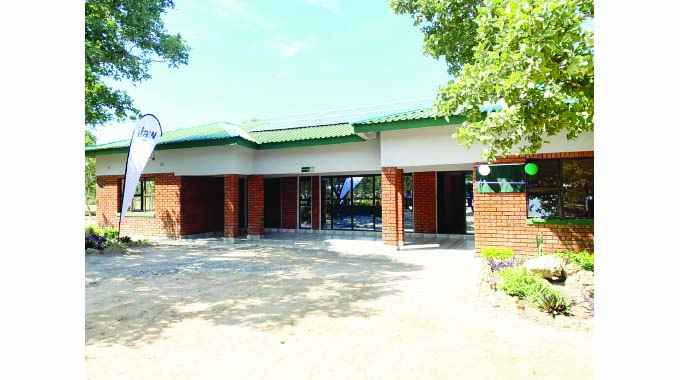
Rutendo Nyeve, Sunday News Reporter
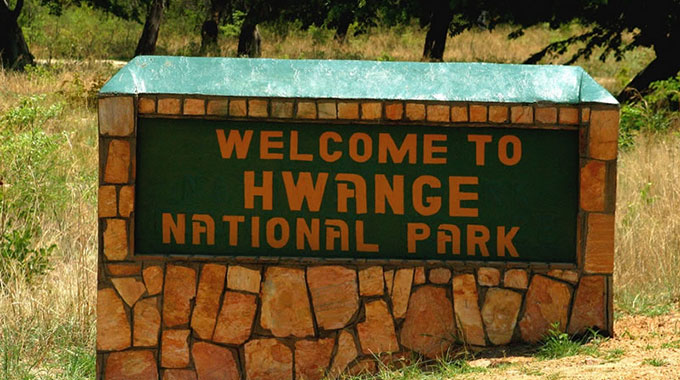
IT was all song and dance for Tsholotsho villagers last Saturday when they witnessed the official opening of a state-of-the-art ranger station which is set to prevent wildlife crime and safeguard communities in the southern part of Hwange National Park.

Makona Sub-station which is located 95 kilometres from Hwange National Park Main Camp and 10 kilometres from Ward 1, Tsholotsho District in Matabeleland North Province is one of the milestone projects under the US$5m five-year conservation agreement between International Fund for Animal Welfare (IFAW) and ZimParks.
Apart from putting rangers at the centre of what was once a wildlife poaching hotspot between 2013 and 2014 through cyanide, the station is also set to curb human-wildlife conflict as the rangers are now closer to the communities and will be able to respond to reports swiftly.
In a speech read on her behalf by Matabeleland North Minister of State for Provincial Affairs and Devolution Cde Richard Moyo, Zimbabwe Tourism and Wildlife Ambassador Amai Auxillia Mnangagwa expressed her gratitude for the collaborative efforts towards infrastructure development saying it would enhance conservation efforts.

“I am grateful for the collaborative efforts of the ZIMPARKS-IFAW conservation partnership for the great work accomplished. The infrastructural development of Makona Camp, which we are all gathered here to witness its official opening, will enhance the conservation and management of Hwange National Park to sustain the desired state of the wilderness qualities and the resource values for the benefit of the present and future generations.
When we talk about Protected Area Management effectiveness and report to Multilateral Agreements to which we are signatories, it is such impact that continues conserving this precious heritage, and tackling the root causes of problems,” said Amai Mnangagwa.
Makona had the most significant number of elephant carcasses recorded from poaching, including the cyanide poisoning incidents from 2013 to 2018, where more than 200 elephants were lost. Amai Mnangagwa said partnerships have helped scale up the fight against poaching and reducing the number of cases significantly.
“It has been over 10 years since the cyanide poisoning incidences and it has taken a partner like IFAW to come in and provide a tangible solution to poaching in the area. We need such partnerships to ensure we address critical issues and tackle them adequately.

It is with great pride that I mention that since 2020, no elephants have been poached in the Hwange National Park, and this can be attributed to the continued support from our partner IFAW and others,” said Amai Mnangagwa.
Speaking at the same occasion, Zimparks Director General Mr Fulton Mangwanya said although the construction project was characterised by several whoops and hardships, the noticeable dedication, commitment and collaboration spirit of the personnel at different development levels which were supplemented by continuous financial support rendered by wildlife partners in conservation, IFAW enabled them to collectively achieve the milestone.
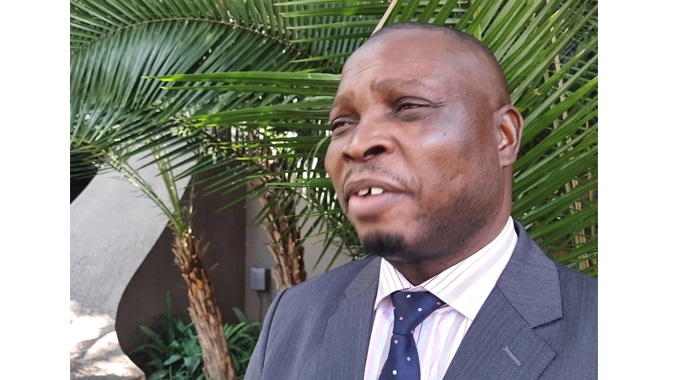
“Unity and collaboration have been key to the successful completion of this project as alluded to by our Wildlife Ambassador and Environmental Patron, Dr Auxillia Mnangagwa. To our IFAW partners, we are grateful for the invaluable support rendered at Makona field station
“The wildlife industry contributes significantly towards economic development, hence maximum efforts towards wildlife conservation goes a long way in contributing towards socio-economic development in Zimbabwe,” said Mr Mangwanya.
Since signing the agreement between Zimparks and IFAW in 2019, the Hwange National Park has received much-needed technical, financial and material support, whose monetary value is now close to US$3m. The demand-driven support has targeted investments towards crucial conservation areas, including infrastructure development, law enforcement, game water management, community engagement, human-wildlife conflict mitigation and tourism development.

This support has resulted in the rehabilitation of the 45-kilometre main camp to Makona Road to improve accessibility and reduce wear and tear of vehicles and the construction of the rangers’ operation office, which is critical to the enhancement of law enforcement operation.
The project has also facilitated the construction of nine ranger accommodation houses at Makona that has improved staff welfare and constant monitoring of the park.

It will also enable quick reaction to issues of human and wildlife conflict cases because of the proximity to the community.
The partnership has also supported the Dete Old Age home renovation, strengthening the veterinary unit as well as the tourism investment that saw the rehabilitation of lodges at the main camp. — @nyeve14



 Bongani Ndlovu
 Online Reporter