

 daniel chigunwe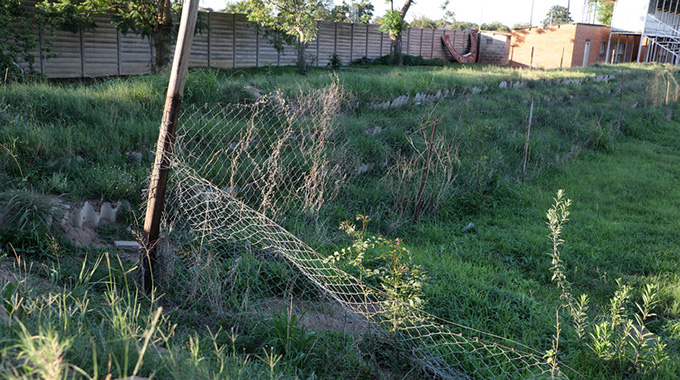
Langton Nyakwenda
NORMAN MAPEZA took advantage of the just-ended Premier Soccer League break and visited Chitungwiza, his hometown, last week.
He passed through Chibuku Stadium, the Chitungwiza football arena that shaped careers of many stars back in the 1990s.
What he discovered at the now ghostly stadium shocked him.
“I passed through Chibuku last week when I went back to Chitungwiza and I was shocked with what I saw.
The situation is very bad,” Mapeza said.
“It’s really sad, the precast wall is down, the playing surface you cannot recognise it.
“This is very disappointing. When we were growing up it was everyone’s dream to play at Chibuku Stadium.
“We used to play there as juniors and I also played there in the Premier Soccer League with Darryn T.
“I don’t know what the town council is thinking about this situation but it needs to be fixed as soon as possible,” Mapeza told Zimpapers Sport
Chibuku Stadium is in a sorry state.
At some point it was turned into a car park, yet this is a stadium that used to host Premier Soccer League matches, until about 15 years ago.
Former Soccer Star of the Year, Stewart “Shutto” Murisa, played his first cup final at Chibuku as an 11-year-old back in the 1980s.
His team Rough Riders played against Alois Bunjira’s Black Wolves in an Under-12 Cup final.
Murisa, who won the Soccer Star gong in 1996, also vividly remembers a Premier Soccer League match he starred for Darryn T against Highlanders in 1991.
The match ended 1-1, but fans were treated so some fantastic football from both sides.
Darryn T featured the likes of Derby Makinka (late), Forbes Ndaba (late), John Phiri, Usman Misi (late), Felix Antonio (late), Mapeza and Murisa.
Bosso paraded the league’s hotshot Peter Ndlovu, Mercedes “Rambo” Sibanda and Rahman Gumbo among other stars.
“Those were the days,” Murisa, who is now based in the United Kingdom said, with a serious nostalgic feeling.
“Premier Soccer League football was at our doorstep. Families would easily some to support us.”
Since the demise of Kiglon FC, the last club to use Chibuku Stadium some 15 years ago, Chitungwiza has been crying out loud for a facility that can host topflight matches.
Several attempts have been made to revive Chibuku Stadium, including Walter Magaya’s audacious bid in 2017.
Magaya proposed to renovate the stadium on a long lease agreement, but his idea was shot down by some councillors.
There is now a fresh ray of hope for Chitungwiza following a recent development at the town council.
The Municipality of Chitungwiza last week secured a financier, Wistmer Investment, and has already started the process of preparing a masterplan that will see the town transform into a smart and green city.
Under the masterplan, Wistmer has undertaken to renovate Chibuku Stadium in order to enable it to host PSL matches.
“It (Wistmer) will subsequently build a larger Chitungwiza Stadium capable of hosting international matches and the same complex will be home to a civic centre.
“To enhance sports development in the city, Wistmer intends to construct a modern high-performance centre at Unit L,” read a document seen by this publication.
Several attempts, which were unfortunately fruitless, have been made to revive Chibuku Stadium.
But the arrival of Wistmer is seen as a panacea to the perennial crisis.
“This is long overdue,” a resident in Unit H said.
“We are delighted that a new investor has come in to rescue our football facility.”
Chibuku Stadium’s demise started in the late 1990s.
In 1992, the stadium hosted a huge musical show by the late rhumba maestro Pepe Kale and the after effects of that event are still felt up to date.
That was the beginning of the rot.
Fans destroyed the precast wall trying to gain free entry while the playing surface was destroyed, forcing Darryn T to relocate to Gwanzura Stadium in Highfield.
Chibuku Stadium was then closed temporarily in 1997 at a time it was being used by Blue Swallows.
Then Blue Swallows coach, Lovemore Nyabeza, summarised the situation at Chibuku at that time.
He decried the state of the toilets and dressing rooms.
During matches, water and waste could be seen flowing from toilets and dressing rooms.
“It’s sad that nothing concrete has been done to spruce up this stadium since the 1990s,” says Nicodemus Muramba, a former Air Zimbabwe Jets defender, who is based in Chitungwiza.
“It has been all gloomy,” he added.
Perhaps, former Chitungwiza Town Council acting chairman, Newton Mutungwazi, was prophetic when he spoke about the town’s lack of sporting facilities back in 1991.
He was quoted by The Herald in October 1991 saying that the future of the suburb, as far as addressing the lack of sporting facilities and equipment was concerned, was still gloomy.
It’s still gloomy, although residents are now hopeful the partnership between council and Wistmer could unlock the town’s potential.
“Chitungwiza is probably now the second largest after Harare, in terms of population, but we don’t have a Premier Soccer League stadium.
“Yet small areas like Mhondoro Ngezi and Chisumbanje have nice facilities,” a worried William Bango of St Mary’s said.
There have been previous attempts to build a state of the art facility in Chitungwiza, or renovate the dilapidated Chibuku Stadium.
In the late 1980s, a plan was mooted to build a multipurpose stadium between Zengeza 3 and Unit J, but instead of fulfilling its promise, council constructed a play centre called Waterland.
In 1989, Chitungwiza Town Council engineer, Sreten Skoro, told The Herald about the council’s intention to build a multi-purpose sports complex that would also house cafes, restaurants, a swimming pool, tennis courts at Unit L shopping centre.
Coincidentally, Wistmer Investments have this plan in their proposal.
In October 1991, the Working Party on Strengthening Commonwealth Sport pledged to seek assistance in their respective countries to enable Chitungwiza to develop its sports facilities.
The then secretary of the Commonwealth Games Federation, David Dixon, who was also a member of the Working Party, emphasized the need for Chitungwiza to have its own facilities during a tour of the town.
“I will certainly be taking this up with British sporting authorities to see what assistance they could give.
“There are also many solidarity movements which can help,” Dixon was quoted by The Sunday Mail on October 20, 1991.
Sadly, nothing materialized.
In December 1992, Chitungwiza Town Council, through its director of housing and community services, Simba Mudunge, revealed plans to upgrade the stadium to meet ZIFA standards.
Sadly, nothing materialized.
On February 13, 1997, the executive committee of the Chitungwiza Municipality agreed in principle to allocate the Zimbabwe Football Association (ZIFA) a stand for a stadium.
Then ZIFA chairman, Leo Mugabe, was quoted by the Herald in March 1997 saying the project would be completed in time for the 2000 African Cup of Nations which was supposed to be staged in Zimbabwe.
“Our main purpose of building this stadium is for it to host some of the 2000 African Cup of Nations matches,” said Mugabe, who also revealed at the time that his association was sourcing sponsorship for the project.
Of course, that stadium was never constructed.
In 2017, Walter Magaya proposed a deal to renovate Chibuku Stadium, which he wanted to use as a home ground for his Premier Soccer League side Yadah FC.
The Council said it was not ready to give Magaya a long lease, and the deal collapsed.
Magaya also wanted to build a stadium in Zengeza under the same deal.
After he was frustrated, Magaya shifted his focus to Harare, and went on to build the 5 000-seater Heart Stadium in Waterfalls which now hosts Premier Soccer League matches.
All hope now lies with this fresh deal between the council and Wistmer Investments.


 Peter Tanyanyiwa
 Online Reporter