Online Reporter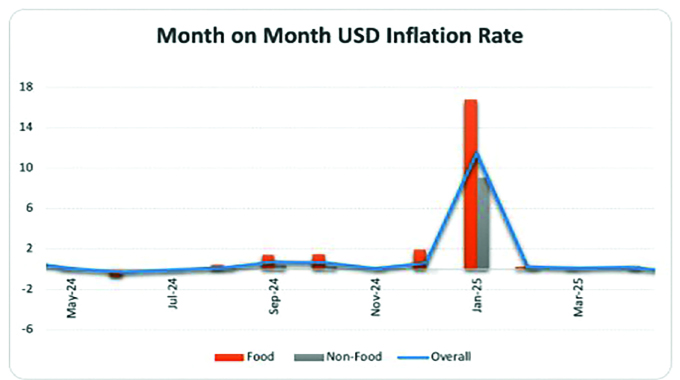
Tapiwanashe Mangwiro
THE Reserve Bank of Zimbabwe (RBZ) says it will continue supporting key productive sectors through the Term Lending Refinancing Facility (TLRF), as part of broader efforts to sustain disinflation and consolidate stability under the gold-backed Zimbabwe Gold (ZiG) currency regime.
The Lending Refinancing Facility is a programme administered by the RBZ through the banking system.
It aims to provide long-term funding to specific sectors like agriculture, manufacturing and mining, which often require substantial capital to operate effectively.
Speaking after the latest Monetary Policy Statement (MPC) meeting on June 16, RBZ Governor Dr John Mushayavanhu reaffirmed the central bank’s commitment to the TLRF as an anchor for economic productivity.
“The bank will continue to support the key productive sectors of the economy, including the SMEs sector, under the Term Lending Refinancing Facility (TLRF),” he said.
He noted that as of June 13, 2025, the bank had disbursed ZiG1,03 billion under the facility.
The TFF, which targets agriculture, manufacturing and other growth sectors, forms part of broader measures to stabilise the local currency and support supply-side interventions.
“The facility is critical to ensure that there is production to back the currency and sustain disinflation,” Dr Mushayavanhu added.
The MPC also welcomed the significant improvement in the use of the gold-backed ZiG currency across the economy, attributing the trend to the prevailing macroeconomic stability.
“According to the central bank, the share of local currency transactions on the National Payments System rose sharply from ZiG7,9 billion, or 26 percent of total transactions in April 2024, to ZiG56, 8 billion, which is 43 percent of the total, by the end of May 2025.
“The increasing adoption of ZiG in everyday transactions is a strong vote of confidence in the currency and a reflection of improved economic sentiment,” said Dr Mushayavanhu.
He further emphasised that the currency remained well-supported, with foreign currency reserves covering both reserve money, ZiG4,7 billion and total local currency deposits ZiG15,5 billion by a wide margin.
“As at June 13, 2025, the bank held foreign currency reserves equivalent to US$701 million or ZiG 18,9 billion, which fully covers our entire domestic currency obligations.
This is fundamental to maintaining the credibility and stability of the ZiG,” he noted.
At its last meeting, the MPC resolved to maintain tight monetary conditions to reinforce the ongoing disinflation trend and preserve the stability of ZiG.
Chief among the resolutions was the decision to keep unchanged the Bank Policy Rate at 20 percent per annum, as well as the Medium-Term Bank Accommodation (MBA) interest rate at 15 percent.
“The committee noted with satisfaction the prevailing stability in the exchange rate and prices, and agreed to maintain the current tight monetary policy stance,” Dr Mushayavanhu said.
He added that the bank would maintain the statutory reserve requirements at 15 percent for demand deposits and 5 percent for savings and time deposits, a move intended to restrain speculative lending.
Furthermore, the bank will not revise the 10 percent placement limit on foreign currency account (FCA) deposits held with banks.
Dr Mushayavanhu emphasised that “monetary targeting remains focused on achieving a reserve money growth path consistent with end-of-year inflation targets, ensuring adequate support to the productive sectors without destabilising the macroeconomic environment”.
To strengthen the effectiveness of monetary policy and ensure tighter control over liquidity, the RBZ has enhanced its open market operations by recalibrating the structure of its Non-Negotiable Certificates of Deposit (NNCDs).
As of May 27, 2025, the bank discontinued short-term maturity options of 7, 14 and 21 days, standardising all excess balance placements into a 30-day fixed tenor.
Early redemptions will now only be permitted under specific conditions, namely, to settle Government tax obligations or to purchase foreign exchange directly from the central bank.
“This recalibration introduces discipline into the market by curbing speculative behaviour while ensuring that excess liquidity is managed in a manner that reinforces monetary stability,” said the Governor.
He added that the changes were necessary to align liquidity management tools with the bank’s disinflationary objectives and enhance policy transmission.
Looking ahead, the central bank projects a stable economic environment for the remainder of 2025, characterised by the strong performance of agriculture, mining and manufacturing sectors.
The governor said the economy was expected to remain on a positive trajectory, underpinned by the stellar performance of agriculture during the 2024/2025 season, expected recovery in mining output and firming international commodity prices.
He noted that inflation, which had not so long ago been a persistent challenge, was now under control.
The month-on-month blended inflation rate fell from 2,4 percent in April to -0,6 percent in May 2025, largely due to price stability induced by the new currency regime.
“Headline inflation developments and the current trajectory suggest that the year-end inflation target of 0 percent–5 percent is achievable,” said Dr Mushayavanhu.
He credited this improvement to the comprehensive monetary reforms and exchange rate stability measures rolled out in April, including the launch of the ZiG.
The MPC reaffirmed its commitment to a cautious but growth-supportive stance, reinforcing the view that monetary discipline, foreign currency reserve backing and productive sector funding will be key to sustaining macroeconomic stability in Zimbabwe.