Online Reporter
Rutendo Nyeve [email protected]
THE Reserve Bank of Zimbabwe (RBZ) is intensifying efforts to make the Zimbabwe Gold (ZiG) more accessible and widely accepted, targeting border towns across the southern region and Matabeleland provinces as it pushes for broader use of the local currency.
The move is in response to the growing demand for the local unit, which has consistently maintained its stability against the United States dollar, resulting in predictable pricing and lowering of inflation.
This comes at a time when the Government is stepping up efforts to close the long-standing trust deficit around currency and financial products by strengthening policy consistency, legal certainty and engagement with the private sector.
In a recent interview in Victoria Falls, RBZ Deputy Governor Dr Innocent Matshe acknowledged that some parts of the country, especially border communities, have yet to fully embrace the newly introduced ZiG denominations due to limited access to local currency notes and coins.
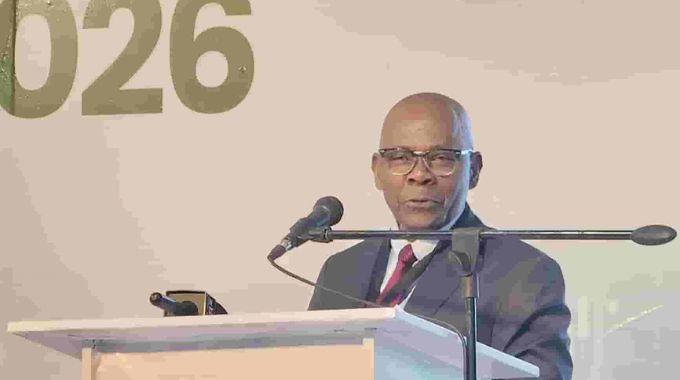
He, however, insisted that the central bank has been proactive in distributing the local currency nationwide.
“I can assure you, in the areas that you have talked about, the Reserve Bank has been there, and I can also assure you that in those same areas, there is no bank or subsidiary or sub-bank that did not receive local currency and that cannot access local currency,” said Dr Matshe.
“If there is, then we need to look at it, and it is important that ZiG be available across the whole country.”
He explained that border towns such as Beitbridge and Plumtree were always going to be the last areas to completely embrace the local currency, owing to their historical use of multiple currencies interchangeably across the border.
“Because these communities had always used currencies interchangeably across the border. But because the Zimbabwean currency had depreciated and had been unstable for a long time, it was always going to take much longer than elsewhere,” he said.
Dr Matshe drew a contrast with areas like Gokwe, where the ZiG is widely used because cotton farmers receive the local currency as part of export retention payments.
He said the process of entrenching the ZiG will take time, as the currency is two years old, while the US dollar is a long-established, strong currency.
“The depreciation of value can only be taken care of by the stability that exists in the financial markets. So, your exchange rate stability, your inflation, volatility, which is now very low, it will take time. But that is something that will engender the use of the local currency,” he said.
The Deputy RBZ Governor urged citizens to use their ZiG for local transactions such as utilities, groceries, and school fees, warning that exchanging it for US dollars only to convert it back for local payments results in unnecessary losses due to financial intermediation costs.
“Why would you want to exchange your local currency into USD only to exchange it back when you pay for your utilities? Or when you pay for your groceries that you can pay in local currency?
“You earn in local currency. You spend it in local currency. Otherwise, if you don’t do that, you lose value,” he said.
Speaking during a plenary session at the Zimbabwe Economic Development Conference (ZEDCON) 2026 in Bulawayo, Deputy Minister of Finance, Economic Development and Investment Promotion, David
Mnangagwa, emphasised the need for policy-makers to speak with one voice on currency issues to rebuild confidence among businesses and the public.
“Each time we discuss the trust deficit, especially when it comes to currency issues, it’s important that everybody in the policy-making position chimes in so that it is very clear that we are saying the same thing or based differently,” he said.
Deputy Minister Mnangagwa said unresolved mistrust could persist across generations, making it critical for the Government to continuously address concerns surrounding currency management.
“What this means is that the trust gap and deficit, if not dealt with, is something that can linger on for generations.
“So whatever hysteresis is lingering on, we need to deal with it at every moment and how we have looked at it and have made sure that there is clarity, is making sure that the policies that govern our management of currency and everything surrounding it are enshrined within the law.”
Dr Matshe further explained that the central bank introduced two facilities to support the use of the local currency, including arrangements with miners who initially wanted a smaller proportion of their surrender converted into ZiG.
The RBZ has demonstrated that miners’ local currency expenses exceeded the 30 percent retention threshold, proving the need for more, not less, local currency.
Dr Matshe also issued a stern reminder that no school or economic agent is allowed to reject ZiG payments under the multi-currency system.
“I can assure you, no school in this country is supposed to reject ZiG payment, none. Yes, we are in a multi-currency environment, and no economic agent is allowed to do that,” he said.
Dr Matshe added that fuel, previously a sticking point, is also transitioning, revealing that some fuel companies are already selling fuel in ZiG.
“An economy does not change overnight. If it changes overnight, you will have problems, deep problems. What we are seeing now is a transition, a transition that will make this economy compact,” Dr Matshe said.
He reminded the nation that exclusive use of the US dollar in the past did not grow the economy, and the market, not the Reserve Bank or Government, will ultimately determine the pace of full ZiG adoption.



 Bunjiwe Mkwananzi