Online Reporter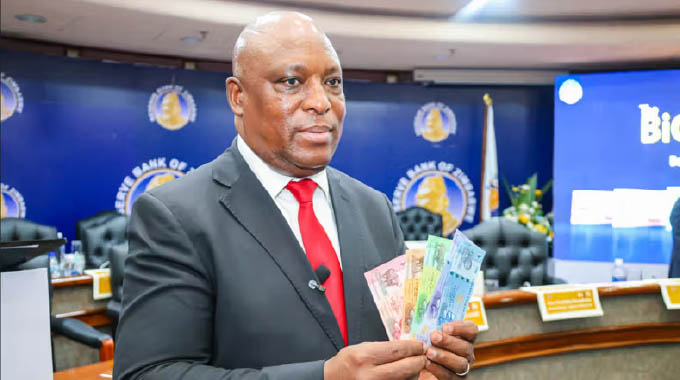
Nelson Gahadza
Business Reporter
THE Reserve Bank of Zimbabwe (RBZ) has urged banking institutions not to unnecessarily restrict lending tenures based on expectations of a transition to mono-currency, stressing that the shift is no longer date-based and will be driven by economic conditions rather than a fixed timetable.
RBZ Governor Dr John Mushayavanhu made the call amid concerns that some banks were limiting loan tenures to 2027 in anticipation of the transition.
“Banking institutions should not limit lending tenures to 2027 because the transition to mono-currency is no longer date-based, but is based on the conditions presented,” he said.
He added that foreign currency obligations would remain payable in the currency in which they were contracted throughout the transition.
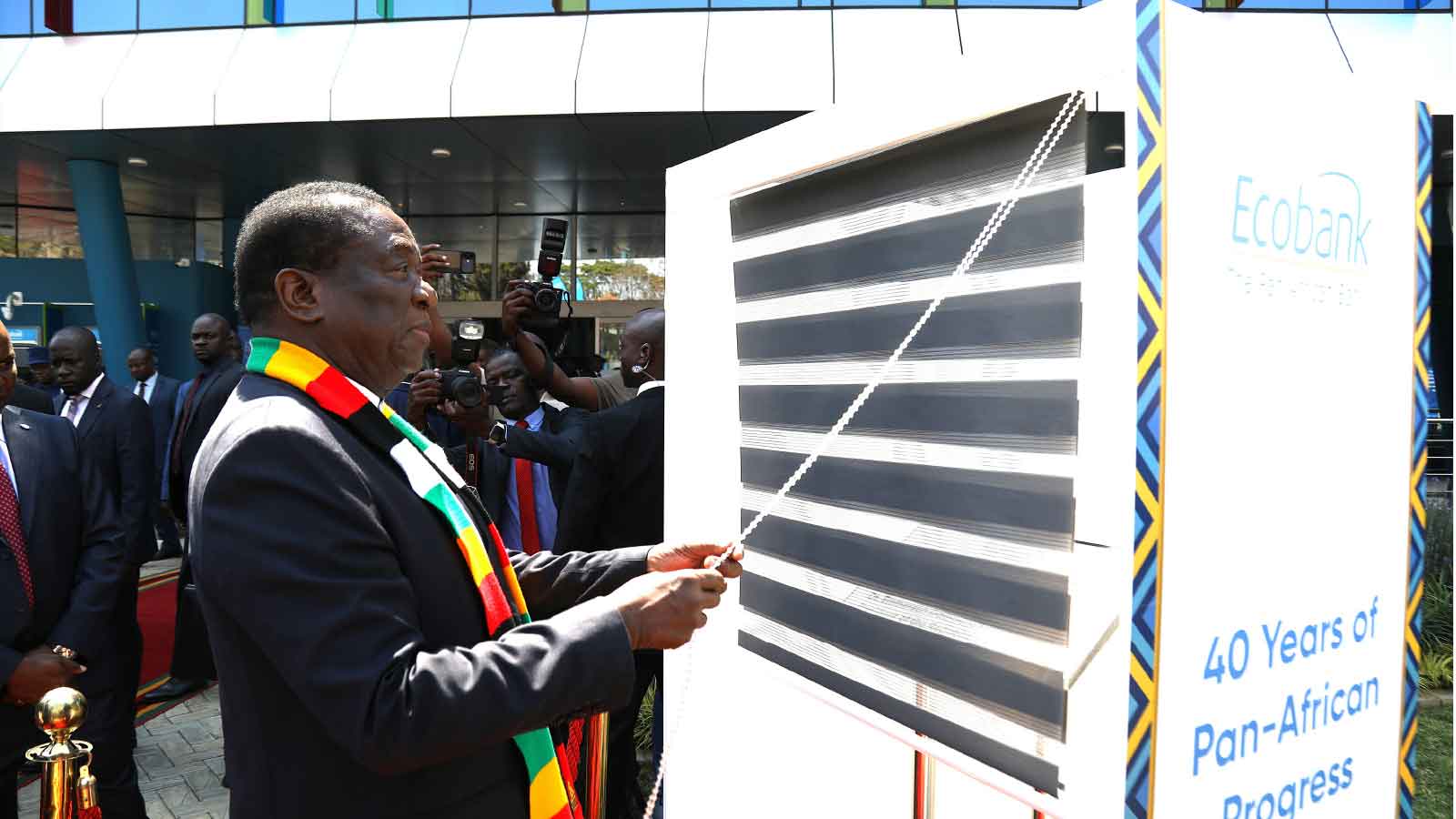
Dr Mushayavanhu was speaking at the official opening of Ecobank Zimbabwe Limited’s new head office in Borrowdale, Harare, where he also provided an update on Zimbabwe’s long-term transition towards a mono-currency regime.
He said the transition would be market-led and would only occur once the conditions outlined under the National Development Strategy 2 had been met.
These include durable macroeconomic stability, adequate foreign currency reserves, an efficient foreign exchange management system, stable exchange rate dynamics, increased demand for the Zimbabwe Gold (ZiG), financial sector stability and an efficient national payments system.
“The transition to mono-currency is going to be market-led. It is no longer date-based but contingent upon meeting conditions outlined in the National Development Strategy 2,” Dr Mushayavanhu said.
He said Zimbabwe had made progress towards meeting several of the requirements, particularly in inflation management, foreign exchange market reforms, financial sector stability and the national payments system.
However, Dr Mushayavanhu said foreign currency reserves remained a key area requiring improvement.
He noted that Zimbabwe currently has between 1.7 and 1.8 months of import cover, against a medium- to long-term target of three to six months.
“We still have a way to go, but we will get there,” Dr Mushayavanhu said.
He said reserves were expected to rise to about two months of import cover by the end of the year, supported by stronger foreign currency inflows.
The Governor projected the country’s current account to remain in surplus at about US$2.5 billion in 2026, largely driven by merchandise exports and diaspora remittances.
Annual inflation, he said, was expected to remain in single digits, while month-on-month inflation was projected to stay below one percent.
Stronger foreign currency inflows would help bolster reserves and provide greater support for exchange rate stability, he said.
Turning to foreign exchange reforms, Dr Mushayavanhu said the RBZ would launch a digital foreign exchange trading system in the fourth quarter of this year as it steps up reforms aimed at improving price discovery and transparency in the foreign currency market.
He said the platform was at an advanced stage of development and had undergone peer review by the World Bank.
The digital platform is part of ongoing reforms to the willing-buyer, willing-seller foreign exchange market, which Dr Mushayavanhu said was now operating on a purely market-determined basis.
“The Reserve Bank remains committed to enhancing the efficiency of the willing-seller, willing-buyer foreign exchange market.
“Through continuous reforms, the market has witnessed improved price discovery and a more efficient allocation of foreign exchange resources to the productive sectors of the economy,” he said.
Dr Mushayavanhu said the central bank was no longer actively involved in determining the exchange rate, with authorised dealers responsible for buying and selling foreign currency.
“The prevailing exchange rate in the willing-buyer, willing-seller market is purely market-determined.
“The Reserve Bank no longer actively participates in this market, as the buying and selling of foreign currency is conducted by authorised dealers. We only come into the market as residual buyers or residual sellers,” he said.
The Governor said the digital trading system would further strengthen the market by enhancing transparency and improving the efficiency of price discovery.
“The digital foreign exchange trading system, which we said we were going to implement this year, is at an advanced stage of development and we expect to launch it in the fourth quarter of this year,” he said.
“The system has undergone rigorous peer review by the World Bank and, as such, is expected to further improve price discovery in the foreign exchange market.”
He said a well-functioning foreign exchange market was critical to restoring investor confidence, supporting productive activity and improving Zimbabwe’s competitiveness.
Dr Mushayavanhu also sought to reassure the market that the central bank was up to date with its foreign exchange obligations.
“As we speak right now, there is no single foreign exchange invoice that has not been honoured. We are up to date with our payments,” he said.
Financial institutions such as Ecobank, he said, had an important role to play in facilitating foreign exchange transactions, cross-border trade and private-sector participation in the market.
On the local currency, Dr Mushayavanhu said the RBZ had introduced new ZiG10, ZiG20 and ZiG50 banknotes, which had been positively received by the public.
Higher denomination ZiG100 and ZiG200 notes would be introduced in due course, subject to approval by President Emmerson Mnangagwa.
Turning to the banking sector, Dr Mushayavanhu said the financial system remained resilient, with banks profitable and adequately capitalised.
“All the banks in this economy are trading profitably, are well capitalised,” he said.
He cited Ecobank’s decision to establish a permanent head office in Zimbabwe as evidence of investor confidence in the country’s economic prospects.
The Governor said the RBZ would continue pursuing prudent monetary policies focused on maintaining price and exchange rate stability while strengthening the financial system.
Zimbabwe, he said, also remained on course with its 10-month International Monetary Fund staff-monitored programme, with the central bank confident of meeting its quantitative targets and structural benchmarks.
Dr Mushayavanhu congratulated Ecobank Zimbabwe on the opening of its new head office, describing the investment as a demonstration of confidence in Zimbabwe’s economic prospects.
He said since commencing operations in Zimbabwe in 2011, Ecobank has grown into a significant financial services player, with substantial interests in deposits, lending and assets.
He added that the bank has also supported key productive sectors, including agriculture, mining, manufacturing and infrastructure, while facilitating trade and investment.