Online Reporter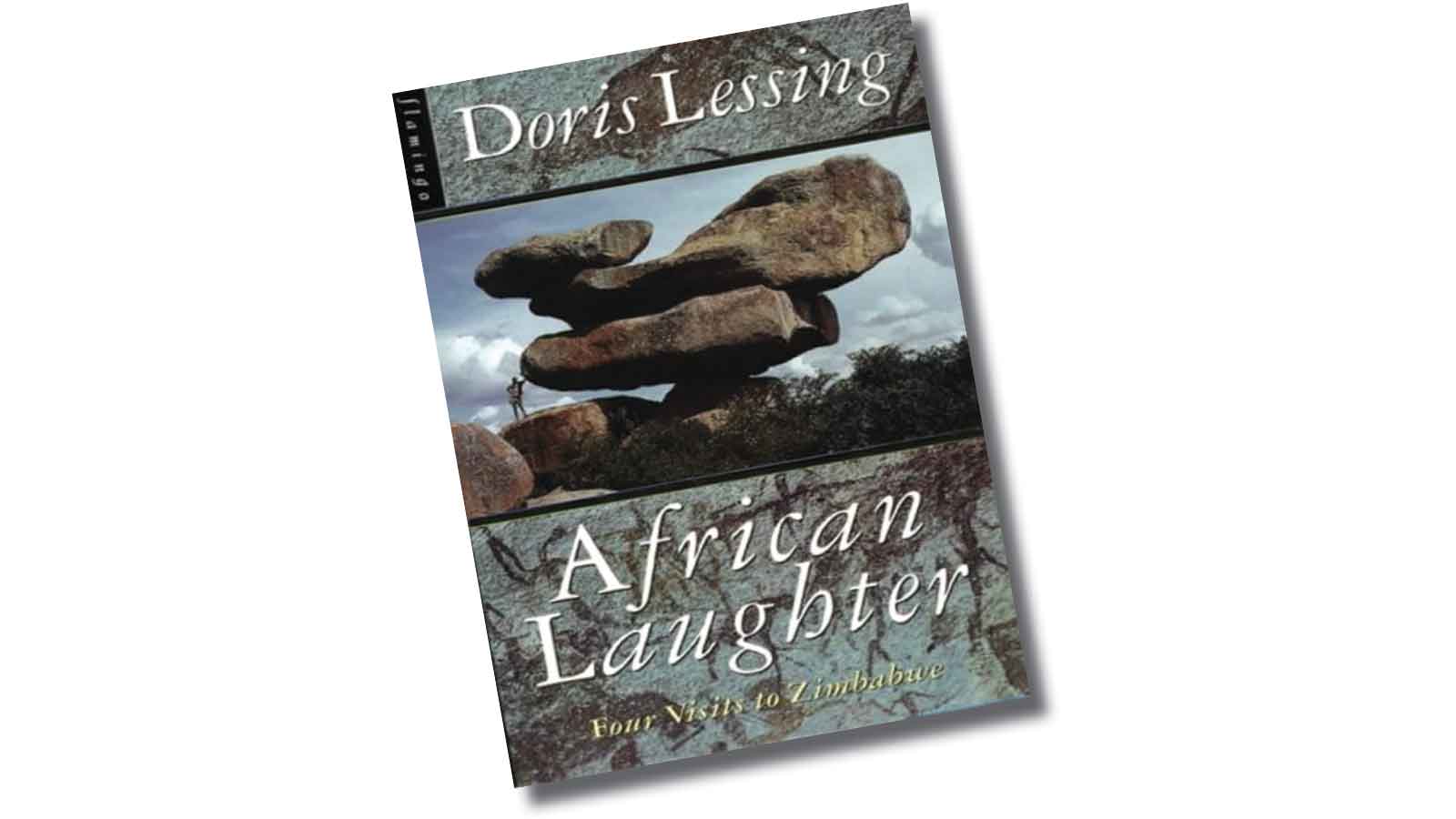
Elliot Ziwira
At the Bookstore
As Zimbabwe prepares to commemorate Heroes Day this August, the nation once again pauses to honour the men and women whose sacrifice secured freedom, restored dignity to a dispossessed people and reclaimed a future long denied by colonialism.
Beyond the ceremonies and wreath-laying lies an equally important duty, which is to remember the liberation struggle as it was lived, and to examine how it has been narrated by those who fought it, those who witnessed it and those who stood on the opposite side of history.
Literature remains one of the most enduring repositories of such memory.
Among the works that invite reflection during this commemorative season is Doris Lessing’s “African Laughter: Four Visits to Zimbabwe” (1992). It is an autobiographical account that chronicles the author’s return to Zimbabwe after a 25-year exile imposed by the Rhodesian government she had criticised.
Returning in 1982, barely two years after Independence, and revisiting the country in 1988, 1989 and 1992, Lessing records not just her travels, but a nation negotiating the promises, contradictions and growing pains of freedom.
What emerges is a compelling portrait of one conflict remembered through two entirely different lenses.
To white Rhodesians, it was the Bush War. To indigenous Zimbabweans, it was the Second Chimurenga, a liberation struggle fought to reclaim ancestral land, humanity and the right to determine their own destiny.
That divergence is the heartbeat of “African Laughter”.
Lessing neither writes as a detached historian nor as a political propagandist. Instead, she employs the autobiographical mode, weaving together stories, anecdotes, newspaper cuttings, poems, songs, obituaries and historical reflections to construct a textured narrative of a country rediscovering itself.
The memoir says as much about Zimbabweans as it does about Lessing herself.
Her first return is marked by a striking contrast. On one side is the jubilation of a people finally breathing the air of freedom after decades of racial oppression, segregation and dispossession.
On the other is the visible despondency of many whites struggling to reconcile themselves with a political order in which they were no longer the unquestioned custodians of power.
Lessing captures both worlds with unusual honesty. She recognises the excitement of Independence while acknowledging the inevitable challenges confronting a young Government learning the difficult craft of governance after inheriting institutions designed to exclude the majority.
The most memorable thread running through the book is the laughter from which it derives its title. To an outsider, the laughter appears almost contradictory.
How can people burdened by poverty, drought, shortages and uncertainty laugh with such abandon?
Lessing gradually discovers that this laughter is neither denial nor surrender but resilience. It is the philosophy of a people who have learnt, through generations of conquest, displacement and adversity, that hope is often the only possession that cannot be confiscated.
She describes it as “the marvellous African laughter born somewhere in the gut, seizing the whole body with good-humoured philosophy.” It is, she observes, “the laughter of poor people.”
Yet beneath that laughter lies remarkable strength.
The African refuses to be defined solely by suffering. His optimism survives circumstances that would have broken many societies. Ironically, the qualities often mistaken for docility become the very source of endurance.
The memoir inevitably turns to history.
Lessing revisits the colonial conquest that alienated Africans from fertile land, confined them to overcrowded reserves and institutionalised racial privilege.
The land issue emerges not merely as an economic question but as the foundation upon which colonial domination rested. Without understanding that history, the liberation struggle cannot be fully understood.
For settlers, the Pioneer Column had embarked on a noble imperial mission in service of Cecil John Rhodes and the British Crown. To Africans, it represented invasion.
The settlers convinced themselves that Salisbury belonged to them because they had brought what they regarded as civilisation. They believed the conquered should remain grateful recipients of white tutelage.
The contradiction is so stark that it attempts to strangle logic.
Curiously, wildlife occupied vast tracts of fertile land while Africans were crowded into impoverished reserves derisively labelled “kraals”.
Such an imbalance could not endure indefinitely. The First Chimurenga and Second Chimurenga became inevitable responses to dispossession. Thus, what whites remembered as the Bush War was, for Africans, an unavoidable struggle to reclaim both land and dignity.
On Heroes Day Zimbabweans precisely remember that distinction. The day honours those who fought not to conquer other people but to recover what had been taken from them.
In “African Laughter”, Lessing also explores the psychology of defeat.
The confidence once displayed by Ian Smith’s declaration that there would never be black majority rule “in a thousand years” evaporates almost overnight.
Many whites retreat into nostalgia. Others migrate to apartheid South Africa, unable to imagine themselves living under black political leadership. The famous veranda conversations become symbols of a community trapped in memories of Rhodesia—their Rhodesia.
Lessing’s brother Harry personifies that refusal to move forward.
Unable to accept political reality, he continually speaks of black inferiority while romanticising colonial administration.
He even resents giving lifts to Africans because, in his words, they had “unfairly beaten his side in the War.”
Such bitterness reveals how difficult reconciliation can become when privilege is mistaken for entitlement.
Yet Lessing does not paint all whites with one brush. She acknowledges those who embraced Independence and committed themselves to building Zimbabwe alongside fellow citizens regardless of race.
Likewise, she does not idealise Africans. The new society is shown grappling with corruption, inefficiency, bureaucracy and individual avarice.
Freedom, she suggests, removes colonial rule but not necessarily human weakness.
That balanced treatment gives the memoir credibility. The work resists simplistic binaries. Instead, it teaches readers that nation-building demands moral responsibility from every citizen.
Education appears as another recurring motif. Having been deliberately excluded from meaningful educational opportunities under colonialism, Africans embrace schools with extraordinary enthusiasm.
Communities build classrooms and parents sacrifice whatever little they possess so their children can learn.
Predictably, critics are quick to highlight shortages of books, trained teachers and low pass rates. Yet such criticism often ignores where the country had come from.
An education system that had denied the majority access could not be transformed overnight. So, the existence of thousands of new classrooms represented remarkable progress.
Lessing also records an irony that frequently confronts development work. Some expatriate experts discover that villagers often possess deeper practical knowledge than those sent to teach them.
One extension worker candidly admits that locals end up teaching the trainers. The observation quietly dismantles assumptions that knowledge always flows from North to South.
The memoir also documents the emergence of HIV and AIDS, capturing the fear, stigma and misinformation that accompanied the epidemic during its early years.
Communities struggle to understand the disease. Accusations of witchcraft coexist with scientific uncertainty.
Looking back from today’s perspective, those passages become powerful pointers of how societies learn through painful experience.
Regionally, Lessing highlights Zimbabwe’s strategic importance as Mozambique descends into violence fuelled by the apartheid-sponsored Renamo insurgency. The country’s support for regional liberation and stability reinforces the broader ideals that inspired the liberation struggle.
This was never merely about Zimbabwe. It was about the emancipation of Southern Africa.
Therefore, Heroes Day echoes beyond national borders.
It commemorates sacrifices made not only for one nation but for a region yearning to free itself from colonial domination.
Although “African Laughter” refuses to provide comfortable conclusions, it invites readers to confront difficult truths.
Freedom is neither an event nor a destination but an ongoing responsibility. The liberation struggle ended colonial rule, but the work of building an equitable society continues.
That may be the memoir’s greatest strength. It recognises both the triumph of Independence and the complexities that inevitably follow political liberation. It celebrates resilience without romanticising lack and acknowledges letdown without diminishing achievement.
History, Zimbabweans acknowledge, is rarely singular. The same war produced different memories depending on where one stood. For the settler, it signified the collapse of an empire and for the African, it marked the recovery of humanity.
However, history has the final word. The liberation struggle was never just a bush war. It was a people’s determined quest to reclaim ancestral land, dignity and self-determination.
That is the legacy Heroes Day celebrates. And it is a legacy that literature, in all its complexity, continues to preserve for generations yet unborn.
- For an immersive reading experience, visit the DigiHub Retail Shop at Herald House, corner George Silundika Avenue and Sam Nujoma Street in Harare. Contact Leon on 0772739306.