Andrew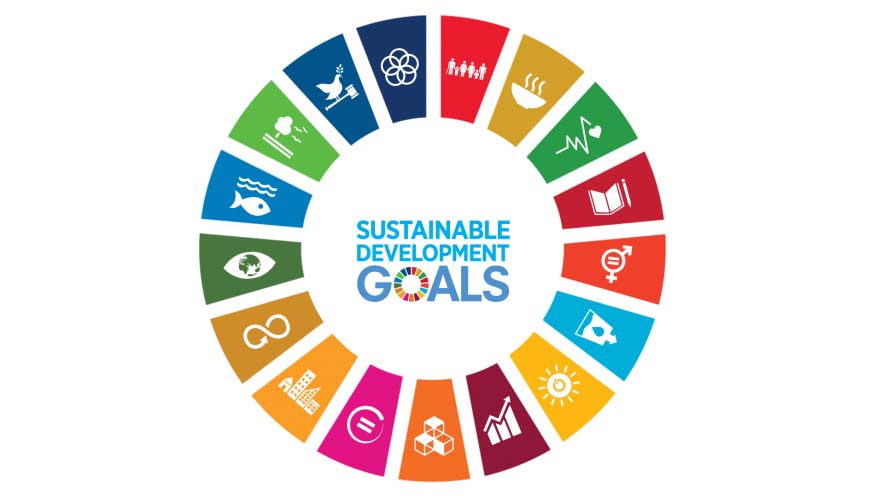
Alexandra Mliswa
SUSTAINABLE Development Goals (SDGs) are a list of 17 objectives identified by the United Nations as necessary for a better and of course ‘sustainable’ future for all. These objectives seek to address the ever- increasing global challenges that plague our world today, like poverty and climate change to name just two.
In Zimbabwe, ZUNDAF (Zimbabwe United Nations Development Assistance Framework) is the foundation through which the UN channels its support for the realisation of SDGs.
Even though there are 17 objectives, no two countries are the same and each country has its own priority areas that it chooses to focus on. Zimbabwe has six national priority areas which are: Food and Nutrition Security; Gender Equality; HIV and AIDS; Poverty Reduction and Value Addition; Public Administration and Governance; and Social Services and Protection. These areas simultaneously serve as key aims of Zimbabwe’s Vision 2030, which seeks to attain an upper middle-income economy by 2030.
The realisation of the SDGs requires that all sectors of society work together. It is imperative for the private sector to play its role in the implementation, monitoring and evaluation of SDGs.
This is not limited to large corporations alone but also includes small –to-medium enterprises (SMEs). The most effective way for the private sector to contribute to the realisation of SDGs is through their CSR strategies.
A culture of monitoring and evaluating SDGs will undoubtedly require that the CSR activities, through which the SDGs are channelled, are measured and reported. There are a number of options available for sustainable reporting but it is encouraged that it is done through ESG (Environmental, Social and Governance) reporting matrices for reasons that will be clear at the conclusion of this reading.
How are SGDs connected to CSR?
CSR and SDGs share the primary purpose of addressing society’s wellbeing, so, it only makes sense for CSR strategies to make use of a pre-existing and globally recognised framework that is found in SDGs.
The 17 Sustainable Development goals are an ideal framework for CSR strategy formulation. This is because SDGs receive funding every year, and their impact has been substantial across the globe showing the possibility of company partnerships with experts in the NGO sector for effective implementation. Secondly, the fact that SDGs are already widely known and globally recognised highlights a great opportunity for businesses to use them as a framework for their CSR strategies. In addition, businesses will have a greater willingness to adopt sustainability reporting mechanisms like ESG in order to measure the effectiveness of their CSR activities.
Benefits of incorporating SDGs into CSR strategies
Businesses would want to know about the benefits incorporating SDGs into CSR Strategies? Here are a few listed below, but it is by no means an exhaustive list;
Clarity and Direction: SDGs can provide an integrated framework to develop a strategic, balanced, and effective world-class CSR strategy which can achieve real and impactful sustainable development. In this instance it can really ‘change the world’.
SLO (Social Licence to Operate): for business activities that are inherently destructive such as mining, a more integrated CSR framework which incorporates SDGs can provide them with an SLO from the community and key stakeholders. This can also help keep pressure groups who have the potential to cease operations at bay.
Competitive Advantage: A CSR strategy that is based on SDGs coupled with ESG reporting can have an array of benefits for businesses not limited to; attracting investors, an increase sale, capital inflow, a higher probability of hiring top talent, having Government support, having international support and recognition, and reducing variable costs.
The expectation to give back to the community through CSR is not the same across all sectors. Certain CSR initiatives attract more attention than others, particularly if their operations involve activities that cause destruction to the human and natural environment.
If you are in the mining sector for instance, your business has much higher societal expectations than other sectors. This is based on the reasoning that mining companies must try to reduce the negative externalities of their operations through CSR. In that instance, you will find that while it is not a legal obligation for mining companies to conduct CSR initiatives, failure to do so can have serious consequences for a business.
To that effect, if a business is investing in CSR for whatever reason, it makes more sense to invest in something that is impactful and has added benefits to the business – a CSR strategy which incorporates SDGs can achieve both!
Alexandra Mliswa specialises in CSR. She holds an LLB, BA and is completing an MSC in Peace, Leadership and Conflict Resolution.



 Online Reporter