Sundaymail Editor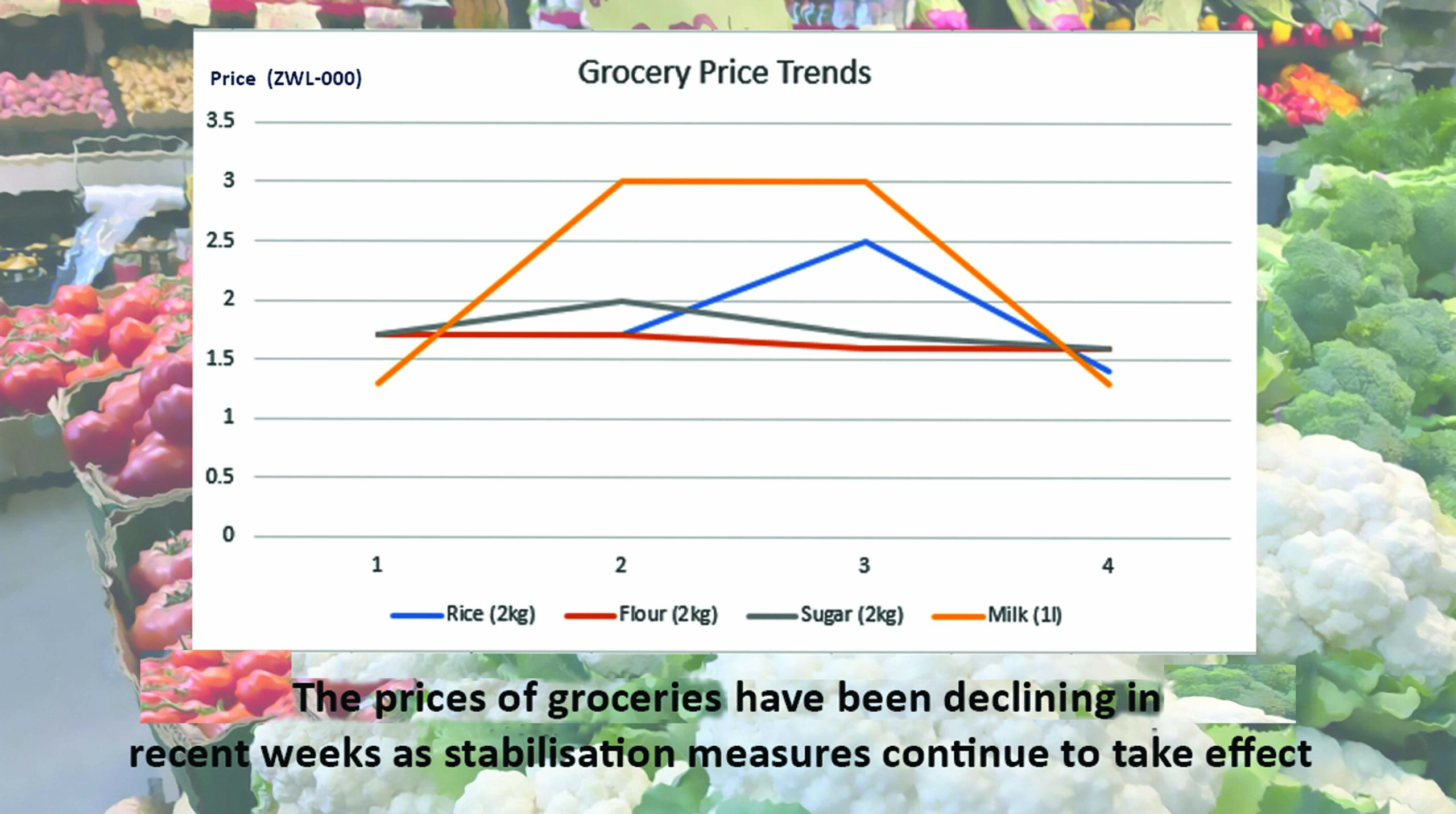
Richard Muponde and Sharleen Mohammad
FOR some time, retailers in Zimbabwe connived to raise prices of basic goods, disregarding market forces. It had become the norm for them to sell the goods at astronomical prices, in anticipation of high inflation.
However, in recent weeks, wholesalers and retailers have been outdoing each other in slashing prices of basic commodities. This is in conformity to real market fundamentals, which have seen the convergence of the parallel exchange rate and the Reserve Bank of Zimbabwe (RBZ)’s willing-buyer willing-seller rate.
The majority of wholesalers and retailers are putting their products on promotion in the unremitting drive to slash prices.
This has also been necessitated by the reduction of fuel prices.
Measures implemented by the authorities to stabilise the economy include strengthening the local currency, while disincentivising the use of the United States dollar.
In the past, a customer would choose to go to the parallel market and trade his/her US dollar to buy in shops, but now it makes more sense to buy with the US dollar as the parallel market rate has converged with the official rate.
The authorities also introduced gold coins as an instrument to preserve value, and reduce excess local currency in the market.
And a blitz on currency manipulators was also launched by RBZ’s Financial Intelligence Unit, with many businesses, Government departments, local authorities, banks, hotels, and individuals being penalised.
Some had their accounts frozen and their directors blacklisted.
The Government has also banned lumpy payments to contractors, as it is wary of the destabilising effects of this process.
All these measures have proved to be the panacea in taming runaway inflation that was affecting citizens’ disposable incomes.
The combined effect of the measures has seen a stabilisation of the economy.
A survey by The Sunday Mail revealed that prices have fallen in leading shops in Harare’s central business district (CBD).
Economist and member of the Reserve Bank of Zimbabwe Monetary Policy Committee Mr Persistence Gwanyanya said the country is now into a new era of price correction and the economy is right-sizing, as monetary and fiscal policy measures implemented by the authorities take effect.
“The era of easy money — often gotten through extortionate pricing on Government contracts and tenders — has come to an end as Treasury religiously implements value for money processes,” said Mr Gwanyanya.
“Businesses that resist this wave will be penalised, not only by the authorities but by the market itself. As such, businesses have to be more competitive, more productive and more efficient. Businesses are reducing prices and embarking on aggressive promotions to defend demand for their products and services.”
He said the authorities have shown a clear direction that tightening money supply will continue until the “job is done and that is when month-on-month inflation is reduced to less than 5 percent”.
Mr Gwanyanya said confidence has been instilled into the market and unlike in the past, an increasing number of people now believe inflation is going to fall.
“This is important in driving inflation downwards. Importantly, fiscal policy has made the job of the monetary policy easy by insisting on value for money processes.
“As Treasury insists on using the ‘right price’ on all its payments, price correction is going to be sustainable. The ‘right price’ is one that is based on the interbank exchange rate and will not afford the recipient the flexibility of going into the parallel market,” said Mr Gwanyanya.
Economist Dr Kingstone Kanyile said price correction was occurring as consumers could no longer afford inflated prices.
“The economy is on the right track at present because slowdown in consumption impairs enterprises’ viability and increases business and financial risks, hence, the appeal to consumers through price reductions is a realistic alternative to ensure short-term liquidity and corresponding solvency targets,” said Dr Kanyile.
Members of the public have welcomed the slashing of the prices, saying they can now afford to buy more in the local currency.
“I want to thank the Government for intervening. Prices have gone down and basic commodities are readily available. We like the situation and we hope it continues,” said Ms Violet Sibanda (30) of Sunningdale, Harare.
Her sentiments were echoed by Mr Shadreck Shumba, a vendor in the CBD:
“There are many promotions being offered by all the big shops. Surely, prices are going down. Just this morning, I bought my daughter a soft drink and a burger, both for just $680. I want to thank our Government for its hard work in terms of addressing this issue,” he said.
Ms Fellistas Samson (40), a schoolteacher, said the price stability enables her to plan ahead with her income.
She revealed that she had been so surprised by the reduced price of beef in one leading supermarket that she had to confirm the expiry date.
“I thought the meat was stale. Imagine buying a kilogramme of beef for $2 000. Isn’t that great? We are grateful to the Government and we hope that this continues to subsist,” said Ms Samson.
Earlier this year, the country experienced wanton price increases of goods and services, with basic commodities sky-rocketing.
At one time, the parallel market rate was inching close to US$1 for $1 000, with prophets of doom predicting the demise of the local currency. However, the merchants of negativity have been made to eat humble pie as the economy improves.



 Online Reporter