admin
admin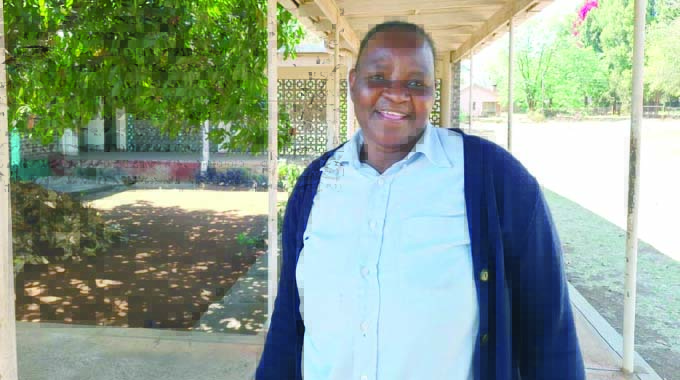
Rumbidzayi Zinyuke, Senior Reporter
The air in the mortuary was thick and heavy, but for 62-year-old Mrs Grace Mafukidze, this was familiar environment.
The mortuary had been a constant companion to her for the past 28 years that she had been dealing with the deceased at Gweru Provincial Hospital.
Despite the stigma and discrimination associated with her work, Mrs Mafukidze has remained dedicated to her role as a mortuary attendant.
She recalls joining the hospital as a general hand many years back, and eventually moving to her current job.
“Taking care of the dead is not an easy job. When I joined the hospital, I was a general hand. But one-by-one, my colleagues were being selected to train as nurse aides in the hospital or for other positions. When I realised that I had been left behind, I decided that it was time to challenge myself. An opening had arisen at the mortuary and I decided to take it up. I went to United Bulawayo Hospitals to train as a mortuary attendant,” she said.
While the road has not been easy, Mrs Mafukidze has become more committed to her job over the years.
She has not been deterred even when people choose to leave the seat next to hers empty on the bus ride home, or when they move as far from her as they can in the corridors.
“Most people think that just because I spend the better part of my day with dead people then I am weird or cursed. But that is not it. I am just as normal as anyone who works in any other department in this hospital. I have nothing to do with these people’s deaths so why should I worry about being haunted by their souls? I do my work and I go home to my family,” she says.
But her job has evolved.
Over the years, her responsibilities have expanded significantly due to staff shortages and the Covid-19 pandemic.
Mrs Mafukidze now handles a multiplicity of tasks, from collecting bodies from the wards, doing the paperwork to book them in and out of the mortuary as well as dispatching them for burial.
But despite her dedication, she has faced challenges in terms of career progression and recognition.
Her pay grade has remained unchanged, and she has been unable to pursue further training.
“I have never thought of leaving the health service. When I joined the mortuary department, I had hope that I would grow in this field. But 28 years later, I am still in the same position. I have not had a chance to get further training so that I can get a promotion. I could not afford to take myself to school to further my studies so I have remained in the same position,” she says.
With only a few years left to retirement, Mrs Mafukidze has not lost hope that she will be recognised for all the hard work that she has put in.
She believes the ongoing job evaluation exercise currently being undertaken by the Health Service Commission will help to outline her duties clearly and place her in the correct pay grade.
The exercise which started in July, is being done to evaluate the relative worthiness of all 840 jobs in health service.
This ensures that the job grading structure is aligned to the duties and responsibilities of a particular job.
While job evaluation is not salary increase, promotion, upgrading or cost of living adjustment, builds a sustainable grading structure, establishes job hierarchy, determines pay relationship and informs the development of policies and systems that speaks to job responsibilities.
As a result, employees like Mrs Mafukidze can be properly recognised for the work they do. This can also have a bearing on the retention of such employees.
Mr Tom Marume, another mortuary attendant at Shurugwi District Hospital, shares the same hopes.
He spoke of the additional responsibilities that mortuary attendants had taken on, particularly during the pandemic.
“There are many duties that were not in our job descriptions but we now do them. For instance, during the Covid-19 pandemic, we suddenly had to test every dead body that came to us before we could take it into the mortuary so we worked closely with the lab. But we never had to do this in the past. This shows that our duties have evolved. I hope that this job evaluation will take into consideration these changes we have had to do and ensure that our job descriptions cover this. Our grades should help us to be aligned with the work we now do,” he said.
Since the last job evaluation exercise in 2003, there has been a significant amount of technological, socio-political and economic changes.
This has seen an increase in the challenges faced by workers, redundant jobs, lack of career progression, duplication of duties and responsibilities among different jobs as well as a mismatch in the grade, qualifications and salary.
HSC commissioner, Mr Angelbert Mbengwa, emphasised the importance of a streamlined and fit-for-purpose workforce in the health sector.
“The health sector is a human capital intensive sector and therefore we really want to sharpen our human resources so that they are more equipped to meet the challenges of the health sector and we can achieve the aspirations of the NDS1 and National Health Strategy,” he said.
The Government has on its part moved in to ensure this happens.
The approval by Cabinet of the Health Workforce Strategy (2023-2030) and the Health Workforce Investment Compact (2024-2026) are set to improve education, training, deployment, retention, and financing of the health workforce.
The operationalisation of the strategy and investment compact will ensure that employees like Mrs Mafukidze are retained and remunerated accordingly.
While she and other mortuary attendants work behind the scenes, they hope to be recognised for their dedication and contributions, which are essential to the functioning of the healthcare system.



 Online Reporter