Online Reporter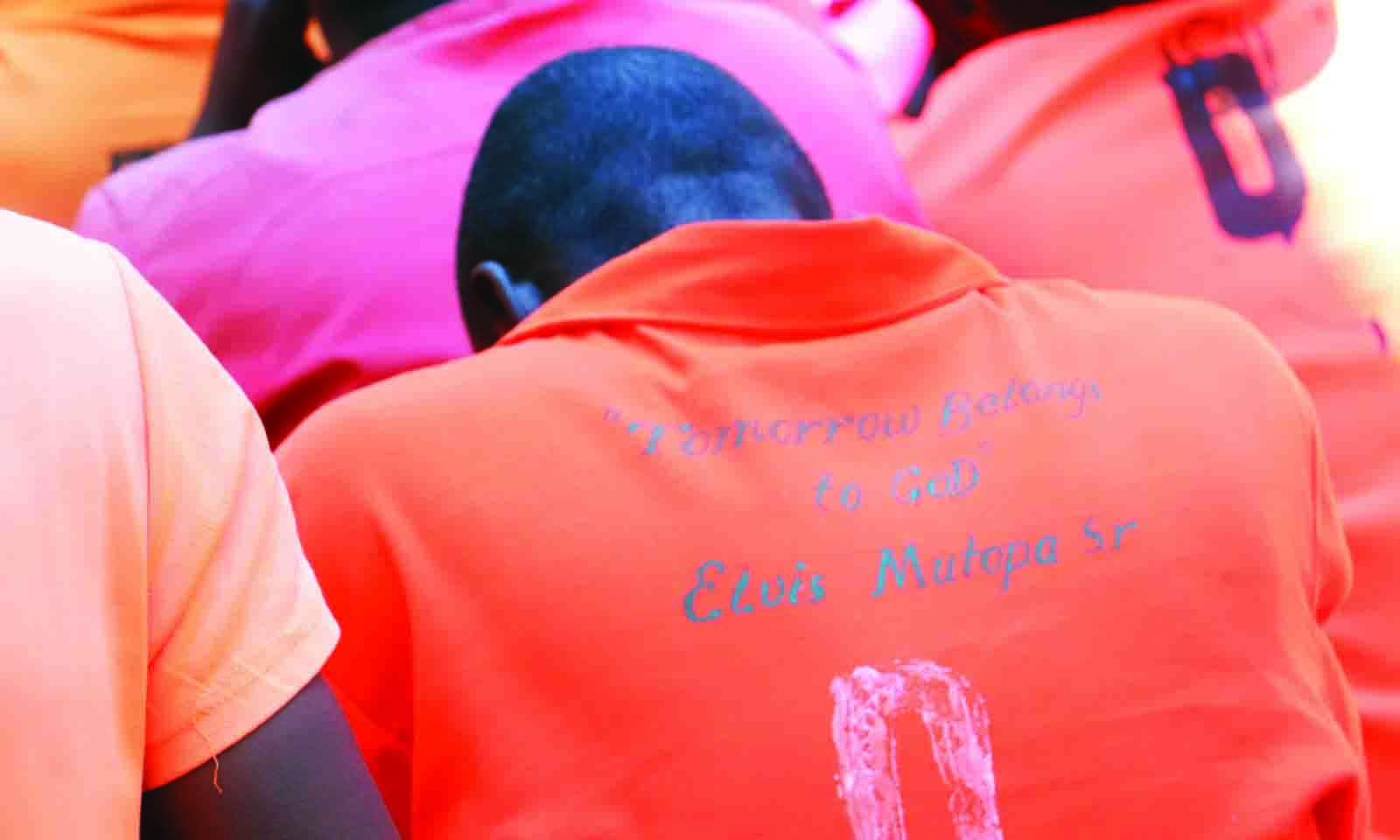
Theseus Shambare
Features Writer
THE T-shirt is new. Its colour, red, is striking bold against the dull grey of the prison walls, radiant under the filtered light that slips through the iron bars.
At the back, the message reads: “Tomorrow belongs to God”. And, at his right chest side, black letters declare: “Faith, Hope and Confidence”.
It is worn by 39-year-old Steward Tembo from Mawana Village in Bindura, Mashonaland Central Province, whose jail nickname is Elvis Mutopa.
Convicted in July 2018 for the murder of his girlfriend, a tragedy he now calls a moment of madness born of misunderstanding, Tembo serves a life sentence following his resentencing on May 6, 2025.
He left behind a wife and a seven-year-old son, now living with his in-laws in Murehwa, Mashonaland East.
The red T-shirt has become something larger than cloth. It has become the colour of survival and repentance.
For years, Tembo lived in the shadow of death. He recalls the hollow fear that clung to each sunrise, the sound of keys turning in the cell door, and the dread that each day could be the last.
“Every dawn felt like a verdict,” he says quietly. “Now, when I wear this red T-shirt, I remind myself that life itself is a gift — even here. I regret that single moment that destroyed two lives — hers and mine.”
Before his arrest, Tembo was self-employed and an avid follower of foreign languages, having learnt French.
Today, he teaches French to fellow inmates but appeals for textbooks and exam opportunities, hoping to equip them for ventures beyond the prison walls.
When Zimbabwe abolished the death penalty in December 2024, it joined a growing number of Southern African Development Community nations aligning justice with human rights, International Labour Organisation standards and global calls for dignity over death.
For Tembo, the decision was more than legal reform. It was resurrection and the beginning of forgiveness.
On Wednesday (yesterday), Justice, Legal and Parliamentary Affairs permanent secretary, Mrs Vimbai Nyemba, visited Chikurubi Maximum Security Prison to meet inmates who were previously on death row.
“Do you know that you have rights, despite being sentenced to life imprisonment? You even have a right to appeal your sentence,” she tells them.
Prison officials describe the engagement as an important step in ensuring that inmates are aware of their rights and avenues for sentence review or rehabilitation.
Albert Chigumba, one of the inmates, welcomes the abolition of the death penalty but says life imprisonment remains harsh.
“I am happy the death penalty has been lifted, but life in prison is still hard, especially since the system is supposed to focus on correction rather than punishment,” he says.
The Ministry of Justice, Legal and Parliamentary Affairs indicates that similar outreach programmes will continue across other high-security facilities, reinforcing the Government’s commitment to human rights-based reforms in Zimbabwe’s correctional system.
The reform did not stop at law.
Inside Chikurubi, inmates are now trained in vocational and rehabilitation programmes, carpentry, horticulture, welding, and tailoring, aligning Zimbabwe’s prisons with ILO standards for productive and dignified work.
In the tailoring room, the same red fabric used for prison attire is repurposed into shirts, aprons and bags donated to hospitals and schools.
For Tembo, sewing his own shirt became symbolic, each thread being a prayer for redemption.
“When I sewed the words ‘Tomorrow belongs to God,’ I was stitching hope into my own heart,” he says. “It is my testimony that faith survives even behind bars, that madness can pass and reason can return.”
Inside Chikurubi, colour carries meaning. Red, once the colour of warning, danger and punishment, now speaks of life, courage and resilience.
“Red used to remind us of fear,” says Makaita Milanzi, another inmate. “Now, when I see it, I see new life. We may wear the same colour, but our hearts have changed.”
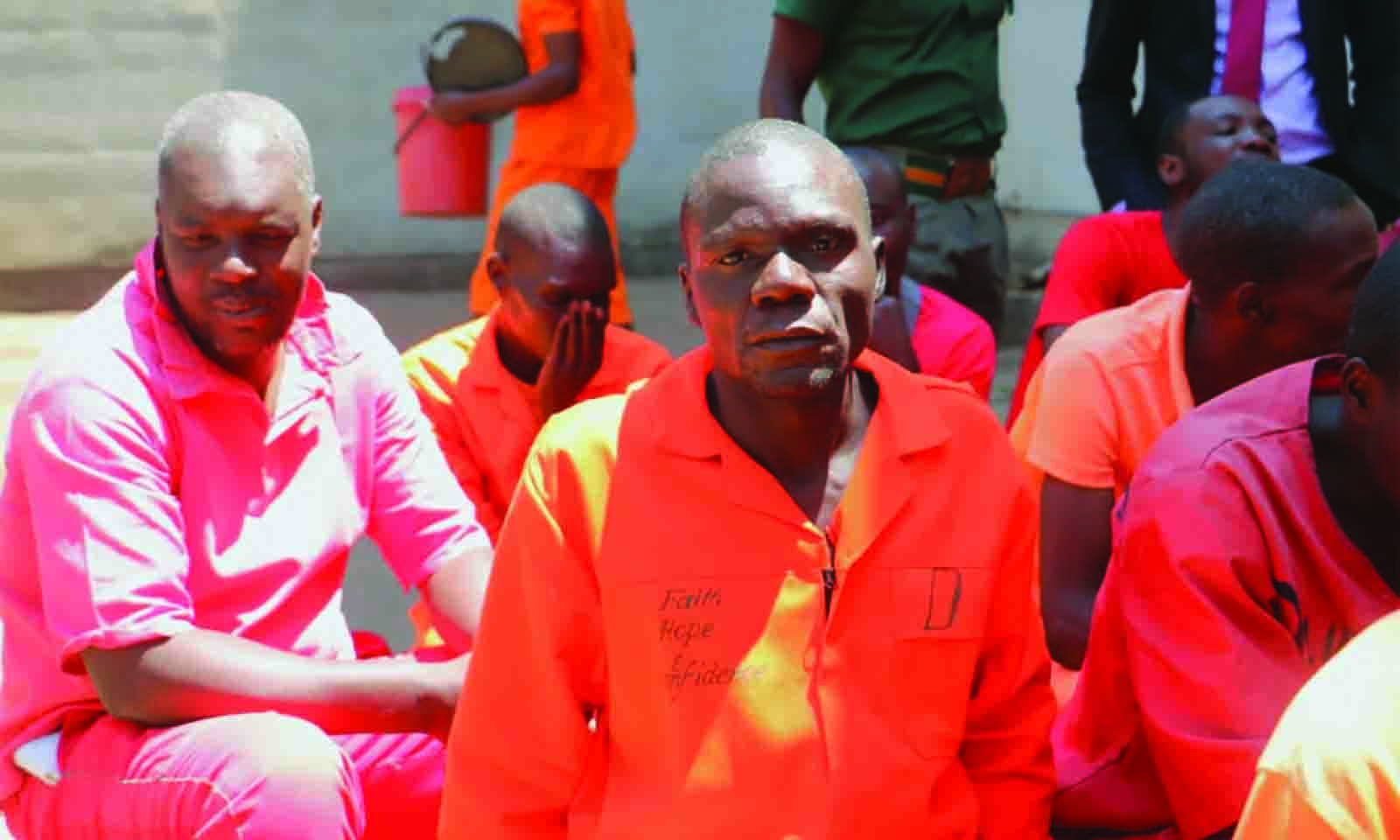
The red T-shirt has inspired a quiet cultural shift. Inmates write verses, paint murals and craft words of encouragement on fabric scraps.
Each creation reflects a growing truth that punishment alone does not reform, but reflection does.
Tembo is yet to perform the rituals needed to appease the spirit of his late girlfriend, hoping that the time behind bars will allow him to do so safely.
Around him, other inmates work silently every day, the whirr of machines echoing through the corridor.
Hope hums in that sound and confidence breathes in every stitch. Faith, once fragile, now lives in the red cloth on their backs.
“When we lost the death sentence,” Tembo says, “we found life. Not a perfect life, but living with purpose, prayer, and work.”
Hence, Zimbabwe’s decision to abolish capital punishment was not just a legal act but a declaration of values. It reaffirms the sanctity of life, the dignity of labour, and the capacity for redemption that underpins human rights law across the world.
The red T-shirt, worn within the cold walls of Chikurubi, stands as a quiet symbol of that transformation — of a system learning to correct without crushing, to punish without dehumanising, and to believe that even the condemned can be redeemed.
As Mrs Nyemba leaves the prison gates, the men stand in formation, their red uniforms blazing against the dull afternoon sky.
In that colour; vivid, defiant, and alive, one can almost see a nation’s conscience turning toward the light.