Business Reporter
The Supreme Court has removed gold producer, Redwing Mining Company, from corporate rescue proceedings, citing legal technicalities, officials at the gold mining company have confirmed.
Last week, the court dismissed the locus standi of the Associated Mine Workers Union of Zimbabwe (AMWUZ), which applied for the corporate rescue while the notice of intention, also known as the standard notice to place the company under the reconstruction process, was not properly issued, according to the officials.
“The ruling was basically on legal technicalities and not on merit, so another application can be made,” said one official who requested anonymity. Redwing is one of the gold mines owned by South African business magnate Mzi Khumalo’s Metallon, alongside How Mine near Bulawayo and Mazowe gold mine, part of Zimbabwe’s major gold producers.
With levels of disorganised mining reaching an alarming level at the mine—and exposing illegal miners to a very big risk to safety and causing serious environmental degradation, the Centre for National Resources Governance (CNRG) recently filed a petition to Parliament demanding to know if the Environment Management Agency (EMA) was monitoring environmental compliance at the mine.
The petition was deemed admissible and was referred to the Portfolio Committee on Mines and Mining Development. The CNRG is asking the Parliament to exercise its oversight role on whether EMA is properly executing its mandate of monitoring environmental management and compliance at the mine.
A recent visit to the mine showed hundreds of peasant miners had set up makeshift mines around the processing plant in Penhalonga, 50 kilometres west of Mutare.
They are digging shafts in search of gold ore, without observing any safety measures.
The area has become a death trap as no efforts are being made to fill back the disused shafts or erect danger warning signs on the abandoned mines. Viewing the mining site from a small township of Penhalonga resembles a shanty settlement.
“Those are all mining sites,” said Jonas Sithole, a miner from Chipinge. “Just get closer and see for yourself.” During a tour around the mining site, thousands of miners could be seen with rudimentary tools–working under extremely dangerous conditions.
Corporate rescue manager, Knowledge Hofisi had already come up with a rescue plan, which entailed the settlement of proven liabilities, reconstructing the balance sheet, resumption of underground mining, security of employment to ensure optimal contribution to the economy. He said the company needed US$6 million to restart production by bringing in new investors into the business valued at about US$30 million.
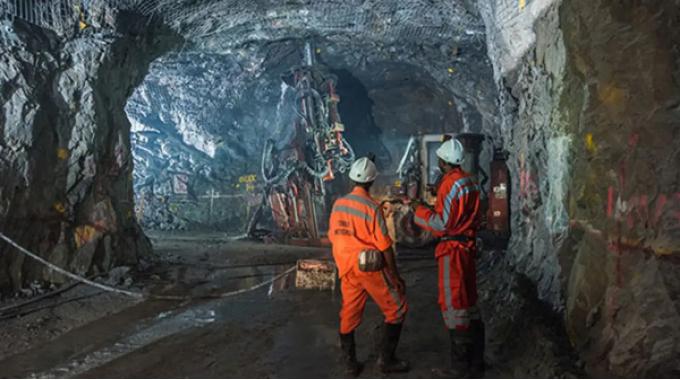
Underground gold production would resume from level one using conventional hand-held mining techniques before moving to level three to benefit economies of scale.
Much of the funding would be raised from new institutional investors who buy shares from existing shareholders and also inject funds into the business. Part of the funds to be injected will be used to settle creditors or the potential investors would buy shares from the existing shareholder and also have new shares issued to them.