Online Reporter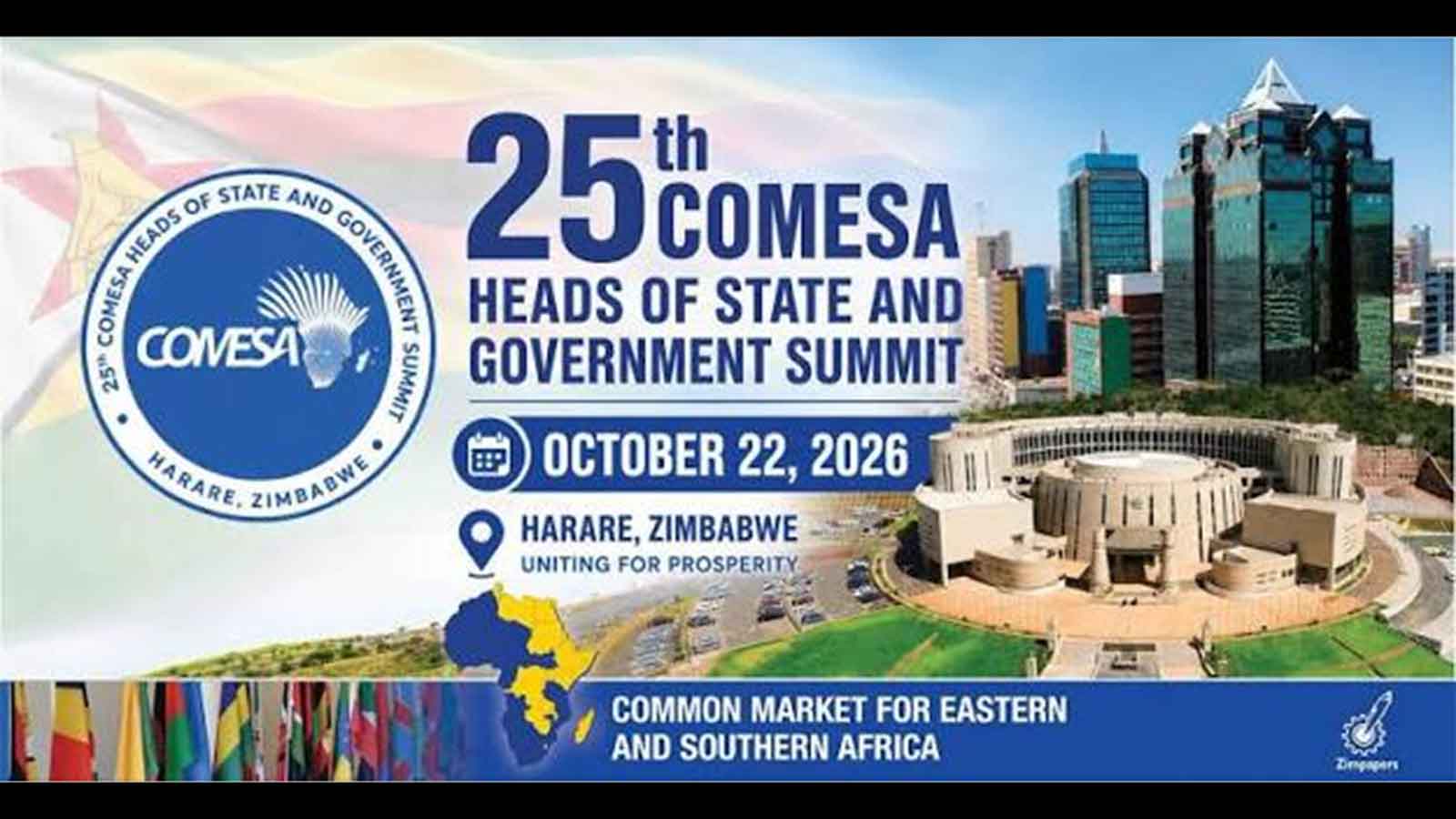
Gibson Mhaka-Zimpapers Politics Hub
THE 23rd ZANU PF Annual National People’s Conference comes at a defining moment for Zimbabwe’s economic transformation agenda, with the ruling party preparing to take stock of progress made under the Second Republic while charting the next phase of the journey towards Vision 2030.
Scheduled for October at Chinhoyi University of Technology (CUT) in Mashonaland West province, the conference will be held under the theme: “From Resolutions to Results: Consolidating Economic Development and Deepening Empowerment Towards Vision 2030.”
The theme itself carries a significant political and economic message.
It suggests that the era of simply adopting resolutions and waiting for their implementation is giving way to a more results-oriented approach in which policies must translate into measurable improvements in production, investment, industrialisation, employment and household incomes.
But as the provinces table their resolutions for consideration at the national conference, there is an equally important regional dimension that should not be overlooked.
Zimbabwe is preparing to host the 25th Common Market for Eastern and Southern Africa (COMESA) Heads of State and Government Summit in October and assume the chairmanship of the regional bloc.
The COMESA Summit will be held under the theme: “One Market, One Future: Advancing Inclusive Industrialisation, Investment and Regional Integration in COMESA.”
The convergence of these two major events presents Zimbabwe with an important policy opportunity.
The economic resolutions coming out of the ZANU PF conference should not only respond to domestic economic priorities, but should also complement the three key pillars underpinning the COMESA Summit theme — inclusive industrialisation, investment and regional integration.
This does not mean that the ruling party’s conference should become a COMESA meeting.
Rather, it means that Zimbabwe’s domestic economic policy agenda and its regional economic responsibilities should reinforce each other.
After all, Zimbabwe cannot effectively champion industrialisation, investment and regional integration at the regional level if these priorities are not firmly embedded in its own national development programme.
The call, therefore, should be for the 23rd National People’s Conference to produce resolutions that give practical expression to these three pillars while advancing the country’s Vision 2030 ambitions.
From resolutions to results
The conference theme is perhaps the clearest indication of the direction that the ruling party wants to take.
For years, political parties and governments across the world have produced resolutions, policies and development plans, but the real test has always been implementation.
A resolution has little value if it remains on paper.
This is why the phrase “From Resolutions to Results” deserves particular attention.
It places implementation at the centre of the political conversation.
For Zimbabwe, this means economic resolutions should increasingly be judged by what they produce on the ground.
The Second Republic, under President Mnangagwa, has placed economic transformation and empowerment at the centre of its development agenda.
The Government has pursued infrastructure development, agricultural transformation, mining expansion, value addition and beneficiation, industrial revival and empowerment programmes as part of efforts to move the economy towards an upper-middle-income economy by 2030.
The next phase, however, requires a sharper focus on competitiveness and markets.
This is where COMESA becomes particularly relevant.
Inclusive industrialisation
The first major pillar of the COMESA theme is inclusive industrialisation.
For Zimbabwe, industrialisation cannot simply mean the revival of large factories in the traditional manufacturing centres.
It must encompass the development of value chains across agriculture, mining, manufacturing, tourism, energy, technology and other sectors.
Zimbabwe possesses substantial natural resources, but the long-standing challenge has been ensuring that these resources generate maximum value within the country.
The principle of value addition and beneficiation must therefore remain central to economic resolutions.
A mineral-rich country should not be content with exporting raw minerals when it has the capacity to develop industries around those resources.
The same applies to agriculture.
Zimbabwe has significant agricultural potential, but the greatest economic benefits arise when agricultural production is connected to processing, packaging, manufacturing, logistics and export markets.
This is where the COMESA market becomes important.
Industrialisation should not be pursued solely with the domestic market in mind.
Zimbabwean industries must be encouraged and supported to produce for the region.
A factory producing food products, pharmaceuticals, fertiliser, clothing, machinery or construction materials should be able to look beyond Zimbabwe’s borders and view the wider COMESA market as part of its potential customer base.
The ZANU PF conference should, therefore, consider resolutions that strengthen productive capacity while ensuring that local industries are capable of competing regionally.
This requires addressing some of the perennial constraints facing industry, including the cost of finance, energy shortages, infrastructure gaps, outdated machinery, skills shortages and the cost of doing business.
If the country is to take advantage of the COMESA market, local producers must be competitive.
Investment as a catalyst
The second pillar — investment — is equally important.
The COMESA chairmanship provides an additional platform to market Zimbabwe as an investment destination.
Instead of treating the COMESA Summit as a once-off diplomatic gathering, Zimbabwe should use the occasion to showcase opportunities available across its productive sectors.
The summit can become a gateway for investment partnerships.
Investors interested in mining, agriculture, manufacturing, energy, tourism, infrastructure and technology should be exposed to Zimbabwe’s opportunities while also being made aware of the wider regional market available through COMESA.
This is where domestic policy and regional diplomacy can converge.
The conference can produce resolutions that strengthen the investment environment, while the COMESA chairmanship can provide the regional platform for marketing those opportunities.
Regional integration
The third pillar — regional integration — perhaps presents the greatest opportunity for Zimbabwean businesses.
The concept of “One Market, One Future” is built around the idea that African countries can unlock greater economic potential by reducing barriers to trade and strengthening regional value chains.
For Zimbabwe, regional integration should translate into more exports, wider markets and stronger economic links with other COMESA member States.