Online Reporter
Alphina Ncube
Last night I watched the vigil for Professor Jason Arday, and I went in expecting sadness, but what I did not expect was to be stopped in my tracks by the depth of love and grief that filled the room.
Speaker after speaker stood up, and as I listened, I realised they were not speaking simply about a professor, but about a man who had touched lives, opened doors, and made people feel that perhaps they too could belong in spaces that had historically seemed beyond their reach.
And sitting there, I found myself asking a hauntingly simple question that has stayed with me since: at what point do we stop seeing the human being?
I ask this as a mother, as an academic and scholar still navigating my own journey, as a Black person, as a Black woman, as an African living and studying in Britain, and ultimately as a global citizen who is concerned about the kind of world we are creating for one another.
Professor Jason Arday died at 41 after weeks of intense public scrutiny surrounding allegations about his academic work and aspects of his personal story, and while he denied plagiarism and acknowledged mistakes, his family has since spoken of the devastating effect of sustained abuse, misinformation, and harassment.
There are legitimate questions about academic integrity, and as scholars we must insist that our work withstands scrutiny, because evidence matters, attribution matters, and truth matters, but another truth matters too, and that is that human beings matter.
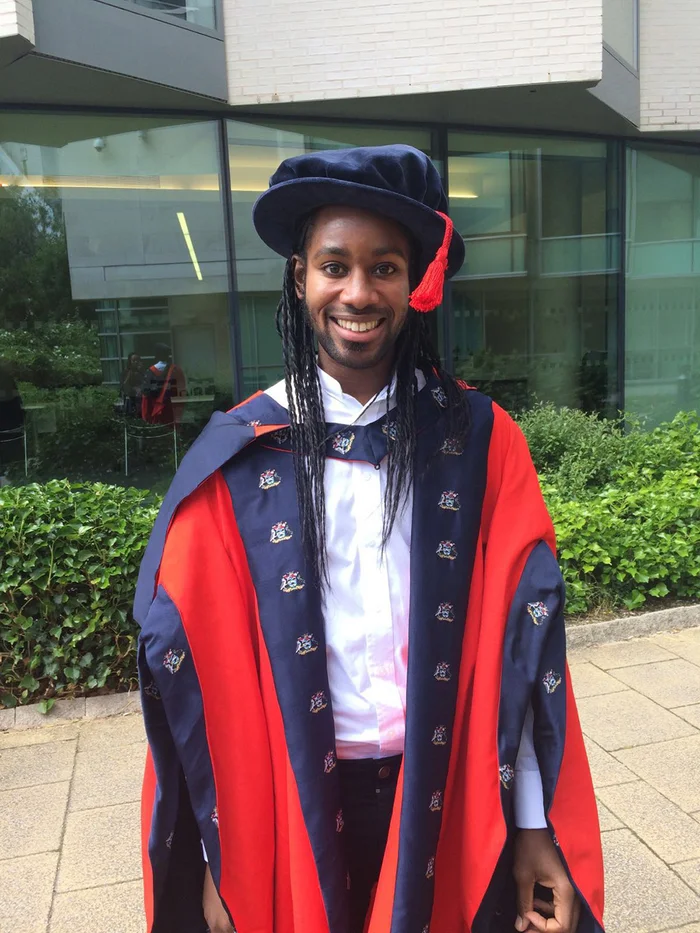
Somewhere along the way our world has become frighteningly comfortable with public destruction, where a mistake becomes a person, an allegation becomes an identity, and a controversy becomes entertainment, while behind our screens we dissect people we have never met, often without knowing what else they are carrying.
Jason Arday’s death should make us uncomfortable, not because we all have to agree about him, but because disagreement should never require the abandonment of humanity.
Watching his vigil reminded me of something my own journey continues to teach me, which is that achievement is not armour, a degree does not protect you from pain, a title does not immunise you against racism, and professional photographs do not show the sleepless nights.
A successful woman may still go home and face violence, a mother may submit academic work after holding together a struggling family, and the colleague smiling in a meeting may be fighting a private battle that nobody in the room knows exists.
I know something about rugged terrain, because I have experienced racism, I have experienced domestic abuse, and I have mothered while hurting, studied while rebuilding, worked while exhausted, and walked into academic spaces carrying chapters of my life that were never written on my CV. And I am still navigating, still learning, and still becoming, which is perhaps why Jason’s story reached somewhere particularly deep in me.
Black people who enter elite spaces often carry an additional, invisible weight, which is the awareness that sometimes we are not simply allowed to be individuals, because our successes may be celebrated as evidence of progress while our failures become evidence for something much larger than ourselves, and that is a dangerous burden.
Black women know another version of it: be strong but not intimidating, be ambitious but grateful, speak but not too loudly, survive — and somehow make survival look effortless, but I reject that bargain, because we are human before we are impressive.
The vigil showed me the power of community to restore something that public controversy can steal, which is the fullness of a person’s humanity, as people remembered Jason the educator, Jason the colleague, Jason the friend, Jason the father, partner, brother and son, and that matters, because it should not take death for us to remember that people contain multitudes.
We need accountability; academia cannot exist without it; journalism must investigate, and institutions must ask difficult questions, but surely our civilisation must be sophisticated enough to pursue truth without cruelty, and surely accountability and compassion can occupy the same room.
Surely we can challenge a person’s actions without turning their destruction into a spectator sport, and perhaps this question extends far beyond Jason Arday to the struggling student, the overwhelmed mother, the migrant trying to belong, the man taught never to admit that he is drowning, and the woman everybody calls “strong” because nobody has stopped long enough to ask whether she is tired.
What do we miss when we reduce people to the most controversial chapter of their lives? I am writing this from my own unfinished journey, because I have not arrived; I am narrowing my focus on my doctoral studies, raising my children, healing, questioning, researching, and becoming.
Some days I walk confidently, some days I crawl, but I keep moving, and increasingly I believe scholarship must do more than make us knowledgeable; it should make us more capable of encountering complexity without losing compassion.
When the headlines fade, and the crowds move on, families remain, children remain, memories remain, and so does one unsettling question: could we have pursued the truth without losing our humanity? May Jason Arday’s life provoke more than an argument about one academic, and may it awaken something in us before we post, before we condemn, before we join the crowd, and before we reduce an entire human life to its most difficult chapter. May we remember that there is always a human being on the other side.
*Alphina Ncube is a Zimbabwean writer, poet, and doctoral researcher based in the United Kingdom. She writes on identity, women, resilience, community, and the human stories behind public narratives.