

 Online Reporter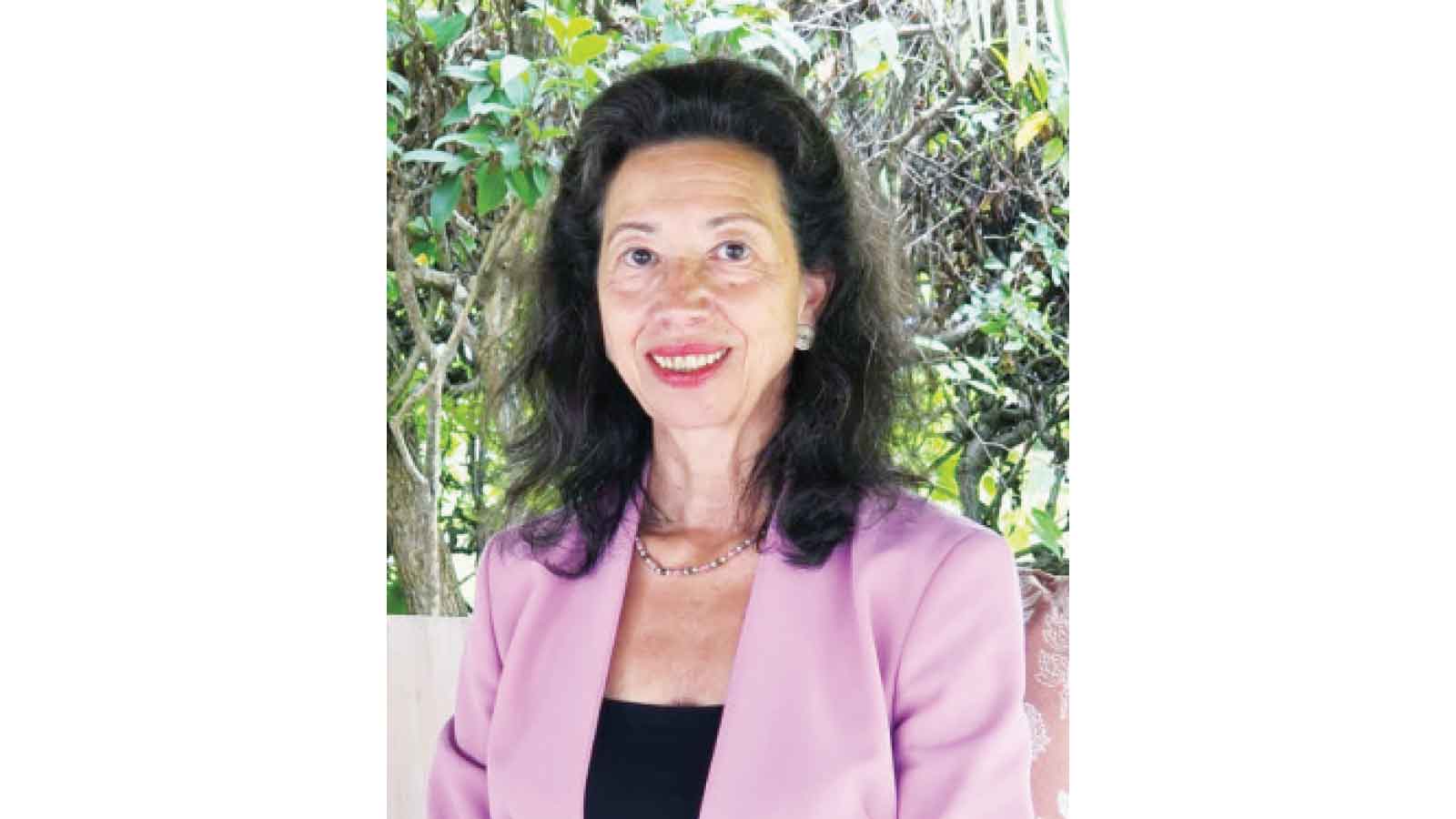
ZIMBABWE and Greece share vast common views, including on freedom, liberty and multilateralism. In an interview with Zimpapers Politics Hub’s Gibson Nyikadzino (GN), the Ambassador of Greece to Zimbabwe Ms Anna Farrou (AN) spoke on the need to reform the United Nations, addressing gender equality and women empowerment. Below are the excerpts:
GN: What do you consider to be points of convergence that drive and sustain Zimbabwe-Greece relations?
AN: Our relationship is based on mutual respect and understanding on equity. And it is firmly grounded on what unites us and on what we share. There are quite a few things that we share and that unite us. One, for instance, is the love and passion that both our nations have for freedom. And Greece, knowing very well what it means not to be free, not to be independent, stood really firmly by Zimbabwe during the independence struggle. When Zimbabwe got independent, we recognised it immediately and established diplomatic relations.
Again, something else which unites us and acts as a bridge between for our two nations is a very vibrant and dynamic Greek community, the so-called Hellenic presence, as we say, in Zimbabwe. And the Greeks and Cypriots came in Zimbabwe many years ago and slowly, they established themselves very well. Today, they contribute vitally in the political, economic and educational life of the country.
GN: Can you tell us more about what the two countries share at the international level?
AN: In the international field we share the same views on many issues. We are both committed to effective multilateralism, meaning on the basis of the principles and values of the UN Charter, including respect to international law and to settling of disputes through dialogue and diplomacy. We are strong pillars of security and stability in our regions. Both our countries firmly believe that the global challenges that humanity faces today need global responses and very good coordination. Also, both our countries believe not only in effective, but enhanced multilateralism, meaning that in order to have an effective international order, this international order should be strengthened.
GN: How can this international order be strengthened in times like these?
AN: This can be done through reforming the UN Security Council, with the inclusion of more non-permanent and permanent members, including from Africa, in order to represent the realities and the dynamics of our times, and not of the times of the after-war period.
GN: But what do you consider to be the low-hanging fruits you can use to maximise and strengthen this relationship?
AN: Something that I have noticed from the time that I came here is that although our bilateral relationship is a very good one, this is not directly reflected in high-level visits. And this is something that I am working on. I would like very much to see members of my political leadership visiting Zimbabwe and having talks with their interlocutors and vice versa. I am quite optimistic on that. Another issue that I noticed is that there are no direct Greek investments in Zimbabwe. And I tell you that we hear very clearly the message that Zimbabwe spreads all over the world, which is that “Zimbabwe is Open for Business”. I would like very much to see Greek investors to come here. There are lots of opportunities. It’s something that we recognise from our side as an embassy.
GN: You highlighted something about the Hellenic presence in Zimbabwe. This is the Greek diaspora living here, when did they come to Zimbabwe and what is their population?
AN: Greeks started coming in Zimbabwe late 19th century. Most of them were workers in the railway network. Many of them stayed and also brought their families and relatives. They started developing small family businesses. This is what we do in Greece. We have family businesses, meaning a bakery shop or a grocery shop. In the decade of 1950s and 60s, the numbers were quite substantial.
From what I know, around 14 000 people. But then the situation in Greece became better and somehow they started either going back home and to other countries. Nowadays, the ones who live here, they are more or less around 2 000.
And they deal mainly with trade, which is also something that we, the Greeks, do traditionally. We are traders, so some are in the food industry, in hospitality, a few are in mining and farming. Apart from the economic life of Zimbabwe, the Hellenic presence here contributes vitally in the educational sector of the country, with the Hellenic Nursery, Primary School and the Hellenic Academy.
GN: Greece is known for producing philosophers, historians and a cradle for Western civilisation. From a Zimbabwe-Greece perspective, are there any exchanges in the educational, cultural or areas of philosophy?
AN: Indeed, Greece is the founder of Western civilisation, it is the birthplace of democracy, history, philosophy, theatre, even the Olympic Games, just to name a few. Our language is spoken and written for about 4 000 years. It is one of the oldest in the world. It is true that education and art and culture and sports, I would add, are fields which connect people.
They build bridges, they build strong bonds, and also they are a very powerful tool to enhance mutual understanding. In particular, education is really the driving force for prosperity and growth in every nation. And this is something that both our countries recognise. We have been working on the educational sector bilaterally, meaning that Greece, for a long time, provides every year, according to our capacity, scholarships to Zimbabwean students to study in particular the field of medicine and in other fields as well. I have met some of these doctors who studied in Greece and then they came back to Zimbabwe, and still today, they offer their valuable services to the Zimbabwean people.
GN: Lastly, as one of the few women ambassadors accredited to Zimbabwe, how much do you think your work inspires young women and girls in the context of the implementation of UN SDGs, and in particular SDG5 on gender equality?
AN: That this is a very interesting question. I do not know how much it inspires, but I really hope it does because gender equality is really a fundamental human right, and it is the driving force for a peaceful, prosperous, and just world. And we are far away from that, unfortunately, everywhere in the world.
A lot has to be done, and mentality should change. Diplomacy is a field where women are still underrepresented, all over the world. And it is a difficult profession, it is a difficult job, and every day there are many challenges and many stereotypes that we, women, have to overcome, not only in our strict working environment, but also the way that people perceive us. So I would say that a woman ambassador is a very good example that leadership has nothing to do with gender. It has to do with skills.
Women in general should believe that they can lead. And in diplomacy, it is not only a privilege or a prerogative of a man to represent his country, it is also us who do it, and in a very good way.
I hope that whenever a woman sees a woman ambassador or any other successful woman in her sector, that this works as an inspiration. So to every girl out there, I would say that your dream is valid. Do not be afraid to have your dreams. Pursue your dreams, pursue your life.



