Online Reporter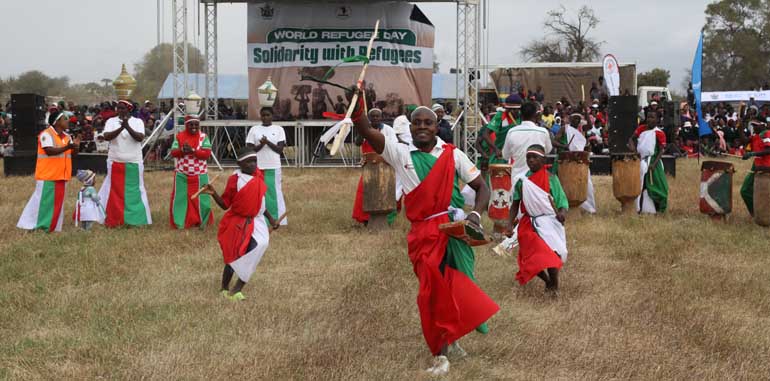
Lovemore Kadzura
Post Reporter
“THE strength of a society is measured by how it treats its most vulnerable members.”
These words by the late South African President Nelson Mandela continue to echo across generations, offering a moral lens through which nations are often judged.
In Zimbabwe, that lens is increasingly being applied to the country’s approach to hosting refugees, as this year’s theme: “In Solidarity with Refugees,” places compassion and shared responsibility at the centre of global reflection.
In the quiet routine of Tongogara Refugee Settlement in Chipinge District, gratitude is a recurring refrain.
Refugees speak of stability and dignity that, while not erasing the pain of displacement, have helped them rebuild fragments of their lives. From access to basic services to opportunities for education and livelihood support, their testimonies point to a Government and host communities that have extended protection in uncertain times.
At Tongogara, daily life reflects both hardship and resilience. Children attend school, families engage in small-scale farming and trading, and community structures maintain order and social cohesion. While challenges remain, many residents acknowledge the importance of services and protection frameworks provided under national and humanitarian coordination.
In conversations within these communities, gratitude towards the Government of Zimbabwe is expressed, not as abstract praise, but as lived experience.
Refugees describe feeling “seen” and “not forgotten,” particularly in access to education for children and basic healthcare. For many, these provisions represent more than assistance—they represent dignity in displacement.
In an emotional address during the World Refugee Day, Miss Ancilla Niyirema, a 20-year-old youth leader from Burundi, born at the settlement, said they feel the warmth, love and solidarity received from the host country. She added they have integrated well with the local Ndau people.
“To the world, this day is an observance on a calendar. However, to us, as refugees, this day is a profound mirror. It is a moment where we look back at the homes we left behind, the journeys that tested our survival and the losses we carried. Nevertheless, more importantly, it is a day of deep reflection on our journey here, a day where we celebrated the fact that we are still standing, still dreaming and still building. It reminds us that our identity is, not defined by our displacement, but our courage, our unity and our unyielding hope for future.
“What makes Tongogara truly unique and beautiful is the incredible tapestry of people gathered here. We are a community woven from different backgrounds, different cultures and diverse nationalities. We have crossed different borders and speak different languages, yet we live side-by-side as one family. This rich diversity is not a barrier; it is our greatest strength. It is the heartbeat of our settlement, proving that humanity can unite across any divide.
“Solidarity is not just an abstract concept to us. It is a daily practice. On behalf of the leadership of this community, we express our profound gratitude to the Government of Zimbabwe, which continues to show true solidarity by maintaining peace, keeping its doors open and providing protection to all of us here who seek sanctuary. We are so deeply grateful for the food assistance provided to our families. While resources are limited and rations are often not enough, our community meets this support with thankful hearts, gracefully practicing solidarity among ourselves by making the absolute most of what we have.
“We are celebrating beautiful, improved grounds that bring us together through soccer and a vibrant community radio station giving our diverse people a voice. On the legal and administrative front, we want to note our appreciation regarding documentation. Following our discussions with UNHCR delegation from Zambia, the response was positive and our people are now receiving passports,” she said.
Humanitarian partners working alongside national authorities have strengthened systems that support refugee welfare, but the consistent message from residents this year is appreciation for a host country that, despite economic pressures, continues to offer refuge.
Mr Mukuta Jojo, from the Democratic Republic of Congo, said living conditions are good for them, and called for free education, as raising fees is proving difficult.
“I have been here since 2017. We would like to thank the Government of Zimbabwe for giving us the support, security and providing everything we require. We do not have complains on how we are living here. We, however, ask that ambulance services be available on weekends to attend to emergencies. We also ask for free primary and secondary education for our people as we are struggling to raise school fees,” said Mr Jojo.
Chief Mutema said they have co-existed well with refugees and his community treats them in the spirit of hunhu/ubuntu.
“We are co-existing very well with our fellow Africans displaced from their countries of origin. As the community leader, I just treat them as my normal subjects. There are no challenges at all in terms of co-existence as both the host communities and the guests respect each other,” said Chief Mutema.
Public Service, Labour and Social Welfare Minister, Honourable Edgar Moyo, said Zimbabwe is doing its best to cater for refugees’ needs, and treat them as equal human beings.
He revealed that refugees will soon be involved directly in the country’s development plans from district level.
“The Government remains steadfast in its commitment to this noble cause. Guided by the principles enshrined in the 1951 Refugee Convention, the 1969 Organisation of African union Convention and our own Refugees Act, Zimbabwe continues to provide a safe and conducive environment for refugees and asylum seekers. The frameworks are not merely legal instruments. They are living commitments that shape our policies, actions and compassion. In this regard, my ministry is actively working to realign the Refugees Act and advocate for inclusion of refugees in district, provincial and national development plans. Despite global financial constraints, the Government continues to ensure that refugees have access to basic necessities such as food, shelter, healthcare and education. These are, not luxuries, but essential foundations for restoring hope, dignity and self-reliance,” said Minister Moyo.
Tongogara Refugee Settlement is a Government institution established under General Notice 252 of 1999.
Named after the late ZANLA Commander and national hero, Cde Josiah Magama Tongogara, it was established in the early 1980s, and sits on 870 hectares.
The current population is 11 683, comprising nationals from Mozambique, Rwanda, Burundi and DRC.
Only two Mozambicans remain after repatriation of their compatriots earlier this year.
There are two schools – Tongogara Primary and St Michael’s Secondary – and one health centre.
Four irrigation schemes cover 175ha.
There are two libraries, two ICT centres and 25 internet service providers. Three financial institutions service the settlement, while a ZRP base provides security.
There are 82 unaccompanied children, 62 separated children and 128 orphans. Some 176 adults and 71 children live with disabilities, and there are 280 older persons.
Tongogara has a radio station, FM Tongogara, serving refugees and host communities.
Some 86 refugee youths are enrolled at universities in and outside Zimbabwe.