admin
admin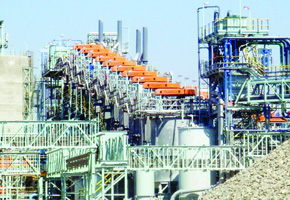
At that time South Africa was just coming out of the white apartheid minority regime, and Zimbabwe was still a member of the British Commonwealth.
The current democratic political dispensation and Zimbabwe’s exit from the Commonwealth plus a number of other social, economic and political developments have occurred since then, rendering some of the observations of the research obsolete.
However, most of the AfDB’s findings are as relevant to the region today as they were then, some 19 years ago. Although in Zimbabwe’s case, the 2007-09 massive economic meltdown and this year’s economic indigenisation policy as well as the land reform programme a few years before in the same decade created an altogether unpredictable scenario as far as the researchers were concerned.
Economic integration implies a situation in which goods and services, finances and technology can be exchanged between or among nations with much ease, that is without highly disabling tariffs or prohibitions.
It implies the use of a currency or currencies that are mutually acceptable to the nations concerned. It is accelerated and facilitated by a developed communication infrastructure such as a railway and road network, well serviced airways, waterways that are usable throughout the year, reliable telephonic and telegraphic services plus highly sophisticated modern electronic and electro-iconic communication systems, without excluding postal services.
Admittedly, some of these modern communication technologies are still to be introduced into some of the Southern African nations. In Sadc, the area effectively covered by the AfDB research, it is clear that the best means of communication are in the Southern African Custom Union (Sacu) region.
That area comprises South Africa, Lesotho, Swaziland and Namibia. These four nations are also closely integrated financially in what is called the Multilateral Monetary Area (MMA), a reference in fact to Sacu, formerly called Common Monetary Area.
The greatest advantage of this MMA (Sacu) region is that the national currencies of each member state (Swaziland, Lesotho, and Namibia) are converted more or less at par with the rand.
The region is, in effect, a rand-dominated economic bloc. Zimbabwe is presently to all practical purposes a part of the area in that one of the several currencies it uses is the rand. Although that is a result of the 2006-09 economic meltdown in the country, it came as the proverbial silver lining in a dark cloud.
If the Sadc economic integration programme is pursued to its logical conclusion, Zimbabwe will not have any macro-economic problems associated with the convertibility of its national currency since it has none.
It is in effect a de facto member of the Southern African MMA bloc. What it needs to do to secure its position and role is for its export sector to accumulate its earnings preferably in rand especially in view of the fact that its imports are from South Africa, particularly its consumer commodities.
This does not imply that Zimbabwe would be well advised to join the Sacu in view of that bloc’s agreement some of whose clauses are strongly pro-South Africa in economic developmental terms. That means that those clauses are prejudicial against the other Sacu member states.
It was for that reason that Botswana decided to withdraw its Sacu membership. The prejudicial clause empowered South Africa to stop Namibia from establishing a German motor vehicle assembly plant as that could have created a competitor to South African-based motor vehicle assembly businesses.
In the current economic circumstances, Zimbabwe’s export sector’s most significant performance is in mining, followed by tobacco production which is inevitably seasonal, a disadvantage.
Tourism and cotton sales also play a big role in the country’s national economy but have been adversely affected by worldwide recession and successive poor rainy seasons respectively. The cotton production sector has traditionally been feeding the textile industry whose major market has been Zambia since the mid-1950s.
With the coming in a big way of China’s synthetic and other textile products onto the Zimbabwean market and a number of other factors, the textile industry has been pushed very much down on the country’s export sector scale.
Mining is now undoubtedly Zimbabwe’s economic backbone. The country has about 50 types of minerals ranging from asbestos to zirconium. Prospecting and exploration is being carried out in some areas.
Whether or not adequate investment will follow and suitable technology will be accessible to exploit the finds is a matter of much interest and speculation.
However, suffice it to observe that Zimbabwe is one of the world’s major producers of coal, gold, chromium, diamonds and platinum. In fact, Zimbabwe, South Africa and some parts of the former Soviet Union are sitting on some 95 percent of world’s platinum reserves. The three have among them hold 94 percent of the world’s chromite and account for about 66 percent of that mineral’s global production.
We can rightly say, therefore, that the country’s economic development should be dependent on the mining industry. Poverty eradication must also be based primarily on the same industry, it being used as the motive power.
Whether or not success can be achieved through private ownership or nationalisation of that particular type of resource should be an issue of national debate
The opinion of the author of this article is that nationalisation can give maximum benefit to the largest number of people of Zimbabwe most (if not all) of the time.
That was what most freedom fighters sacrificed their very all for, in fact, and certainly not for the enrichment of a few well-placed individuals.
Regional economic integration could be facilitated and accelerated by the massive production of management personnel and massive production of minerals. That could lead to massive investment and massive employment, resulting in massive reduction of poverty, ignorance and disease.
l Saul Gwakuba Ndlovu is a retired Bulawayo-based journalist. He can be contacted on cell 0734328136 or through email [email protected]


 Online Reporter