Rutendo Nyeve, Sunday News Reporter
THE growing commercial trade in indigenous forest products such as mopane worms and wild fruits is raising questions about the sustainability of rural livelihoods, community benefits and the protection of natural resources, as Government moves in to tighten regulation of the sector.
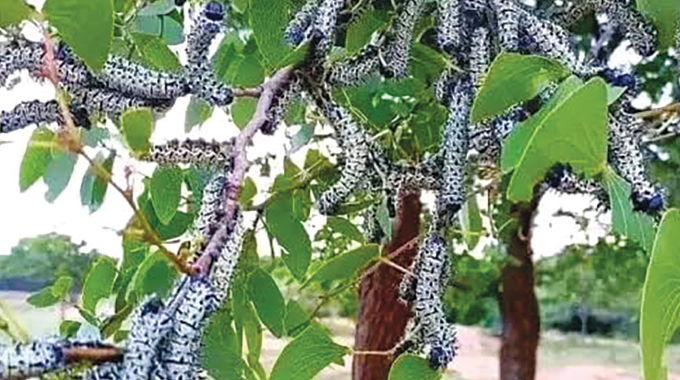
Across Zimbabwe, forest products have become an important source of income for many rural households, with seasonal harvesting of mopane worms, commonly known as macimbi or madora, and wild fruits such as mazhanje supporting informal trade networks that stretch from communal areas to urban markets.
However, the increasing commercial value of these resources has also brought pressure on communal woodlands, raising concerns about uncontrolled harvesting, environmental degradation and whether communities where the products originate are receiving a fair share of the economic benefits.
In the southern parts of the country, mopane worm harvesting has developed into a lucrative seasonal industry, providing income for harvesters, traders and processors. In the north, mazhanje harvesting similarly attracts people who travel to communal areas to collect the fruit for resale.
While the trade provides economic opportunities, concerns have emerged over the exploitation of forest resources without adequate regulation, particularly where harvesting is driven by commercial demand rather than household consumption.
The Ministry of Environment, Climate and Wildlife says unregulated commercial exploitation threatens indigenous and reserved species, degrades forests and woodlands and deprives local communities of long-term benefits.
The concerns have brought into focus the need to ensure that communities are not merely suppliers of raw forest products but also benefit meaningfully from the value generated through their commercialisation.
Government has now moved to enforce provisions of the Communal Land Forest Produce Act [Chapter 19:04], which allows inhabitants of communal lands to exploit forest produce for their own use but requires a written, paid-up licence for commercial exploitation in natural forests or State-controlled plantations.
Environment, Climate and Wildlife Minister, Dr Evelyn Ndlovu said individuals and businesses involved in collecting, commercially exploiting, manufacturing, processing or selling forest produce from communal land must comply with the law.
“I would like to notify the public that the Communal Land Forest Produce Act [Chapter 19:04] regulates the exploitation and use of forest produce from Communal Land
“Any person collecting, commercially exploiting, manufacturing, processing or selling forest produce from Communal Land without complying with sections 4 and 5 of the Act is in breach of the law and has thirty (30) days from the date of this notice to contact the Director-General of the Forestry Commission and regularise their operations as the Act requires. After this period, the law will be enforced in full against anyone who has not complied,” said Minister Ndlovu.
The move is part of the Zimbabwe Biodiversity Economy Initiative under the National Development Strategy 2 (NDS2), which seeks to promote sustainable utilisation of natural resources while ensuring that biodiversity contributes to economic development.
The challenge, however, is to ensure that regulation does not simply restrict access to resources on which rural households depend, but creates a framework that allows communities to participate in and benefit from a properly organised forest-products economy.
This includes strengthening community participation in resource management, promoting sustainable harvesting practices and ensuring transparency in the licensing and commercialisation processes.
The Forestry Commission is expected to play a central role in enforcing the legislation, while affected individuals and businesses have been directed to contact the commission to regularise their operations.