


 admin
admin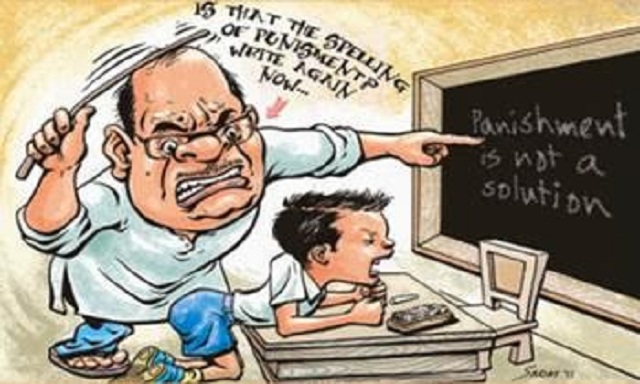

Vusumuzi Dube
OVER the past few years Matabeleland region’s education standards have continued to plummet, with the overall pass rates being among the lowest in the country.
A lot of reasons have been put forward regarding this continued dismal performance ranging from poor infrastructure in the region, lack of qualified teachers and resources to teach the pupils.
To add on to the whole melee, the region has recently been identified with unfortunate scourge of the infamous Vuzu Parties — parties organised by school-going children where they drink alcohol, take drugs and engage in a number of sex games.
Just a couple of months ago, police arrested 16 pupils from Milton High School, Townsend Girls High and Pace College after they were caught drinking beer and abusing dangerous drugs at Centenary Park.
They were all wearing school uniforms and were taken to Bulawayo Central Police Station for questioning.
In a bid to get to the bottom of the problems affecting the region’s educational performance, Sunday News tracked down renowned educationist and former Matabeleland regional education director Mr Stanley Hadebe, who expressed disappointment at the tumbling education standards in the region.
Mr Hadebe has also held a number of positions in the education sector including being in the advisory council of the former Ministry of Education, Sports, Arts and Culture, a Zimsec board member and Zimbabwe Open University board member, among a host of other positions.
The 82-year-old Mr Hadebe (SH), who retired in 1993 and is now a High Court assessor, tells Sunday News reporter Vusumuzi Dube (VD) that the solution is more complex than what most people assume and needs every stakeholder, including parents, to realise that they have a stake in reviving the education sector.
VD: A lot has been said about the plummeting education standards in the Matabeleland region and as a renowned educationist you have also expressed concern over this decline. In your view, what could be the possible solutions to solve this crisis?
SH: There is no simple solution to this issue because it is quite complex but my view is that it is an issue of leadership. By leadership I mean leadership within the family, the school, the Government and all the organisations that have to do with education. All these levels should now be honest enough to find out the root cause of the plummeting education standards in the region and their failure to achieve what they set out to do. That is within the family, the school and the Government.
The issue is not about playing the blame game or looking for excuses, this matter has to be faced head-on if there are to be any solutions at all. Looking for excuses is like taking an easy way out of this crisis.
At every level there is something which is being done, the schools should ensure that they utilise everything that is available to them to the best of their ability, in terms of human and material resources. Back in my days as director you would find schools that were not resourced as others but there would be passionate teachers, who would be knowing very well what they were employed to do.
All that the Government can do, on the other hand is effectively support the education sector, that is in terms of providing the required resources so that the officials on the ground can be given the necessary assistance for them to do their job, which in this case is teaching and producing results.
Further, Government can assist schools by running courses that will ensure the continued upgrading of teachers and the empowerment of school development committees. This can go a long way in addressing this crisis before us.
The parents on the other hand should stop thinking that the onus is with teachers and schools alone. This is wrong. The parents must ensure that they also do their part in supporting their children, giving them what is required at school and even ensuring that their children do everything that is required of them at school.
Still on parents, they should take a keen interest in education, constantly monitoring their children’s homework and not wait for consultation day to talk to teachers but to be always consulting on how best their children could be assisted.
Parents should also not pile their children with household chores leaving them no time to study because this could also heavily contribute to low pass rates.
VD: Looking back at the time you were at the helm of the region’s education sector, what is the difference between that period and now?
DH: Education will always remain as education, the role of the teacher will also never change. Simply, a teacher must teach.
That’s the centuries old role of a teacher. The parent also has a responsibility. To be frank, nothing really has changed. If we say there is a change it will only be someone looking for an excuse for these dismal results. Go back to the 1980s and you might even discover that conditions were worse. But truth be told, there is no difference at all; it’s all about people knowing their assigned duties and performing them to satisfaction. What is important though is that pupils should be disciplined such that they realise the importance of education. Maybe, when you look at it that could be the slightest difference where children these days have become more undisciplined.
VD: Sir, you talk of disciplining children. We now live in times when there has been the introduction of all sorts of laws. We now have the issue of illegalisation of corporal punishment. What is your take on this matter?
DH: Discipline is an important factor in education; discipline is an important part of life. At any point of life you have to be disciplined, even as a nation you have to be disciplined and once you overlook this issue of discipline then you start having all these problems which we are having in the region’s educational sector. Our children are currently undisciplined. That is a fact and one can safely say that our schools and parents are not playing their required role. Even the scriptures are clear that: spare the rod, spoil the child. In my view, there is nothing wrong with corporal punishment if it is administered in a way that will correct wayward behaviour and help build the character of the child. It should not be sadistic. A fact that we tend to ignore is that in real life if they commit a crime, they will be disciplined. So why do we have to be selective and say schools should just let pupils do as they will? Besides, why should we wait for the pupils to get to the stage of being arrested by the police? Why don’t we catch them early? So the Ndebele adage goes: isigogo sigoqwa sisemanzi.
It’s alright to talk of children’s rights but let us also talk of children’s responsibilities; each right has a responsibility. Right now the Matabeleland region is known for Vuzu parties, which is a very unfortunate development. It is an evil which cannot be allowed to go on unaddressed. As a community we must take full responsibility and nip this in the bud. We must take it as a matter of urgency.
VD: There has been the issue of non-Ndebele speaking teachers who are also alleged to be contributing to the low pass rate within the primary school level in the region. Do you share this thinking?
DH: That is a very sensitive subject. Admittedly, it is very important for children to be educated through their own language but what has to be accepted is that there are non-Ndebele speaking teachers who have been deployed in the region for a long time and quite a number of them have excelled within their schools. Some have even managed to become headmasters.
We must not create an impression that they are not welcome. They are Zimbabweans like everyone else and some of them are making a positive contribution to the education sector in the region. One thing that we should know is that if teachers are deployed at a school, it is the school head’s responsibility to deploy teachers to a field they can operate fully. Yes, ideally, they must be taught in their mother tongue but we must not blow this issue out of proportion.
This also goes to the issue of the deployment of non-qualified teachers within the school set up. It also has to be handled with great caution. During my time as a director, I also had that problem but some of them were given proper guidance and ended up performing better than the qualified teachers. I will give you an example of a degreed individual joining the teaching fraternity without going to teacher training college but that person could be an expert in Maths or Physics and even go on to produce good results. Why would you then want to get rid of that person? My plea, however, is that the teachers do not take advantage of this scenario and just teach to get a salary at the end of the month. This is a situation which can also be found with qualified teachers.
VD: As a parting shot, what is your advice regarding the revival of the education sector in Matabeleland?
DH: We must remind ourselves what education is all about, not only the academic aspect but the holistic picture inclusive of character. The parent, the teacher and the community must come together in promoting sound education. That is the only solution to this crisis we have. We cannot continue being the laughing stock in the country. There is no point in critisicing or pointing fingers. Each and every one of us has a responsibility. Even those of us who have retired have a responsibility in bringing up our children as disciplined individuals.
VD: Thank you for your time Dr Hadebe.
DH: You are welcome. Don’t forget that the onus is on each of us to revive the sector.



 derick.khumalo
 Online Reporter