Chronicle Editor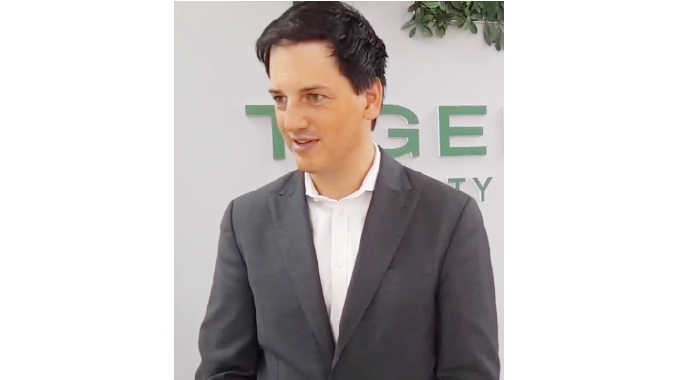
Judith Phiri, Business Reporter
AS the country continues to implement the Smart City concept, real estate sector players have said real estate investment trusts (REITs) can be utilised to acquire more funding for development.
A REIT is a company that own or finance income-producing real estate across a range of property sectors.
These real estate companies have to meet a number of requirements to qualify as REITs and most REITs trade on major stock exchanges, while they offer a number of benefits to investors.
In view of developing smart cities, the country has seen a number of places being transformed into digital and green energy smart cities.
The Smart City concept is expected to generate the much-needed investments expected to boost economic growth towards the targeted upper middle-income status by 2030.
In a recent interview, Terrace Africa managing director Mr Brett Abrahamse said as REITs play a critical role in any real estate, they could equally be utilised in the smart city concept.
“Zimbabwe has been actively pursuing the development and promotion of smart cities. To be able to raise more money and move forward in a quicker manner in the concept, the REIT model approach can be utilised. It has been successfully done on an international basis and we watch the space to see if the same can be implemented here,” he said.
Zimbabwe currently has one REIT listed being Tigere Property Fund REIT an affiliate of Terrace Africa Asset Management which was listed on the Zimbabwe Stock Exchange in December last year.

Mr Abrahamse said REITs will continue to contribute to investment growth in properties if real estate players come together to pull investors to create great assets within the country.
“l think we will see a lot more activity and REITs have that role to play in as a credible and regulated structure that allows investors to safely put their money in knowing that it will be targeted and invested in quality assets. REITs will therefore help drive this property sector forward in a very important way,” he added.
Looking at the real estate sector, he said Zimbabweans love properties and they have a historical affinity towards fixed assets.
Mr Abrahamse said this then allows the property sector to continue to performing exceptionally well.
“There are sub-sectors within the property market that will perform better than others. We are still seeing a shortage of housing and a need for people to own a home than rent.
“On the commercial side we are about to witness a strong uptake activity, being industrial warehousing as well as retail. We have just seen the start of it and l think in the next five to 10 years there are going to be cities that are going to be transformed by the amount of development that is about to come,” he said.
Meanwhile, the Government remains resolute in its quest to ensure availability of modern houses for the general populace in line with the national development agenda.
National Housing and Social Amenities Minister Daniel Garwe is on record stating that Zimbabwe was committed to enhancing social needs of its citizens that conforms with Sustainable Development Goals (SDGs).
He said efforts were underway to meet the housing backlog by providing at least 220 000 houses by the year 2025, insisting the country had surpassed half of the target.



 Online Reporter