admin
admin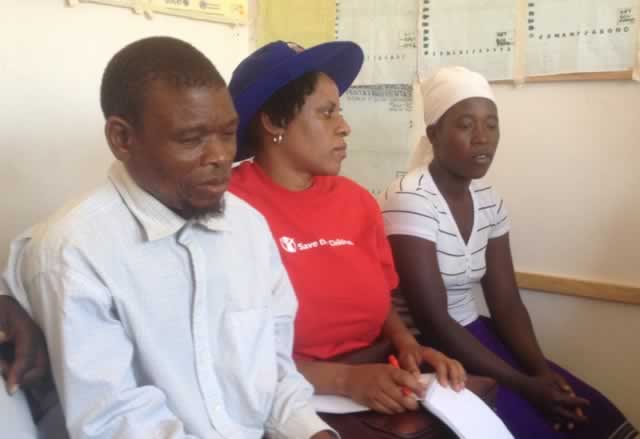

Christopher Farai Charamba Features writer
Religion plays a critical role in the lives of most people. Their thoughts, actions and behaviours are often influenced by a church doctrine and church leaders. Of religion, Karl Marx said “it is the opium of the people”, suggesting it helped people temporarily forget their earthly problems.
All religions follow a set of rules and guidelines. Pivotal to the monotheistic religions of Judaism and Christianity, for example, are the 10 Commandments which the Bible says were given to Moses by God.
The African Apostolic Church of Johanne Marange is no different. The followers of this church follow strict dictums for the spiritual betterment of the being. But what happens when these rules affect the physical health of a person or their family?
Portia Tavararirwa, a 22-year old mother of two from Machira Village in the Buhera District, left the Johanne Marange sect last year fearing her children would die after they had contracted cholera and her church had prohibited her from seeking medical treatment at a clinic.
“My children got very sick last year in October and I did not know what the problem was. I took them to the elders at my church and they prayed for them and gave them salt water but the situation did not improve.
“It is forbidden for a member of the Johanne Marange sect to go to hospital so I could not do so at the time. I had never been to a hospital before myself,” she said.
After her children’s health deteriorated further, Ms Tavararirwa’s husband advised her to go to the clinic to get help. Despite her fears of the church’s reaction, she took her husband’s advice and went to Mudawose Clinic in Ward 23, Buhera Central.
“At church anything to do with the clinic was taboo. We were not allowed to take pills because the church leaders argued we did not know what ingredients went into making those pills.
“At the clinic I was able to get a lot of assistance. They told me that my children had cholera and gave us the necessary treatment. From then on I started to receive general health advice from the village health workers at Mudawose clinic. I started to see and appreciate the importance of the clinic and going to hospital,” she said.
Portia’s case is not unique. In the village she comes from most people are members of the Johanne Marange sect and do not go to clinics or hospitals. Pregnant women deliver their babies at home and young children grow up without immunisation, leaving them exposed to various preventable diseases and infections.
Mudawose Clinic is part of the Save the Children and Community Working Group on Health project or Strengthening Community Participation in Health (SCPH).
The initiative is aimed at strengthening community engagement in monitoring of and advocacy for improved quality and outcomes of maternal, neonatal and child health services in 21 districts in Zimbabwe.
A core part of the SCPH is the Health Centre Committee (HCC) which comprises members of the local community including the village headman, the local counsellor, the clinic nurse, church elders, youth representatives and the volunteer village health workers.
Chairman of the Mudawose Clinic HCC Paul Chiduku said their work was aimed at getting the community involved in the affairs of their clinic. It was also to encourage people particularly pregnant women and those with young children to come to the clinic for medical assistance.
“Since this project started in 2013, there has been a remarkable improvement in terms of people coming to the clinic as well as services provided at the clinic.
“Our health literacy facilitators and community monitors in our HCC have been going out to the community not only to educate people on health matters but also to hear the concerns that people have,” he said.
Mr Chiduku added that one of the biggest successes of the project was educating members of the Apostolic Church who previously were averse to the idea of going to a clinic to seek medical attention.
“We have a lot of women who go to the Apostolic Church coming to the clinic now. Some of them come late at night because they do not want their husbands to know and we have told the nurses to make sure such women are assisted.”
Due to the fact that the Johanne Marange sect does not allow its members to go hospital, a lot of women are forced to deliver their children at home and are not be immunised.
This compromised both maternal and child health.
Counsellor Marina Matiza of Ward 23 in Buhera Central said before 2013 they had a problem of women not coming to give birth at the clinic. Once the HCC was formed, they found strategies to convince women to change their ways.
“We used incentives such as giving women free soap and other groceries if they came to register their pregnancies within the first 12 weeks, as they are supposed to. A big problem we face in this area is members of the Johanne Marange sect who are discouraged to come to the clinic. We have told the women that they should come even if they do so at night,” she said.
A former member of the Johanne Marange sect, Cllr Matiza recalled how she gave birth to twins at home in a makeshift shelter assisted by a traditional birth attendant.
“I was married to a Baptist of the 6th line in the Johanne Marange sect and therefore I could not go to hospital to deliver my children. In 1991 I gave birth to twins at home, the mbuya nyamukuta had no gloves or any other form of protection.
“When the children were born she used reed to cut the umbilical cord and then placed ash on the belly button in order for it to heal,” she explained.
Through the efforts of the SCPH there has however been a change in attitude towards health matters in the community.
Caroline Mhaka, a nurse at Mudawose Clinic, echoed the fact that before the SCPH there were not a lot of women coming to the clinic and a lot of women gave birth at home and that the children were not immunised.
“This area has a lot of pregnant women, in a month we can cater for 26 expecting mothers. Before the project started a lot of them would give birth at home, exposing the child and the mothers at risk.
“Since the project started there has been a marked improvement in women coming to deliver at the clinic and in children being immunised.
“Our problem now is that we are understaffed as we do not have a nurse aid or an environmental health technician. We also do not have a mother’s shelter but plans are being made through the HCC to build one to accommodate more women,” she said.
According to the Zimbabwe Multiple Indicator Cluster Survey 2014, the neonatal mortality rate for Manicaland Province where Buhera District is located was 26 deaths per 1000 live births while the infant mortality rate for the same province was 50 deaths per 1000 live births.
The work of the SCPH has been to reduce these mortality rates by ensuring that the community is aware of the various health concerns affecting mothers and children as well as by engaging the community to understand how to make their clinics better.
Information gathered through the HCC is used to lobby the relevant stakeholders such as the Ministry of Health to improve facilities at clinics to ensure that people receive the best possible health care.
Feedback: [email protected]



 Online Reporter