admin
admin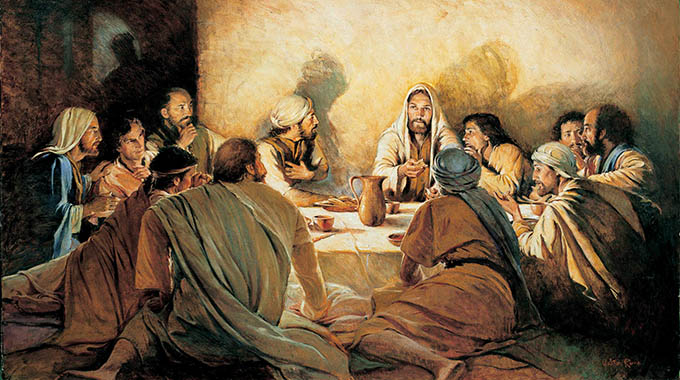
Pastor Lee Fore Faith Correspondent
While churches pray that the coronavirus pandemic will pass over quickly, that turnaround is certain.
Coronavirus has already wreaked havoc around the globe and if it does not end by Passover (with the holiday just weeks away) it is high time that the church continues to unite in prayer and fasting.
It is also important to take heed of all recommendations from the health departments and Government.
Coronavirus has been declared a global pandemic and the church cannot take risks.
As this modern day plague reaches biblical proportions, just as congregations assemble online, we can celebrate via video conference and any other means that do not flout the provisions of prescribed measures that can enable people to share the holiday safely and meaningfully.
When Moses bid Pharaoh to “let my people go,” it was with “a strong hand and an outstretched arm” that the Lord led the Hebrews out of bondage, the foundational miracle of our faith, the Exodus.
We have a miracle in our own time too, the miracle of technology.
So this year, if need be, we can spatially and socially distance our treasured annual gathering.
May it be God’s will that science leads us to the Promised Land post haste and that contingency plans like this one become unnecessary.
But if we cannot chat in the same room this year, may this chat room Passover not be so different from all other Passovers.
However, the well- known Easter, originally known as Passover in the Hebrew word Pasach, is referred to as the Passover Feast.
In the New Testament, Passover and Easter are tied together. Jesus enters Jerusalem and gathers his disciples to celebrate the Passover meal, memorialised by Christians as the Last Supper
It is mentioned in Exodus 12, that the feast was celebrated during the same week Jesus was crucified.
We will take a journey with you of what took place at the Passover Feast in Exodus 12 and relate it to the death of Jesus Christ and His resurrection in the New Testament.
Passover is the oldest and most important religious festival in Judaism, commemorating God’s deliverance of the Hebrews from slavery in Egypt and His creation of the Israelite people.
The festival of Passover begins at sunset on the 14th of Nisan (usually in March or April) and marks the beginning of a seven-day celebration which includes the Feast of Unleavened Bread.
The highlight of Passover is a communal meal, called the Seder (which means “order,” because of the fixed order of service), which is a time to rejoice and celebrate the deliverance for the Hebrews that God accomplished through the exodus.
There are some who argue that Passover and Easter are not the same thing.
They regard Easter as a pagan holiday, despite its significance. Many of the traditions and symbols that play a key role in Easter observances actually have roots in pagan celebrations, particularly the pagan goddess Eostre (or Ostara), the ancient Germanic goddess of spring.
The symbolism of Passover, this is the seder plate, and each food is symbolic for an aspect of Passover: A roasted shank bone represents the Pescah sacrifice, an egg represents spring and the circle of life, bitter herbs represent the bitterness of slavery, haroset (an applesauce-like mixture with wine, nuts, apples, etc.
There are many questions about Passover being the same as the last supper?
However, while the Synoptic Gospels present the Last Supper as a Passover meal, the Gospel of John makes no explicit mention that the Last Supper was a Passover meal and presents the official Jewish Passover feast as beginning in the evening a few hours after the death of Jesus.
The Jewish people have celebrated the Passover feast for hundreds of years to commemorate the night the angel of death passed over them during the tenth plague God inflicted upon the Egyptians.
On that night, the Jews were instructed to paint the blood of a lamb on their door-posts; as a result, the first-born of their children and livestock were spared.
This show of God’s great power brought about the Israelites’ freedom from slavery in Egypt.
God commanded His people to observe the Passover each year to remember the miracle of the night and to pass along the story of God’s protection to their children (Exodus 12:25-27).
In addition to Passover being a look back at God’s provision, it was also a foreshadowing of the provision to come: God sending His perfect sacrificial lamb, Jesus, to atone for our sins and save us from eternal death.
Although there are many Jews who do not believe this atonement has taken place, Christians around the world acknowledge Jesus’ death on the cross that allowed God’s judgment to “pass over” us.
It is for this reason that today Passover is celebrated by Jews and Christians alike.
Brethrens, as we pray and fast for normalcy since coronavirus pandemic has changed our way of doing things as a church, lets hold on to our faith.
This is only for a season, and let us continue to abide to the provisions of health recommendations, and travel advisory.
In context, “let us be in our homes thus our Goshen with our families, as the angel of death roam around you will be spared”.
Let church be the church during Passover with Covid 19.
Pastor Lee Fore is a religious commentator and is contactable on +263 773 469 191 or +263 712 314 734. [email protected]



 Online Reporter