admin
admin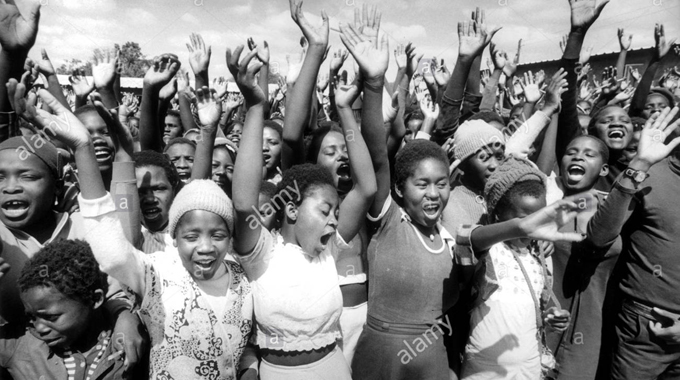

Garikai Mazara
Forty years ago, this past month-end, the majority of blacks went to the polls, on a one-man one-vote basis, for the first time since settlers set up the Southern Rhodesia colony in 1890.
Expectedly, the atmosphere around the country was palpable, not so much for the first-time voting experience, but for the end to the almost two-decade war that had all but brought life to a standstill in and around the country.
Ian Smith’s declaration of independence from the British Crown on November 11, 1965 set the tone for the Second Chimurenga, of which the nationalists reasoned that nothing but armed combat will bring majority rule to the country.
After a protracted war, which claimed lives in equal measure from both sides, a negotiated settlement seemed the only option out. With the 1976 Geneva Conference inconclusive, the nationalists were to meet Smith again at Lancaster House for another round of talks in 1979.
The ceasefire, signed on December 21, finally brought an end to the 15-year armed conflict. However, the journey between ceasefire and independence was not rosy, as Josiah Magama Tongogara was to die on December 26 as he was driving from Maputo to Chimoio to break the news of the newly signed ceasefire agreement.
Nonetheless, by January 6 – the official deadline for disengagement – about 18 500 guerillas had converged at the 16 selected assembly points countrywide for demobilisation.
Then on January 13 1980, Joshua Nkomo, the leader of the Zimbabwe African People’s Union, was to arrive back in Harare, after three years in exile, to a roaring crowd estimated to have numbered between 100 000 and 150 000.
The campaign period for the ensuing elections had begun.
A fortnight later, on January 27, Robert Mugabe, leader of the Zimbabwe African National Union, was to arrive as well in Harare, after almost five years in exile, to another thunderous crowd.
He was to address a crowd estimated to be around 200 000 at Highfield’s Zimbabwe Grounds. As fate would have it, 37 years later, when he was forced to resign, crowds of a similar nature were to converge at the same venue, this time agitating for his stepping down.
As part of the Lancaster House agreement, the first majority vote in Zimbabwe was to be split into two rolls, one reserved for whites (20 seats) and the other for the blacks (80 seats). The white roll offered little or no excitement as 12 of the seats went to the February 14 poll unopposed, on Smith’s Rhodesian Front ticket.
It was the black roll, known as the common roll, that had global attention, with Nkomo’s party fighting it out with Mugabe’s Zanu. The polling for the common roll took place over three days, running from February 27 through to 29.
In the end, Zanu triumphed with 57 seats, Nkomo’s 20 and Abel Muzorewa’s United African National Council polling three. The previous year, 1979, Muzorewa had formed a short-lived Zimbabwe-Rhodesia government of national unity with Smith, having held sham elections in mid-year.
But they are the last three days of February 1980, that is Wednesday, Thursday and Friday, that still remain etched in the memory of many who were exercising their right to vote for the first time.
With Senate votes taking place almost three weeks later, on March 19, there have been questions on how and why April 18 was chosen as Independence Day: what was the significance of April 18, who chose April 18?
For feedback: [email protected]


 Online Reporter