Online Reporter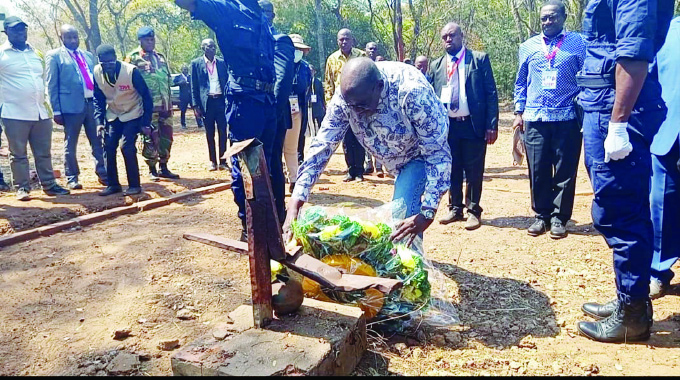
The recent visit by Vice-President Kembo Mohadi to a former ZPRA training camp at Boma, near the town of Luso in Angola where Rhodesian forces launched a devastating aerial attack on 24 February 1979, killing approximately 300 trained and newly arrived recruits brought mixed emotions to the survivors of that tragic event. For many, the visit stirred painful memories of comrades who perished in the assault. Yet, it also offered a sense of recognition and closure, as the Government formally acknowledged both the sacrifices made by the fallen and the resilience of those who lived through the onslaught.
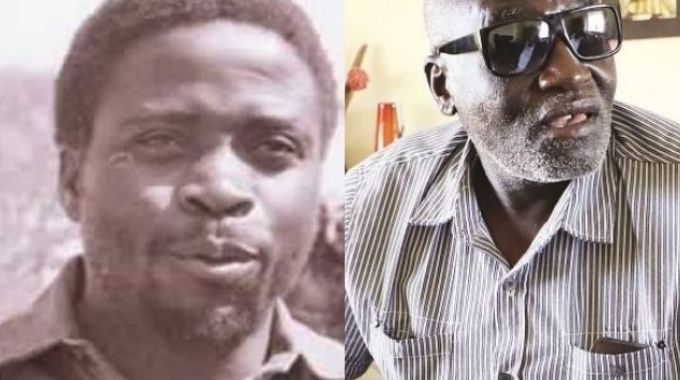
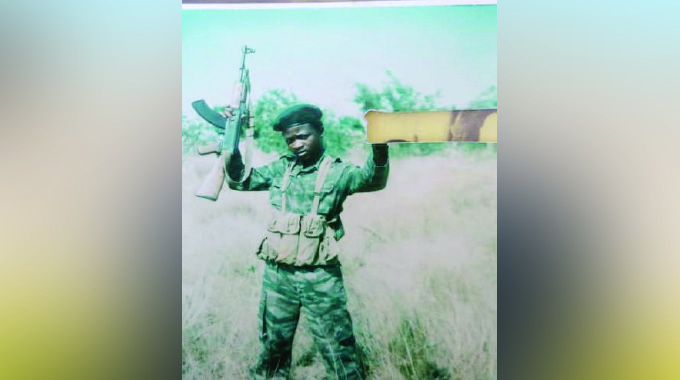
One such survivor is Cde Charles Makhuya, whose pseudonym was Cde Njabulo Moyo. Then only 18 years old, he served as an instructor at the Boma camp alongside now Zanu-PF Bulawayo Provincial Chairman, Cde Jabulani Sibanda, Kenias Ndebele, Lion Maqeda among others under a team of Cuban instructors and Soviet advisors. Tragically, two Cuban instructors were among those killed in the 1979 attack. Last Thursday, our Assistant Editor, Mkhululi Sibanda (MS), caught up with Cde Makhuya, who offered a deeply personal and historical account of the Boma attack, the broader geopolitical dynamics at play, and his own journey in the liberation struggle.
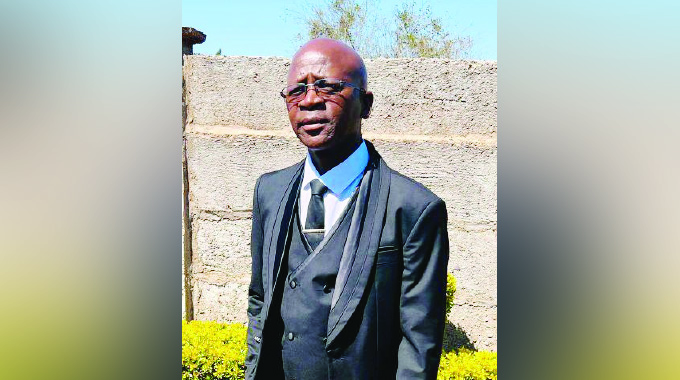
Reflecting on the 1979 assault, Cde Makhuya placed it within a regional context, noting that the Boma attack was part of a broader, coordinated offensive by colonial Rhodesian and apartheid forces of South Africa targeting liberation movements operating from the Angolan soil.
He pointed out that the Boma attack came less than a year after the apartheid South African forces conducted a similar aerial raid on 4 May 1978, parachuting troops into Kassinga, a SWAPO base in Angola. That massacre claimed the lives of around 600 people, including women, children, and the elderly. Kassinga, a former mining town about 300km from the Namibian border, had become a crucial transit and refugee camp for SWAPO fighters and civilians.
As is customary in our coverage of liberation war veterans, our interview with Cde Makhuya began with him recounting how he joined the armed struggle. Below are excerpts from the interview. Read on…
MS: Cde Makhuya, may we start by having you give us your brief background? Who is Charles Makhuya?
Cde Makhuya: I was born on 17 August 1960 at a place called Mhlotshana in Mangwe District, Matabeleland South Province. My father, Andrew Makhuya, was a teacher at Catholic-run schools in the district. Later, he was transferred to St Bernard’s School in Bulawayo’s Pumula suburb, and that meant moving the family including my mother, Eva Malaba Ncube from our rural home to settle in the city. I enrolled at St Bernard’s for my Sub-A in 1968. The following year, in 1969, the education system transitioned to the Grade system, and I went back to Grade One, which had replaced Sub-A. At school, I was one of the boys fond of playing a physical game called the German Cut, which I believe sharpened my militancy. We also had politically conscious teachers like Dr Temba Ndlovu, the former principal of Hillside Teachers College. That exposure gave us an appetite for politics. One day in 1973, our headmaster, Mr L C Sidambe, addressed the assembly and told us to inform our parents that the war between America and Vietnam had ended. That sparked our curiosity about what was happening in the world. At the same time, it planted the idea in us that we, too, could become soldiers like those people in Vietnam.
MS: That is interesting. So you were now developing into a political activist?
Cde Makhuya: Yes, I would say that. In 1974, I was in Grade 7, but my grades were poor, so I repeated the following year. In 1976, I was supposed to start Form One, but because I was already thinking about joining the war, I resisted going back to formal school. Instead, I opted to study through correspondence, which was also quite popular at the time. However, my father, being a teacher, was very disappointed in me. While living in Bulawayo, we were receiving information from our relatives based at our rural home that freedom fighters were being seen in the area. That increased my desire to leave the country and join the liberation struggle. So, I made a plan to visit our rural home during the Easter holidays in 1976, intending to use the opportunity to cross into Botswana, and from there proceed to Zambia. However, I failed to reach the village that year. The following year, in 1977, I finally travelled to our rural home with my elder brother, Bernard again during Easter, but my brother was not thinking about joining the armed struggle.
MS: When you finally reached home, what did you do?
Cde Makhuya: I teamed up with two local boys: Twoboy Nyathi and Teni Sibanda, the latter is sadly now late. We made a plan to leave for Botswana. On the day we were supposed to attend mass at Empandeni Mission, we deliberately delayed, telling others we would catch up later. When the coast was clear, I grabbed a chicken and slaughtered it. The others did the same at their homes. We cooked isitshwala to carry with us for the journey ahead. Initially, we headed in the direction of Empandeni Mission, then detoured toward Embakwe Mission, deliberately avoiding Madabe Camp where we feared detection. We left home at around 9am and reached villages near the border after 4 pm. Twoboy had relatives in that area, and that’s where we spent the night. When Twoboy’s aunt asked what we were doing there, we lied and said we had been attending church at Embakwe and would return home the next day. She didn’t seem convinced. That evening, we overheard her telling Twoboy’s uncle that he should wake us up early in the morning and take us back home. We knew we had to act quickly.
MS: You may go on…
Cde Makhuya: Around 2 am, we quietly slipped out of our blankets and stealthily left the yard. We circled the homestead and jumped into a nearby field. We climbed up a tree and waited for the first light. Later in the morning, we saw the aunt and uncle searching for us. They were trying to track our footprints and they were getting close. But we managed to throw them off and pressed on toward the Botswana border. By then, it was daybreak. As we approached the border, we met a man who warned us that Rhodesian soldiers had recently been spotted nearby. We proceeded with caution and, thankfully, managed to cross the border safely, bidding Rhodesia goodbye.
MS: At that age, were you fully aware of what you were doing?
Cde Makhuya: That’s an interesting question. To be honest, when people asked where we were going, we would say, ‘We are going to Geneva.’ At the time, Geneva was a buzzword. Our nationalist leaders from ZAPU and ZANU and their adversaries from the Rhodesian government, led by Ian Smith, had attended the Geneva Conference in December 1976 to try to negotiate a political settlement for Zimbabwe. We didn’t know much about the world beyond our borders, so to us, Geneva represented freedom. Among the three of us, I was the oldest, just 16 years old.
MS: At that point, you had crossed into Botswana. What was your next move?
Cde Makhuya: We were directed to walk towards Tsetsebe, where we could find transport to Francistown. While walking, we encountered another uncle of Twoboy, who was returning from shopping in Botswana. Crossing the border for shopping without documents was common in that area, and still is today. When the uncle recognised us, he tried to force us to return home. He was riding a scotch-cart. But we had made up our minds and when he became insistent, we took off running. We were not going back.
To be continued next week with Cde Makhuya talking about his stay in Botswana and later on Zambia before being selected to undergo military training at Boma.