Online Reporter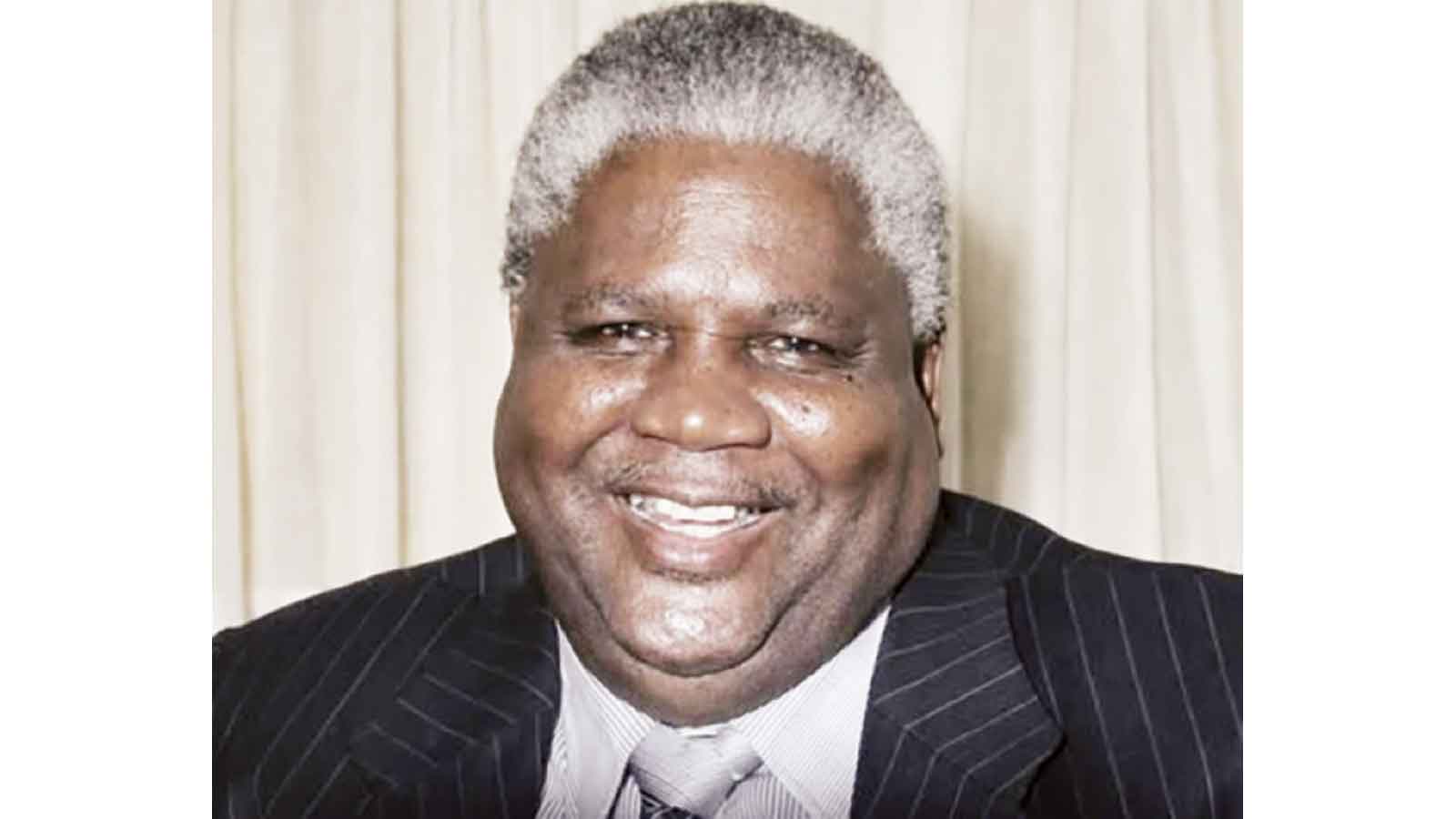
Gibson Mhaka
Zimpapers Politics Hub
AS Zimbabwe pauses tomorrow to mark the 27th anniversary of the passing of one of its founding fathers, former Vice President Dr Joshua Mqabuko Nyongolo Nkomo, the nation does so not only in sombre reflection, but also in the midst of a tangible socio-economic renaissance.
Dr Nkomo, fondly remembered across generations as “Father Zimbabwe” and “Umdala Wethu”, died on July 1, 1999, at the age of 82 after battling prostate cancer.
Twenty-seven years after his departure, he remains an enduring icon of Zimbabwe’s liberation struggle.
His memory lives on, deeply etched into the hearts of many across the country’s generational divide.
Yet this year’s commemorations carry a uniquely triumphant weight. The milestone comes hot on the heels of the recent Independence Day celebrations, held in Matobo District, Matabeleland South province, for the very first time.
By decentralising this major national event to Maphisa, the ancestral homeland of Father Zimbabwe, the Second Republic, led by President Mnangagwa, executed what many have described as a profound “homecoming” for the late nationalist.
This was not merely a symbolic gesture of regional rotation; it was a vivid and structural manifestation of Dr Nkomo’s lifelong advocacy for national unity, reconciliation, devolution, and equitable development.
By bringing national events and transformative infrastructure to previously marginalised communities, the Government effectively demonstrated its guiding philosophy of “leaving no one and no place behind.”
Materialisation of a radical vision
For decades, the legacy of Dr Nkomo existed largely in history textbooks, political speeches, and oral memory.
He was the legendary Chibwechitedza, the slippery rock, the glue that held together diverse liberation movements and the statesman who consistently prioritised national peace over personal political ambition.
His role as a unifier was decisively cemented through the 1987 Unity Accord, a historic political settlement that ended internal conflict and birthed a unified ZANU PF political arrangement.
By choosing reconciliation over division, Dr Nkomo earned his enduring title as the “Father of the Nation,” ensuring that the fruits of independence reached every corner of the country regardless of tribe, language, or region.
What unfolded in his rural homeland this year, therefore, went beyond ceremonial remembrance.
It became a political and developmental statement, one that intertwined memory with policy, heritage with infrastructure and symbolism with the lived realities of communities long excluded from the centre of national decision-making.
At the centre of the commemorations was a powerful convergence of themes that defined Dr Nkomo’s life: national unity, reconciliation, devolution and inclusive development.
The decision to decentralise Independence commemorations and associated legacy projects to Matabeleland South was widely interpreted as a practical expression of the Second Republic’s “leaving no one and no place behind” philosophy.
From remembrance to development geography
Dr Nkomo remains one of the towering figures of Zimbabwe’s liberation history. A strategist of unity and a champion of negotiated nationhood, he was not only a military and political actor, but also a philosophical voice for reconciliation in a deeply divided post-colonial landscape.
His burial at the National Heroes Acre, where thousands gathered alongside regional and international leaders, cemented his status as a foundational architect of Zimbabwe’s independence.
Yet 27 years on, his legacy is increasingly measured not only in historical terms, but in the extent to which contemporary governance structures reflect his ideals.
The choice of Maphisa as the focal point of this year’s commemorations is, therefore, significant.
It symbolises a deliberate shift from centralised remembrance to community-embedded heritage, where national history is not only narrated in capital cities, but experienced in the very communities that shaped it.
A family voice anchoring national memory
In an interview ahead of the commemorations, Dr Nkomo’s eldest daughter, Mrs Thandiwe Nkomo-Ibrahim, offered a deeply personal yet nationally resonant reflection on her father’s enduring ideals.
“The Joshua Nkomo National Foundation is going to hold a prayer session and church service, as we usually do every year, where close friends are invited. It will be a small gathering centred on prayer and remembrance,” she said.
She added that the commemorations were not confined to ritual remembrance, but were structured as a living educational platform.
“It is a day when people who knew him come together to remember him, share memories, socialise and tour the museum as they reflect on who he was and what he stood for.”
More significantly, she highlighted the intergenerational purpose of the commemorations, noting that a public lecture scheduled for July 4 would focus on youth leadership and political participation.
Unity, inclusion, and the unfinished project of nation-building
Mrs Nkomo-Ibrahim situated her father’s legacy within a broader philosophical framework of unity and inclusion.
“The values of Ubuntu, unity, freedom, justice and inclusive leadership are what defined him,” she said.
“He believed in bringing together all tribes, all races and all Zimbabweans regardless of background.”
Her remarks resonate strongly with Dr Nkomo’s historical role as a unifier, most notably through the 1987 Unity Accord, which ended internal political conflict and reconfigured Zimbabwe’s political landscape into a more stable governing arrangement.
“He believed that a united Zimbabwe was stronger than a divided Zimbabwe,” she added.
“His vision was never about exclusion but about bringing everyone together to build one nation.”
In contemporary policy terms, this philosophy aligns closely with the Government’s devolution agenda and rural development thrust, both aimed at redistributing economic activity and governance structures away from Harare-centric concentration.
Institutionalising legacy: From memory to systems
The Joshua Nkomo National Foundation has moved to translate legacy into institutional frameworks.
Among its flagship proposals is the establishment of a national leadership centre designed to train future leaders in ethical governance, inclusivity and developmental thinking rooted in Nkomo’s philosophy.
“We want to build a lasting memorial—a leadership centre where the values of the old man will be taught.
“We are also looking at partnering with Lupane State University and other international universities so that his philosophy of leadership becomes part of academic learning,” said Mrs Nkomo-Ibrahim.
This initiative reflects a broader continental trend in which liberation histories are being formalised into academic and leadership curricula, ensuring that foundational political philosophies are preserved beyond symbolic commemoration.
The voice of the brother: lived memory and rural transformation
If the daughter’s perspective grounds Dr Nkomo’s legacy in institutional continuity, his surviving brother, Mr Edward Ginqusaba Nkomo, provides a more visceral articulation of its impact on community transformation.
Speaking ahead of the Independence Day commemorations in April, he expressed gratitude to the Government for what he described as the “breathing of life” into the late nationalist’s vision through tangible rural development projects.
“The family is profoundly grateful for this symbolic and practical gesture by the President.
“It is a clear demonstration of the Second Republic’s commitment to honouring our national heroes not just with words, but with tangible development,” he said.
He further highlighted the significance of decentralising Independence celebrations to Maphisa.
“We believe in collective empowerment—not just for the family, but for all the people of Matobo and the province at large,” he said.
“By bringing these projects and this national milestone to our doorstep, the President has shown that no place and no person is being left behind.”
From ideology to infrastructure: living monuments of a nationalist vision
Central to this year’s commemorations are two landmark projects nearing completion, the Nyongolo Guesthouse at the ancestral homestead and the Joshua Mqabuko Nkomo Vocational Training Centre.
Mr Nkomo described the guest house as a symbolic restoration of heritage.
“The building of the Nyongolo Guesthouse is a great symbolic gesture for the Nyongolo family,” he said.
“I am sure my brother Joshua would have been proud to see his father’s old homestead revived.”
He further linked the vocational training centre to Dr Nkomo’s long-standing advocacy for rural industrialisation and skills development.
This emphasis on skills development echoes Dr Nkomo’s earlier writings, including his 1980 vision articulated in A New Zimbabwe, which called for self-reliance and grassroots empowerment.
A national philosophy reaffirmed
The relocation of Independence commemorations to Maphisa has been widely interpreted as a reaffirmation of devolution and rural development policy.
It reflects an emerging governance philosophy in which national identity is constructed not only through urban institutions, but through equitable development across all regions.
This symbolism was reinforced when President Mnangagwa planted a Natal Mahogany tree at Mahetshe Primary School in honour of Dr Nkomo, describing him as a son of the soil whose life was deeply rooted in the struggle for independence.
Memory as policy direction
As Zimbabwe reflects on 27 years since the passing of Father Zimbabwe, the commemorations in Maphisa suggest a deliberate effort to transform remembrance into developmental practice.
What emerges is not merely nostalgia for a liberation icon, but a structured attempt to align national development with the ideological foundations he espoused: unity over division, inclusion over marginalisation, and development that reaches the furthest corners of the nation.
In this sense, Dr Nkomo’s legacy is no longer confined to statues, memorials, or annual ceremonies.
It is increasingly being inscribed into infrastructure, education systems, and governance frameworks—an evolving monument built not of stone, but of policy, practice, and people-centred development.