Online Reporter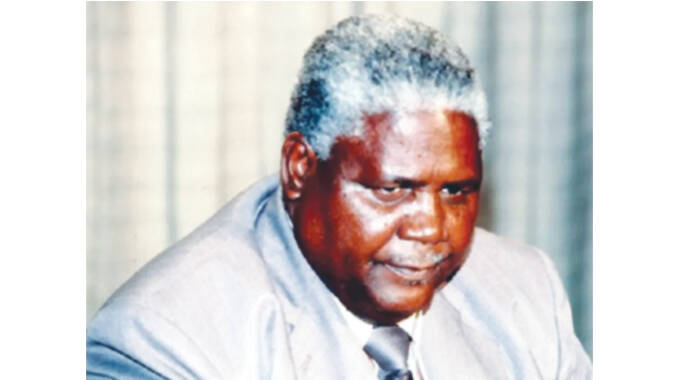
Sifelani Tsiko
Fact Check Editor
ZIMBABWEAN heroes at various stages of both Chimurenga/ Umvukela 1 and 2 will be best remembered for delivering incredibly powerful speeches, historical writings and publications that rallied the black majority under a relentless white Rhodesian minority onslaught.
A number of the heroes had mastery of speech-making and clearly understood the power of words during the protracted armed struggle for the liberation of Zimbabwe. On various occasions, both inside and outside Zimbabwe, they made landmark speeches, historical writings and books that showcased the climax of their oratory prowess.
The liberation struggle in all its forms, also illuminated the country’s greatest political minds and most remarkable characters through words.
The words and messages from Zimbabwe’s heroes rallied the people against the tyranny of the white settler Rhodesian regime, steeling them for the raids, invasion during the blitz and the battle to free Zimbabwe. Their tenacity inspired the black majority to push for final victory in 1980. Much has been written about Zimbabwean heroes and their well-publicised quotes. In this report, Check Point culls quotes from various sources to capture the words that animated the masses to conduct themselves with fortitude, resourcefulness and grim gaiety in the struggle for Zimbabwe.
Literary art — through speeches, historical writings and publication proved to be a most formidable engine of war. Our heroes’ splendour of language had the power to release great energies to mobilise the masses and push for the final road to independence in 1980. The messages illuminated the vision and aspirations of the people, disillusionment and frustration over the repressive white settler regime system.
Veteran nationalist and eminent Zimbabwe revolutionary Dr Joshua Nkomo is among many of our heroes that will be remembered for their powerful and enduring quotes.
“We set ourselves on a course to fight a wrong, and bring about a new order, where a person’s skin colour was treated as the accident that it was, and not a passport to fuller life,” Dr Joshua Nkomo said at Gonakudzingwa Detention Camp in 1964.
“Without all this suffering, imprisonment and torture, we would not have got where we are. They were profitable years in that the people who detained us believed they could kill the spirit of nationalism. It did not turn out that way. In spite of the spirit being dampened, it was sharpened. These people were too stubborn to listen and so without our detention and liberation struggle, we would not be having our long overdue independence.” — Dr Joshua Nkomo
“I could go into the whole theories of discrimination in legislation, in residency, in economic opportunities, in education. I could go into that, but I will restrict myself to the question of land because I think this is very basic. To us the essence of exploitation, the essence of white domination, is domination over land. That is the real issue.” — Herbert Chitepo, Chairman of the Zimbabwe African National Union (ZANU), speech on a trip to Australia in 1973.
“We do not want to create a socio-legal order in the country in which people are petrified, in which people go to bed having barricaded their doors and their windows because someone belonging to the special branch of the police will break into their houses….This is what we have been fighting against…This is why we are in this revolution for as long as it is necessary, to abolish this system.” — Edson Zvobgo.
“Colonialism is violence…violence on a people. The only way of meeting violence is by adopting a rigid policy of violence,” Eddison Zvobgo, a founder member of ZANU when the slogan of ‘confrontation’ was adopted by the first ZANU Congress held in Gwelo from May 21-23, 1964
“What some of us are fighting for is to see that this oppressive system is crushed. We don’t care whether, I don’t even care whether I will be part of the top echelon in the ruling, I’m not worried but I’m dying to see a change in the system, that’s all, that’s all. I would like to see the young people enjoying together, black, white, enjoying together. In a new Zimbabwe, that’s all…” Josiah Magama Tongogara, ZANLA commander.
“If we have no power in our hands to liberate ourselves, then we must disband. We are the people who must die for this country. We are our own liberators,” — declared Ndabaningi Sithole at the 1964 Gwelo Congress of the Zimbabwe African National Union (ZANU).
“It should be remembered that Africa is not exclusively European, nor is it wholly African. It is essentially multi-racial. That is, it has Africans, Europeans, Asiatics and Eurafricans. The cry is no longer, ‘Africa for Africans,’ or, ‘Africa for Europeans,’ but ‘Africa for all races living there’. This is the correct attitude that will help a long way in the solving of our present inter-racial problems.” – Ndabaningi Sithole – in the book Ndabaningi Sithole, Garfield Todd and the Dadaya school strike of 1947.
“We have fought for our land, we have fought for our sovereignty, small as we are, we have won our independence and we are prepared to shed our blood… So, Blair keep your England, and let me keep my Zimbabwe. – Robert Mugabe’s speech at the Earth Summit in Johannesburg, September 2, 2002.