Online Reporter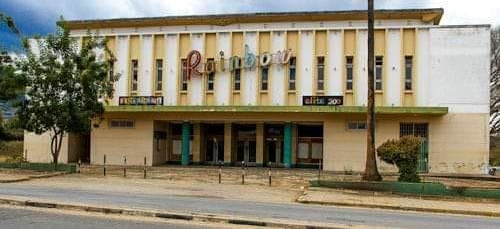
Liberty Dube
Entertainment Correspondent
A FEW years ago, the building was renovated and converted into the new Mutare High Court.
The same walls that once echoed with cinematic soundtracks now hold the solemn voices of judges and lawyers.
Where popcorn was once passed from hand to hand, case files are now stacked neatly.
Justice is sought where joy once danced.
Welcome to Rainbow Vistarama movie house.
On cool evenings in Mutare, when the mountains held the last blush of the sun and the streets softened into gold and violet, there stood a building that glowed with promise.
It was known as the Rainbow Cinema, which was a wide-screen wonder that opened its arms to the city’s dreamers.
Today, it is the Mutare High Court, a place where justice speaks in measured tones. But once, long before the echo of legal arguments filled its halls, laughter and music lived there. It was an oasis of entertainment.
It was where hearts met.
It was where weekends found meaning.
In the 1990s and early 2000s, the Vistarama was a place to be, during weekend and even in the middle of the week when life felt heavy and people longed for light. There were a few mobile phones glowing in palms and there were no buzzing notifications to disturb.
People looked at each other. They spoke. They laughed without distraction. The cinema stood proudly in the heart of the city, drawing families from sprawling suburbs such as Dangamvura, Sakubva and Chikanga as well as other leafy suburbs alike.
Most would walk to the cinema, shoes tapping gently against the pavement, jackets pulled close in winter, excitement warming their steps.
By mid-afternoon, the ticket booth would be alive. The aroma of buttered popcorn floated sweetly in the air, sold at a good price that even a student could afford.
For many lovers, especially young couples, Vistarama was the beginning of a story.
Mary Chirozva still smiles when she speaks of those days.
“We would go for a 12-noon to 3pm movie. You would plan the whole week around it. Bath early, wear your best dress, spray a little perfume. When the lights went off and the screen lit up, it felt like the world had opened just for us,” she said.
The place would be packed to the brim, especially when new movies were premièred.
Talk of action films, romances and comedies. When a blockbuster arrived, the excitement would ripple through the city days before.
Said Blessing Mhlanga, from Greenside: “I remember watching these other movies and the movie house was jam packed and others would sit on the floors. We just wanted to watch the film. The sound would boom across the room, and the wide screen made everything feel real. For two hours, we were inside another world.”
Inside that dark room, beneath the humming projector, time slowed. The cinema was dark, yes, but it was never frightening. It was dark and colourful, glowing with stories from distant lands.
The booming speakers carried explosions, love songs and whispered confessions. Sometimes, a whole row would gasp at once. Sometimes, applause would break out at the end of a powerful scene.
The city and the ghettos were largely violent-free then, at least in the memories of those who filled those red-cushioned seats.
The disturbing issues of drug and substance abuse, which is no doubt a national concern now, were not the shadow they later became. Suicide-related deaths were few. Mental health issues were few. There was a lightness in the air and a sense that tomorrow would be kind.
An emotional Leon Dube, who grew up in Sakubva, said the cinema gave young people something precious.
“We did not have much, but we had Vistarama. Instead of roaming the streets, we saved coins for a ticket. It kept us busy. It kept us dreaming.
“We learnt about love, courage, even fashion from those films. I am actually proud to say, the person I went with to the cinema as a girlfriend is now my wife and a proud mother of four,” he said.
Families came too. Mothers with neatly braided hair, fathers in pressed shirts, children clutching coins for popcorn. Some parents would pretend not to cry during emotional scenes (Remember movies like “Neria” and “Titanic”). Children would fall asleep on their mothers’ laps as the credits rolled. Outside, the cool Mutare night would welcome them home.
For some, just like Dube, the cinema held even deeper memories.
“My husband proposed to me after a movie there. We were still young. We walked out laughing, and he just stopped under the streetlight, and said he could not imagine watching life without me. That building is part of our love story,” said Blessing.
She recalled: “We would go to the movie house after some cozy lunch at Stax Restaurant, which was housed in OK Arcade. Then it was one of the cosiest restaurants in Mutare.”
Others ran to it for different reasons. A few youths, misunderstood at home, would slip away and find comfort in the darkened hall. For a couple of hours, they could forget harsh words or strict rules. The cinema did not ask questions. It simply opened its doors.
Weekends were electric. By late afternoon, the pavement outside buzzed with chatter. Friends debated which movie to watch. Couples negotiated show times. The 12-noon to 2.30pm and the 3pm to 5pm shows were popular.
Residents have often reminisced about this iconic entertainment spot, calling those years “the good old days.” Not because life was perfect, but because it felt connected. People gathered. They shared space and they shared emotions.
Then, as years passed, the curtains fell for the final time.
Yet, if you stand quietly outside the Mutare High Court at dusk, when the mountains blush just as they did decades ago, you might almost hear the faint laughter, the rustle of popcorn bags, the hum of anticipation before a film begins.
The Vistarama, the old Rainbow Cinema, may no longer show movies. But in the hearts of Mutareans, its screen still glows. It remains a symbol of a gentler time of sweet young love, of families walking home under starlight, of friendships sealed in shared wonder.
Yes, around that time, there were other forms of entertainment such as Eldorado (Payeyo) at Mutare Showgrounds, Bulldogs, Spurs, Wimpy, Burger Bar, Cannibal Inn, Matimba and Piki Business Centre (Zimunya). Others, especially soccer fanatics, would go to Sakubva Stadium to watch Tanganda FC playing.
Yes, buildings change, names change and purposes change and although the screen has gone dark and the reels no longer spin, the light of Vistarama still flickers in the soul of Mutare, a timeless glow that no renovation, no verdict, and no passing years can ever dim.