Chronicle Editor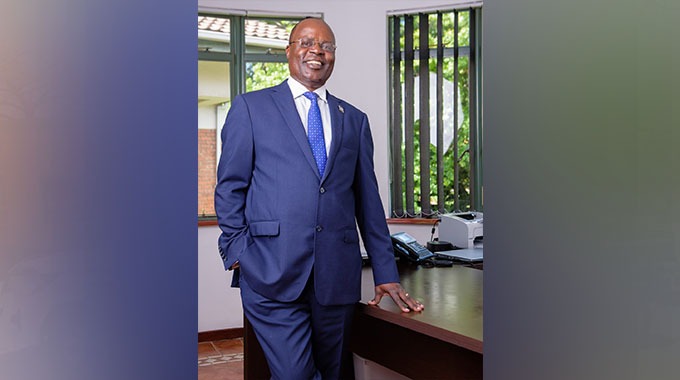
Business Correspondent
THE Macroeconomic and Financial Management Institute of Eastern and Southern Africa (MEFMI) has emphasized the importance of embracing research and development across Africa, as well as fine-tuning macro-economic management practices as key strategies to enhanced economic resilience and achieving the desired regional cooperation and integration.
MEFMI executive director, Dr Louis Kasekende, said this in a recent interview in which he detailed some of the strides his organisation has achieved in the last 30 years.
A regionally owned organisation specialising in providing training and capacity development programmes on macroeconomic and financial sector management, MEFMI is headquartered in Zimbabwe, and works closely with regional governments and Central Banks, in particular, to build sustainable human and institutional capacity and foster best practices for prudent macroeconomic and financial management to support economic growth and poverty reduction.
“These 30 years demonstrate MEFMI’s relevance, resilience and adaptability. Through our flagship programmes: the Macroeconomic Management Programme, the Debt Management Programme, and the Financial Sector Management Programme, MEFMI has provided cutting-edge training to thousands of professionals, policymakers, and researchers across the region,” said Dr Kasekende.
“We have created a pool of experts across various specialisations through the Fellows Development Programme; for member countries to utilise. Research and analysis have been conducted throughout the years to inform policymaking and enhance macroeconomic management while Regional Cooperation, has allowed for knowledge sharing and enhanced regional integration.
“There has also been improvement in statistical excellence across the region as countries do more compiling and disseminating of statistics in line with international standards. Tailored training programmes and workshops have equipped countless individuals with skills to navigate complex economic challenges over the years.”
As a close partner with regional governments, Dr Kasekende said macroeconomic and financial management were key objectives hence the organisation was focused on building the skills of staff in member country institutions charged with designing macroeconomic policies that support economic stability, as well as policies and regulation that promote financial stability in MEFMI member countries.
“All of MEFMI’s services are designed to assist member countries in fostering best practices, improving efficiency in the management of public finances, fostering financial sector stability and prudent macro-economic management for economic growth,” he said.
MEFMI was founded in 1994 as the Eastern and Southern Africa Initiative in Debt and Reserves Management (ESAIDARM) by senior officials of Central Banks and Ministries of Finance and Economic Planning; to address entrenched capacity gaps in sovereign debt and reserves management.
After the initial pilot phase ended in 1996; the mandate of ESAIDARM was broadened to cover macroeconomic and financial management issues and the Institute was subsequently renamed to MEFMI in 1997.
“We primarily work with Central Banks and Ministries of Finance in the member countries. While we are, through our commercial arm; the Business Development Unit expanding to offer services related to financial management systems and macroeconomic planning to other related institutions such as banks, regulators, the insurance sector and others. Primarily MEFMI works with Central Banks and Ministries of Finance or their equivalent institutions,” said Dr Kasekende.
“MEFMI has worked with the member countries to design programmes aligned to skills gaps identified. In addition, through the regional programmes and Executive Fora events, member countries share knowledge and best practices on different macroeconomic issues.
Zimbabwe is among the 15-MEFMI member countries together with Angola, Botswana, Burundi, Eswatini, Kenya, Lesotho, Malawi, Mozambique, Namibia, Rwanda, South Sudan, Tanzania, Uganda, Zambia and Zimbabwe.
Dr Kasekende, however, said the organisation was open to recruiting more members and build capacity in more countries within the East and Southern African region.
“MEFMI must continue to design programmes that effectively respond to the current and emerging challenges in the global and regional environment. As a member-supported institution, it must continually assess the needs of the membership and design appropriate and effective programs that close the skills gaps,” he said.



 Online Reporter