

 Chronicle Editor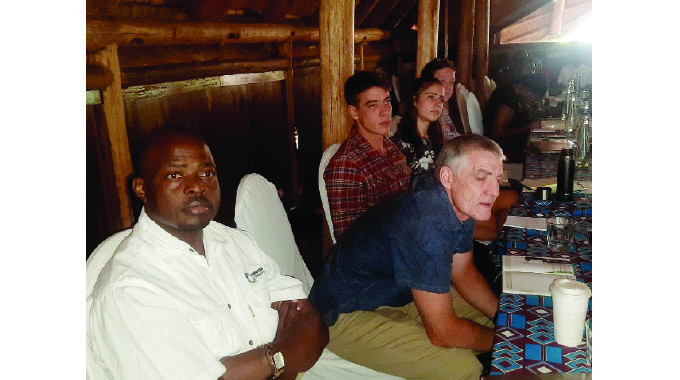
Leonard Ncube, Victoria Falls Reporter
WILDLIFE researchers in Victoria Falls have introduced a number of measures including stationing guardian community officers in areas widely affected by wildlife in an effort to reduce cases of human-wildlife conflict.
Conflict between wildlife especially elephants, lions, hyenas, buffaloes, crocodiles, baboons and wild dogs are prevalent in communities that are adjacent to national parks and villagers have lost livestock, crops and in some cases people have been killed by wild animals.
In an effort to mitigate the conflict through sustainable solutions, the Victoria Falls Wildlife Trust (VFWT) and Connected Conservation in collaboration with the Zimbabwe Parks and Wildlife Management Authority, Hwange Rural District Council and Victoria Falls City Council and other partners carried out combined ecological research on elephants and lions in Hwange West.
The research identified Chidobe, Chikandakubi, Chisuma and Jambezi wards under Chief Mvuthu and Chief Shana as four hotspots where cases of human-wildlife conflict are prevalent and community wildlife guardians have been selected and helping researchers and stakeholders to address cases of human-wildlife conflict, which VFWT wildlife manager Mr Roger Perry said together with other interventions, had reduced conflict with lions by 50 percent.
This is however, despite the increase in conflict with elephants.
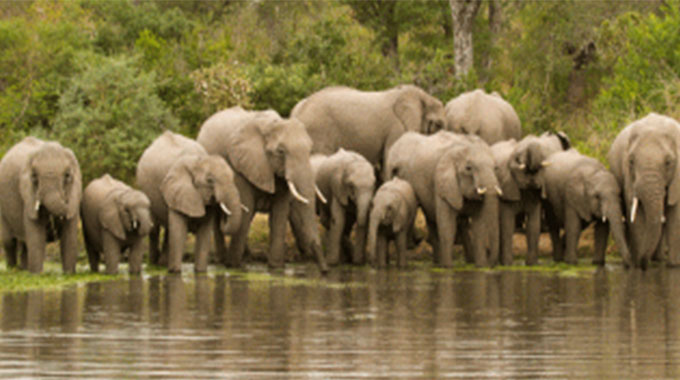
Some of the mitigatory measures include use of vuvuzelas, Boma pens, improved day time herding of livestock, flashing predator lights specifically for lions while for elephants, communities have been taught to use adaptive innovative fencing using available resources like tin cans (bells) tied to trees, chilly bricks, bee fences, disruptive darting and electric fence. Communities have also been taught to take responsibility of human wildlife conflict and co-exist with animals.
Speaking at a Victoria Falls elephant and lion projects research feedback to stakeholders yesterday, Mr Perry said conflict with lions had gone down while hyenas are a new problem for communities around Victoria Falls.
“After identifying four hotspot areas, we selected four community guardians who work with communities to capacitate them on addressing human-wildlife conflict. It is critical that communities care about wildlife.
“The mitigation measures have led to a 50 percent drop in predator conflict and only one lion was shot as a problem animal since 2017. There has been improved protection of livestock by the community and now if any livestock is left unpenned at night generally the problem comes from hyenas and it’s an area we need to work on,” said Mr Perry.
The research by VFWT and Connected Conservation targeted adult lions only and 22 collared bull elephants.
Adult lions and bull elephants are at the centre of conflict with humans, according to Mr Perry.
VFWT community guardians’ manager Mr Bongani Dlodlo said data that identified hotspot areas was collected between 2008 and 2015 before the actual research in 2016.
“The research was done in Hwange west communities adjacent to the game parks and before introducing the guardian’s concept, we were collecting data since 2008 and established hot spots which led to introduction of the guardians.
“Selection was done by the two chiefs and village heads and the four who passed the interviews were trained. They patrol boundaries between wildlife areas and human settlements and if they pick up wildlife issues, they contact the community and stakeholders and where necessary they use the mitigatory measures of attending to such,” he said.
Through community guardians, villagers are encouraged to report any animals within human settlements and report kills sites or poaching suspicions.
The reality is that human population is growing and humans need to co-exist with wild animals, according to researchers.
Connected Conservation project co-ordinator Mr Malvern Karidozo said conflict with elephants was increasing.

“We are working in Chikandakubi and Kachechete wards where communities are being trained on how to co-exist with these animals and are able to record animal presence in real time. Our finding was that conflict with elephants is increasing both in rural areas and towns and last year four people were killed in Victoria Falls. In the 2019-2020 season we had more cases,” he said.
Mr Karidozo said elephants spend eight percent of their time in protected areas and over 20 percent in communal areas, with the rest of the time spent migrating as the jumbos are transboundary. – @ncubeleon.


 Blessing Chizhande
 Online Reporter