

 Chronicle Editor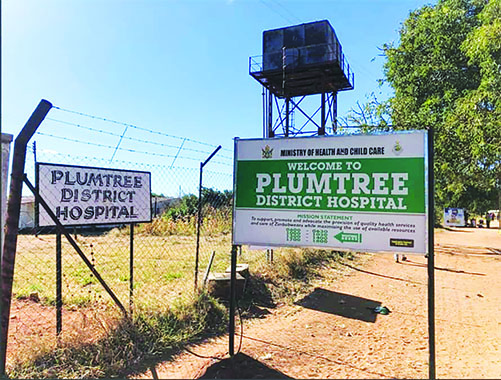
Lungelo Ndhlovu, [email protected]
THE Results-Based Financing (RBF) national programme is enhancing Zimbabwe’s healthcare systems by ensuring that funds are available to purchase critical hospital medicines while addressing public health concerns such as Antimicrobial Resistance (AMR), according to Dr Joe Nganunu, a District Medical Officer at Plumtree District Hospital.
AMR develops when bacteria, viruses, fungi, and parasites evolve and no longer respond to antibiotics, making infections more difficult to treat and raising the risk of disease spread, severe illness, and death.
Antimicrobial resistance (AMR) is a global threat to public health, resulting in 4,95 million deaths annually, but it is disproportionately worse in low and medium income countries, according to a recent World Health Organisation Global Immunisation Bulletin.
Dr Nganunu said Plumtree District Hospital receives funding from the RBF programme to purchase a large number of antibiotics, conduct cultures to identify the precise type of bacteria, and choose the appropriate treatments.
“So, one of the reasons for you to develop this resistance (AMR) is the inadequacy of the drugs themselves. If clients are given less doses or some appropriate amounts and everything, the likelihood of resistance increases,” he said.
Additionally, there are many different kinds of antibiotics, so having only one type of antibiotic increases the likelihood that resistance may develop, Dr Nganunu acknowledged.
“However, thanks to Result-Based Financing, we have enough money to buy a lot of antibiotics, so you know the chances of resistance are actually low because if you use a lot of antibiotics rather than just one type, it will lead to resistance.
“When someone had an infection, we could give an antibiotic blindly because we didn’t know what type of infection they had, but now that RBF is assisting us in doing cultures in laboratories and everything to know the exact type of bacteria we’re dealing with, it also helps us know which antibiotic to use. So, by strengthening laboratory procedures, we know we’re targeting the right germs, and the possibility of antibiotic resistance is minimised,” Dr Nganunu added.
The RBF programme, which began in 2014, is funded jointly by the Zimbabwean Government and the World Bank and is implemented by Cordaid, an emergency relief organisation that delivers free maternal, new-born, and child health services to the underprivileged.
Dr Edwin Sibanda, Umzingwane Director of Health Services acknowledged that they began implementing the RBF with an emphasis on maternal and child health to ensure that pregnant women receive appropriate treatment.
“It is critical for pregnant women to book on time so that some diseases can be detected early. When they are diagnosed early, they are treated early; even those that are treatable can be controlled, and women are seen as frequently as possible,” he said.
The RBF programme also increases access to health care by promoting the World Health Organisation’s (WHO) Universal Health Coverage Goals, which aim to ensure that all people receive the health services they require without incurring financial hardship due to a lack of funding.
The authorities in Zimbabwe, on the other hand, have begun to strictly monitor antimicrobial usage by keeping an eye on the animals and crops that are fed or treated with antimicrobials and gathering information on the quantity used. This is because the country is taking the threat of AMR to public health seriously and has since responded to address the spread of AMR in the country’s agri-food systems.
Dr Anxious Masuka, Minister of Lands, Agriculture, Fisheries, Water, and Rural Development, told the Global Leaders Group on AMR that Zimbabwe is using a variety of methods to track the use of antibiotics in the agri-food systems, including gathering information on the quantity, types, and animals or crops that are treated with antibiotics.
Additionally, Dr Masuka said the country is working on urging stakeholders to responsibly use antibiotics particularly in the agri-food systems to address the spread of AMR.
“We are continuing our surveillance, particularly in the livestock sector, with a focus on poultry, beef, and dairy,” Dr Masuka said.
He said another method of assessing farmers’ and veterinarians’ knowledge and practices regarding the usage of antibiotics can be utilised to identify areas that call for additional education and training.
“We just have been capacitated by the Fleming Fund, UK to establish a state-of-the-art laboratory in Harare, at Central Veterinary Laboratory, so we should be able to do systemic or active surveillance of AMR pathogens,” said Dr Masuka.
Zimbabwe is one of the 14 African countries that received over 4 million pounds from the UK’s Fleming Foundation grant allocation, having done very well in spearheading construction and capacitation of state-of-the-art laboratories in Masvingo, Matabeleland provinces and Manicaland for improved AMR surveillance in the country, Mr Lemson Machibiza, Lead Researcher and Principal Consultant at the African Centre for Global Health Innovation and Research, noted.
“This intervention coupled with rational medicine use enforcement efforts will go a long way in curbing AMR. If this Fleming grant or other funding lines can be secured for rational medicine use efforts to augment laboratory AMR surveillance efforts, the synergistic effect of the interventions will help nip the scourge in the bud,” he said.
Mr Machibiza indicated that improved AMR surveillance in the laboratories and rational medicine use are key components of AMR reduction efforts for the realisation of Universal Health Coverage and ultimately Universal Health Access in line with Zimbabwe’s National Health Strategy, National Development Strategy (NDS)1 and the AU Agenda 2063.
Despite these initiatives to lower AMR in Zimbabwe, a troubling fact is that local pharmacists contribute to the issue by prescribing antibiotics without a prescription while drugs and pharmaceuticals are smuggled across the borders, according to the National Situation of Antimicrobial Resistance and Consumption Analysis annual report (2016-2018).
Mr Samson Saruchena, Pharmaceuticals of Zimbabwe pharmacist focusing on public health, concurred that border controls must be tightened to stop the importation of illegal drugs.
“Most borders have the Medicines Control Authority of Zimbabwe personnel, responsible for checking drugs that are coming into the country. However, illegal drug traffickers frequently avoid using the established routes.”



 Blessing Chizhande
 Online Reporter