admin
admin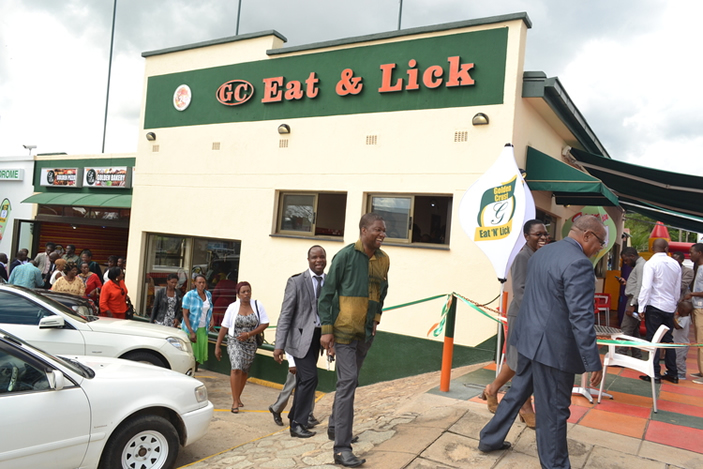
Ngoni Dapira Business Correspondent
THE 2015 business environment in Manicaland, just like other provinces countrywide was mostly characterised by a volatile economic environment compounded by challenges associated with a contracting economy and liquidity constraints.
The Confederation of Zimbabwe Industries in October announced that the country’s manufacturing industry’s capacity utilisation dropped by 2,2 percent to 34,3 percent in 2015 from 36,5 percent last year.
In its state of the manufacturing sector survey, the industry representative body said a host of internal and external pressures in the country continued to stifle the industry’s performance and recovery.
In Manicaland, CZI chairman, Mr Richard Chiwandire, said the manufacturing sector remained the hardest hit, with most companies in the Nyakamete industrial area operating between five to 25 percent capacity utilisation due to limited access to affordable capital resources for recapitalisation and a stiff competition from cheap imports stimulated by weak local procurement policies.
The cases of company properties that were attached and auctioned due to debts owed to banks and other creditors also continued to be on the increase in 2015 as liquidity constraints and low business uptake continued to haunt indigenous businesses.
However, some notable positives emanated, which saw new players coming on board, particularly in the retail trade and fast food sector.
In August, President Mugabe’s 10-Point Plan also encouraged local businesses particularly the thrust on reviving agriculture and agro-processing value chains, which is the mainstay of Manicaland.
Plans by Government to speed up the enactment of the Joint Ventures Bill and the Special Economic Zones Bill also aroused great optimism for the year 2016.
In the 2016 National Budget presentation, Finance and Economic Development, Cde Patrick Chinamasa also put a host of measures to protect the local manufacturing industry in a bid to reduce massive company closures and create jobs locally.
One beneficial initiative expected to boost business for the local vehicle assembling industry in 2016 will be the removal of selected motor vehicles and buses imported by Government and School Development Associations from the Duty Free Certificate Facility.
This will facilitate the enforcement of the Cabinet Circular Number 16 of 2011, which impels all Government entities to buy locally to empower local motor manufacturers like Quest Motors in Mutare.
The continued increase in dialogue between Government and business to activate the economic blueprint Zimbabwe Agenda for Sustainable Socio-Economic Transformation was also another positive in 2015.
Here are some of the positive and negative highlights of the Manicaland business environment in the year 2015:
Choppies plans big for Manicaland
The Botswana Stock Exchange and Johannesburg Stock Exchange-listed retail chain, Choppies, opened a Mutare branch in September.
At that time the Mutare branch brought the total number of Choppies Supermarkets in the country to 29, with the majority of its stores located in Bulawayo and Harare.
The Mutare branch created 85 jobs, while countrywide the retail chain has over 2 000 employees.
Choppies Zimbabwe director, Mr Siqokoqela Mphoko revealed the retail chain would early next year open a second shop in Mutare and open four other branches in different districts throughout the province.
He said plans to open a rice packaging plant in Mutare next year were already at an advanced stage.
Choppies Zimbabwe’s 80 percent local procurement quota in support of Buy Zimbabwe was also applauded as a positive that boosts business for direct communities especially players in the agricultural sector.
Golden Crust Eat and Lick fast food chain expands foothold in Manicaland
The growing indigenous fast food franchise, Golden Crust Eat and Lick, expanded its foothold in Manicaland by opening two outlets this year in Mutare.
Golden Crust Eat and Lick is part of Eyeshigher Holdings which also owns Bestbake Foods (Pvt) Ltd that specializes in production of confectioneries.
The fast food chain which first opened an outlet downtown early this year opened a second up-market branch this month.
The two Mutare branches alone are employing 28 locals, while the developmental vision of the fast food chain was applauded for spurring employment creation which is direly needed in the country.
The Eat and Lick fast food chain currently now has eight branches comprising of two outlets in Chinhoyi, one in Karoi, three in Rusape and two in Mutare.
Eyeshigher Holdings chairman, Mr Isaiah Musabayana said the vision was to take their franchise beyond the borders to compete against the best international fast food chain outlets.
The businessman who hails from Manicaland was applauded for investing in his home town to steer development in the province.
Mutare Cairns Foods (Pvt) Ltd comes out of judicial management
Mutare’s agro-processing firm, Cairns Foods, a subsidiary of Cairns Holdings, was removed from judicial management in November by the High Court paving way for the new investor, local investment holding firm, Takura Capital, to take over.
The company has since roped in former Unilever boss, Ms Nancy Guzha as chief executive officer-designate.
The turnaround story of Cairns Holdings is one positive story that proves there is light at the end of the tunnel to revamp the country’s manufacturing sector.
Cairns Holdings was placed under provisional judicial management in 2012 and final judicial management in February 2013 due to insolvency, owing debts that amounted to $25 million.
Since slowly resuming operations in 2014 Cairns Holdings has increased its capacity utilisation from as low as five percent in 2012 to 35 percent in 2015 as the food and beverages manufacturer seeks to bounce back to profitability.
Takura Capital now has over 90 percent shareholding in Cairns after acquiring the stake owned by the Reserve Bank and other shareholders except that held by Cairns Holdings Workers’ Trust.
The Cairns Foods Mutare late this year purchased a new modern tomato processing plant to increase its productivity.
Cairns Foods Mutare is currently producing 50 000 cases of backed beans and jam per month.
They also started a contract farming programme early this year for growing white pen beans (Michigan beans) which used to be imported from Malawi.
Cairns Foods Mutare operations manager, Mr Joseph Mavhu, said they had already started contract farming with Himalaya small-holder farmers and co-operatives in line with the Zimbabwe Agenda for Sustainable Socio-Economic Transformation initiatives to boost local production and the country’s agriculture and agro-processing value chains.
Manica Boards and Doors defies economic challenges
Manica Boards and Doors continued defying economic challenges and managed to maintain its competitive edge regionally during a time where several manufacturing companies in Mutare’s once industrious Nyakamete Industrial site have either closed shop or are operating below 25 percent capacity utilisation.
Among the noteworthy signature industry in Nyakamete, first to go down in 2011 was the paper-making manufacturing giant Mutare Board and Paper Mills followed by Karina Textiles, one of the largest textiles companies in the country, which is currently being liquidated.
The hardboard manufacturing firm, formerly Zimboard, in 2006, changed ownership to operate as a subsidiary of Old Mutual Life Assurance Zimbabwe and PG Bison Africa.
It manufactures wood products including wooden doors and board products with hardboard as its main production line.
The Mutare-based company which this year scooped the Manufacturing Exporter of the Year accolade at the Zimbabwe National Chamber of Commerce provincial awards, exports hardboard regionally dominating markets in countries such as South Africa, Tanzania, Zambia and the Democratic Republic of Congo to mention a few.
The company, however, bemoaned lack of Government support to reduce the cost of doing business for exporting companies citing too many unnecessary sundry export levies.
Quest Motors in new-line productions
Mutare’s vehicle assembling firm Quest Motors this year picked up on production introducing a number of new-line productions like the Zhongtong Quest Bus and Foton Tractors.
The company has slowly been up-scaling production since 2014 with targets to boost its capacity utilisation to over 60 percent in 2016. Plans are underway to start production of the latest range of the Mitsubishi Triton double cab, Mitsubishi Pajero Sport luxury 4X4 and 1,6 litre Suzuki Carry truck.
Quest Motors operations manager, Mr Carl Fernandez, said the firm had the capacity to produce 23 000 tractors per year and 105 vehicles per day.
Mr Fernandez bemoaned the country’s poor procurement policies that have seen both private sector and Government exporting jobs by importing vehicles instead of procuring them locally from local assemblers.
According to the Zimbabwe National Statistics Agency in 2014, out of the 4 000 newly registered vehicles, 92 percent were imported by Government and the remaining 8 percent by the private sector.
Mr Fernandez said only 12 vehicles were bought by Government at Quest Motors. He urged Government to lead by example in the Buy Zimbabwe campaign to boost local companies.
DTZ-Ozgeo Penhalonga remains closed
Operations at the mine were stopped in November 2013 following a Cabinet decision that stopped all river bank alluvial gold mining after the Mazowe River pollution incident caused by illegal gold miners.
Regardless of numerous attempts since 2014 to get the mine reopened, the mine is still closed. The mine’s rehabilitated land is now being invaded by local artisanal miners who eventually leave the land damaged.
Cases of artisanal miners that died in old abandoned shafts were also rife this year, while pollution has increased in Mutare River due to increased river bank alluvial gold mining by the artisanal miners.
DTZ-Ozgeo public relations and marketing manager, Ms Clara Ngwenya, said the company employed 500 workers, of which more than 400 were redundant after the closure.
The joint venture company said they had the capacity to produce up to 30 kilogrammes of gold every month and had plans to increase production outputs in the next two years if they had continued with production.
As Government pushes to increase gold deliveries, DTZ-Ozgeo Penhalonga mine remains a missing piece in attaining more gold deliveries from Manicaland.
Resolution
With Government’s targets of creating 2.2 million jobs by 2018 under the guidance of the economic blueprint, ZimAsset and President Mugabe’s 10-Point Plan, there is definitely a need for a multi-sectoral approach to curb the massive company closures and auctioning of properties at the expense of the private sector.
The CZI 2015 Manicaland report said top on the agenda in 2016 should be the high cost of doing business that includes among others high unit cost of electricity, corruption, high utility charges by local authorities and policy inconsistency.
Already in 2015 a lot of interest towards business investments in Manicaland was shown with the entrance of OK Mart and the expansion of the brick and concrete roof tile supplier, Beta Holdings, to mention a few.
CZI is predicting there will be new industry once the SEZs Bill is enacted to spur foreign direct investment.



 Online Reporter