


 Online Reporter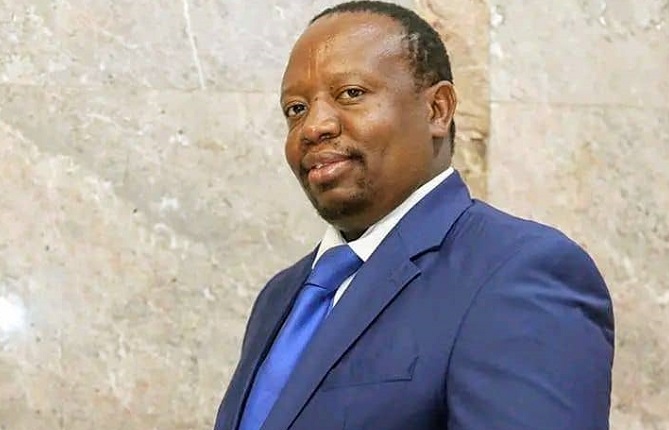
Dr Eric Muzamhindo
Africa’s education statistics for the young population make youth-centred wealth creation an even more optimistic strategy to transform the continent’s economy.
Countries with high youth literacy rates and significant enrolment in both primary and secondary schools are well-positioned to leverage their young populations for sustainable wealth creation.
In contrast, nations with lower literacy rates and secondary enrolment need targeted educational interventions to fully harness their youth’s potential and address inequality effectively.
Despite impressive progress in literacy rates and education, Africa remains poor, with high proportions of the youth living in extreme poverty.
This raises important questions: Is Africa implementing the right education curriculum?
Is the curriculum being implemented correctly? Why does Africa remain at the lowest levels of development if its education curriculum and delivery are not amiss?
These concerns have led to calls for rethinking education for empowerment in Africa.
A fundamental aspect of rethinking education for empowerment is the recognition that traditional educational models often perpetuate social injustices rather than mitigate them.
This necessitates a shift from a one-size-fits-all pedagogy to a more inclusive framework that prioritises the needs of marginalised communities, thereby fostering agency and responsibility among learners.
As articulated in recent feminist scholarship, the role of technology within education — particularly in the wake of new advancements — should serve to enhance social justice, not undermine it.
Furthermore, the Covid-19 pandemic has highlighted disparities in educational access and outcomes, underscoring the importance of addressing socio-economic inequalities in any educational reform initiative.
By embracing contextualised, equitable educational practices, we can cultivate environments that not only support academic success but also empower individuals to realise their full potential in an increasingly complex world. Education should be a tool for unlocking Africa’s human potential rather than merely serving as a ladder to employment.
Many successful individuals have achieved greatness without extensive formal education. However, this observation should not discourage academic pursuits. Instead, the value of education lies in its capacity to expand one’s critical thinking and innovative abilities.
Too often, individuals become content with traditional employment — dressing in formal attire, sitting in an air-conditioned office and awaiting salary disbursements at the end of each month. This mindset can stifle creativity and limit opportunities. Young people must forge their paths and narratives, opening doors for themselves and future generations. Africa’s youth can reframe the conversation around employment and opportunity by fostering an environment where innovation and entrepreneurship are encouraged.
Instead of adhering strictly to conventional employment models, they can explore unconventional personal and communal growth avenues.
This drive for self-determination will lay the groundwork for a new era of economic vitality, ensuring that Africa recognises its potential and actively realises it. In this journey, the role of education is not to confine individuals to narrow definitions of success but to inspire them to think broadly, creatively and strategically.
As Africa navigates its path towards a prosperous future, empowering the next generation with the tools to innovate, adapt and excel will be pivotal.
The promise of Africa rests not only in its rich resources but, importantly, in the unbounded potential of its youth.
They can catalyse a transformation that resonates across the continent and beyond through innovation, resilience and commitment to change.
By emphasising the development of critical thinking and creativity, education can transcend conventional frameworks, equipping students not only with knowledge but also with the agency to influence their communities positively.
This alignment between education and empowerment is pivotal in unlocking human potential and reshaping Africa’s future.
An empowered educational framework holds transformative potential for Africa’s future development and societal progress by fostering critical thinking, innovation and self-sufficiency among its youth.
Such a framework prioritises inclusivity and relevance, accommodating diverse learning styles and cultural contexts, thus igniting a sense of agency in students.
Thus, reimagining education should seek to cultivate a generation ready to challenge existing paradigms, promote sustainable development and forge a new narrative of responsibility and progress across the continent.
By shifting from rote learning to experiential and problem-based approaches, education can equip learners with the skills necessary to navigate and address complex socio-economic challenges.
Furthermore, this paradigm encourages collaboration across sectors, galvanising communities to participate in shaping educational policies that reflect their unique needs.
As a result, empowered individuals are not only capable of contributing to local economies but are also positioned as catalysts for regional stability and growth.
To cultivate agency among learners, the integration of critical thinking and creativity in educational settings is essential.
These cognitive skills empower students to analyse situations, reflect on their choices and generate innovative solutions to real-world problems.
As seen in South Africa’s initiatives like Guga S’Thebe and Violence Prevention through Urban Upgrading, fostering community ownership through participatory processes enhances social cohesion and resilience, linking creativity to active engagement.
Narratives around African identity emphasise the need to reinforce self-worth and capability among learners, addressing the detrimental effects of historical colonial beliefs that have marginalised their potential and fostered opportunities for exploitation.
In the context of education, the significance of cultural relevance cannot be overstated, particularly for empowering students within African societies.
Educational curricula that resonate with students’ cultural identities foster a sense of belonging and agency, allowing them to navigate their realities with confidence.
Historical narratives that undermine the value of African culture have perpetuated a cycle of inferiority, leading to disconnection between students and their cultural heritage, which impacts their educational engagement and outcomes.
By integrating local cultural tools — such as African music, art and historical narratives — into educational practices, educators can actively counter these negative perceptions and promote a richer understanding of African identities.
Moreover, a critical examination of global events, like the repercussions of the war in Ukraine, illustrates the complexities students face and the need for culturally relevant education to cultivate informed, responsible citizens who can respond effectively to global issues while advocating for their communities.
The integration of local knowledge and traditions into educational frameworks plays a pivotal role in enhancing student engagement and fostering a sense of responsibility.
By embracing the African philosophy of Ubuntu, which emphasises interconnectedness and community, educators can cultivate a learning environment that values relationships and mutual support among students.
This approach not only enriches the educational experience but also reinforces students’ agency in their communities, enabling them to become responsible citizens.
Furthermore, community-based initiatives, such as ecotourism, exemplify how local traditions and sustainable practices can empower students while contributing to biodiversity conservation. Such experiential learning opportunities tether theoretical knowledge to real-world applications, fostering a sense of stewardship among learners. a
Ultimately, integrating local customs and knowledge systems into the curriculum cultivates not only engaged learners but also future leaders who are equipped to tackle pressing societal challenges through the lens of collective responsibility and empowerment.
Tinashe Eric Muzamhindo is the CEO of the Zimbabwe Institute of Strategic Thinking. He can be contacted at [email protected]



 Online Reporter