Chronicle Editor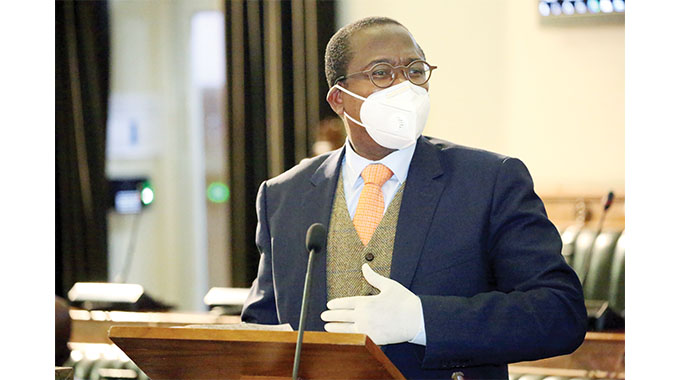
Prosper Ndlovu, Business Editor
THE Treasury has been urged to consider widening the tax-free threshold and review upwards the minimum taxable electronic transaction tax figure in order to boost disposable incomes and aggregate demand.
Although the country has scored significant milestones in tackling inflationary pressures with a drop in year-on-year (YOY) inflation from a rate of 837,5 percent in July 2020 to 106,6 percent in June 2021, and eventually to 56,4 percent in July 2021, according to Zimstats, economic experts have expressed concern over the general erosion of incomes and the subsequent impact it has on business volumes.
The Reserve Bank of Zimbabwe (RBZ) now expects YOY inflation to further decline to between 22 percent and 35 percent by December 2021 with monthly inflation remaining stable at around two percent during the second half of 2021.
Following the recent presentation of the Mid-Term Fiscal Policy Review by the Minister of Finance and Economic Development Professor Mthuli Ncube, members of Parliament say boosting disposable incomes is urgent.
“This is more critical for the economy at a time when the country is battling the adverse effects of Covid-19, which continues to take toll on businesses and individual households”, said the Parliament Budget Office (PBO) in its mid-term fiscal and monetary policy review assessment report released this week.
“The PBO noted with concern the failure by Finance Minister to revise tax bands with tax free threshold remaining at ZW$10 000. This has led to bracket creep, which has dampened disposable incomes and, therefore, aggregate demand,” reads part of the report.
It called upon Parliament to amend the 2021 Finance Act with a view to raise the tax bands.
“The PBO also urges the Government to also revise upwards the minimum taxable amount for the two percent Intermediated Money Transfer Tax from the current $500, which is still too low as most products, which the poor purchase at any given time would cost much more than $500.”
While the Government and private sector players have awarded salary reviews in the course of the year, workers’ unions say these have not been able to keep pace with the rising pricing structure, which economists link to the constant spike in major cost drivers such as utilities, fuel, regulatory and technology fees.
The report notes that the plight of ordinary consumers is being worsened by the “rampant overcharging” of goods and services by businesses that have a tendency of indexing their costs to parallel market rates and would resort to issuance of receipts in local currency for sales made in forex.
The trend has been associated with heightened speculative pressures on the parallel market, which have a destabilising effect on price stability.
“This situation demands “more action to plug these misdeeds,” said Parliament.
The Confederation of Zimbabwe Retailers (CZR) this week reported shrieking sales volumes in the sector attributed partly to reduced business hours under Covid-19 level four lockdown measures, which have also dampened supply and demand value chains.
“The lockdown measures negatively impacted real disposable incomes mainly due to constrained economic activity, with shops also opening for limited trading hours, currently restricted to 8AM to 3.30PM,” CZR president, Mr Denford Mutashu, said.
Business leaders fear that the drop in disposable incomes would have a negative effect across the economic spectrum.
In that regard, Parliament report noted with concern the drop in pay-as-you-earn (PAYE) contribution to overall revenue to the fiscus.
“The PBO noted with concern the decline in PAYE contribution to the national purse from an average of 20 percent in 2010-2014 to the current 17 percent,” it said.
“Historically, PAYE had been one of the biggest contributors to tax revenue ahead of VAT, a trend which has been reversed since 2018.”
The report largely attributed this trend to informalisation of the economy and Covid-19 induced retrenchments. Confederation of Zimbabwe Industries (CZI) estimates that only 13 percent new jobs were created in 2020 with formal jobs estimated around 800 000.



 Online Reporter