

 happiness Chikwanha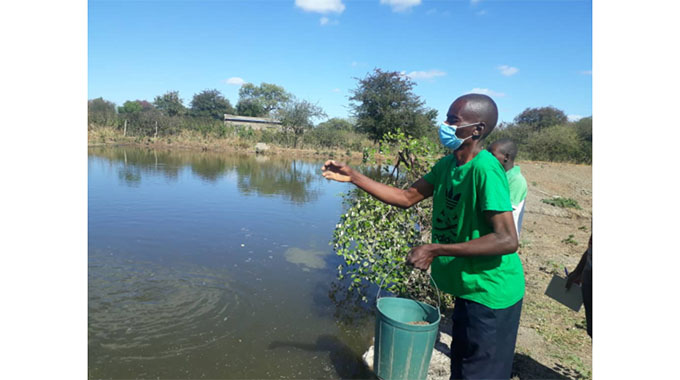
Ashton Mutyavaviri
EFFORTS to reinvigorate the aquaculture sector have started after five years of illegal, unregulated and unreported fishing activities that almost crippled the industry and threatened to dent the push to achieve an upper middle-income economy by 2030.
Fisheries and Aquaculture Resources Department (FARD) director in the Ministry of Lands, Agriculture, Fisheries, Water and Rural Development, Mr Milton Makumbe, revealed that FARD was looking to stock dams with indigenous fish species to arrest the decline in fish populations for communities surrounding dams.
He said they would introduce sustainable management practices for fishery resources in communities near dams under the Presidential Community Fisheries scheme, which started in 2021.
“The Presidential Community Fisheries scheme is inclusive of training communities on sustainable fish harvesting, as well as the setting up of dam committees for a sense of ownership and management,” he explained.
He added that they managed to stock 21 dams in 2022 with 10 in Mashonaland Central, two in Mashonaland West, two in Mashonaland East, another two in Masvingo, four in Midlands and one Matabeleland South.
The country’s dams can produce at least 1, 5 tonnes of fish per year if fully utilised. This can produce meaningful revenue for citizens involved both directly and indirectly in the industry, said Mr Makumbe.
“The same programme will also look at pond stocking in school business units, youth business units, village business units and irrigation business units, which entails having ponds in schools, villages and irrigation schemes,” said Mr Makumbe.
The introduction of community gardens that accommodate two fish ponds and the various dam projects currently underway across the country has given birth to many fish hotspots that have the potential to turn commercial and generate incomes for the participating households.
Statistics availed by the Lands, Agriculture, Fisheries, Water and Rural Development Ministry have shown that the aquaculture sector recorded a 25 percent upward swing in 2022. This was after 6 807, 01 tonnes of fish were harvested compared to 5056,88 in 2021.
The Government is targeting to stock 1 200 dams that have been identified as having the potential to help grow Zimbabwe’s consumption per capita to 13kg by the year 2025.
Fish farming is the fastest-growing food-producing sector and can be done efficiently and cost-effectively.
The Government’s initiative also aims to capitalise on the country’s abundant water resources and favourable climatic conditions for aquaculture.



 Peter Tanyanyiwa
 Online Reporter