Online Reporter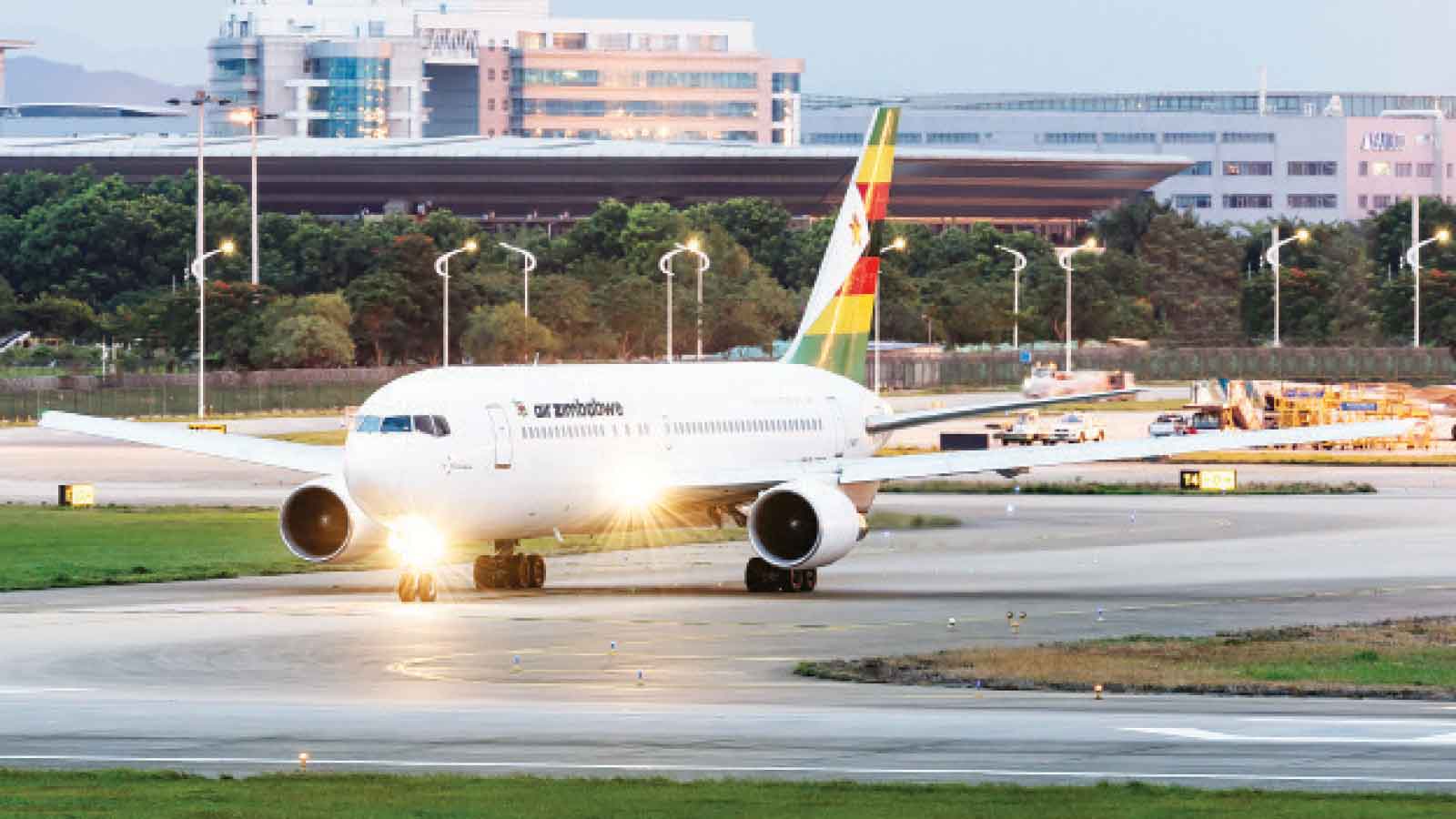
Richard Muponde-Zimpapers Politics Hub
ZIMBABWE’s aviation industry is undergoing a profound transformation that mirrors the broader economic renewal being pursued under President Mnangagwa’s Second Republic, aimed at achieving Vision 2030 of an upper middle class economy with no one and no place left behind.
The sector has re-emerged as a symbol of reform-driven recovery and national re-engagement. Central to this resurgence is the revival of Air Zimbabwe, whose return to the skies has validated the establishment of the Mutapa Investment Fund and underscored the President’s economic acumen and long-term vision.
For years, the national airline stood as a painful reminder of missed opportunities. Today, its revival speaks to a decisive break from the past and the emergence of a governance model anchored on accountability, professionalism and strategic investment.
The renewed vibrancy of Zimbabwe’s skies reflects growing investor confidence and affirms the country’s steady march towards Vision 2030.
A national carrier grounded: AirZim’s long decline
The decline of Air Zimbabwe since the turn of the millennium was the result of multiple, intersecting challenges that gradually eroded its operational capacity and market relevance.
Macroeconomic instability, limited access to external finance, rising operational costs and the impact of international isolation combined to weaken the airline’s financial position. These pressures were compounded by internal governance deficiencies, skills attrition and chronic undercapitalisation.
As the fleet aged, maintenance costs soared and aircraft reliability deteriorated. Routes were progressively lost to better-capitalised regional competitors, while passenger confidence declined sharply.
At its lowest ebb, Air Zimbabwe was effectively grounded, unable to sustain regular domestic, regional or international flights. The loss of the national carrier’s presence in regional skies was not merely an economic setback but a blow to national prestige and strategic connectivity.
During the latter years of the First Republic, the Government under the late President Robert Gabriel Mugabe made several attempts to rescue Air Zimbabwe.
These efforts included debt assumption, management changes and limited fleet interventions aimed at keeping the airline afloat. While these measures demonstrated political commitment to preserving the national carrier, they were constrained by a lack of fiscal space and the absence of a comprehensive reform framework.
Without a centralised and professionally managed structure to oversee State assets, interventions remained reactive rather than transformative. The airline continued to operate in survival mode, with no sustainable pathway to renewal. These structural limitations highlighted the need for a fundamentally new approach to parastatal management.
The Second Republic and a new economic philosophy
The advent of the Second Republic under President Mnangagwa marked a decisive shift in economic governance. Emphasis was placed on re-engagement, institutional reform and restoring confidence in State-owned enterprises.
The recognition that parastatals could be engines of growth rather than perennial fiscal burdens informed the establishment of the Mutapa Investment Fund.
Anchored in the philosophy that “Nyika Inovakwa Nevene Vayo/Ilizwe Lakhiwa Ngabanikazi Balo”, the fund was conceived as a vehicle to consolidate, professionalise and commercialise key national assets. It sought to insulate strategic enterprises from political interference while subjecting them to strict performance and accountability standards.
Mutapa Fund and the rebirth of AirZim
Air Zimbabwe’s transition under the Mutapa Investment Fund marked a turning point in its long struggle for survival. For the first time, the airline was placed under a structured turnaround framework backed by professional oversight and long-term capital planning. This shift enabled the formulation of a credible five-year strategic plan aimed at restoring operational viability and market competitiveness.
According to Air Zimbabwe’s strategic roadmap, the airline plans to acquire six new aircraft over the next three years at a total cost of US$775,5 million. The plan notes that two aircraft will be dedicated to domestic routes to improve frequency and reliability, while two regional jets will be deployed to reclaim market share on key regional corridors. The acquisition of two long-haul wide-body aircraft is intended to restore direct international connectivity to major global hubs.
As the plan states, “By transitioning to modern, fuel-efficient aircraft, the airline anticipates a significant reduction in maintenance costs that have historically undermined its balance sheet.”
This approach signals a move away from short-term fixes towards sustainable operational efficiency.
Expanding routes and restored connectivity
The revival of Air Zimbabwe has unfolded alongside a broader resurgence in the country’s aviation sector. President Mnangagwa’s sound aviation and economic policies have contributed to renewed confidence among international carriers, leading to a significant increase in airlines servicing Zimbabwe.
Ethiopian Airlines, Emirates, Qatar Airways, Kenya Airways, Rwanda Air, Egypt Air, Fastjet, South African Airways, Airlink, Precision Air and Uganda Airlines are now plying routes into Harare and Victoria Falls.
This expanded connectivity has strengthened tourism, facilitated trade and enhanced Zimbabwe’s integration into regional and global markets. The return of multiple carriers underscores the effectiveness of policy consistency and infrastructure investment under the Second Republic.
Beyond aviation: Mutapa’s wider economic footprint
Air Zimbabwe’s turnaround forms part of a broader strategy under the Mutapa Investment Fund, which oversees several key parastatals and strategic enterprises across energy, mining, transport and telecommunications. The Fund’s mandate to restore commercial viability and unlock value has begun to yield results, challenging earlier scepticism surrounding its creation.
What critics once portrayed as a vehicle for asset looting has increasingly emerged as a disciplined investment platform focused on long-term national development. The visible recovery of Air Zimbabwe stands as one of the most tangible demonstrations of this shift.
Vindication of vision and leadership
The return of Air Zimbabwe to regional and international routes provides powerful validation of President Mnangagwa’s decision to establish the Mutapa Investment Fund. It illustrates how visionary leadership, supported by sound institutional frameworks, can reverse years of decline and restore strategic national assets.
As Air Zimbabwe affirms in its strategic outlook, “The restoration of international and regional services represents not only a commercial milestone but the reclamation of Zimbabwe’s aviation sovereignty.” This achievement reinforces the broader reform agenda driving the country towards an upper middle-income economy by 2030.
Confidence in the path to Vision 2030
Air Zimbabwe’s resurgence is more than a corporate turnaround; it is a reflection of a renewed national trajectory. The airline’s revival has vindicated the Mutapa Investment Fund, affirmed President Mnangagwa’s economic foresight and demonstrated the transformative power of disciplined reform.
As Zimbabwe grows busier and its national carrier reclaims its place, citizens are encouraged to maintain confidence in policies that are yielding visible results and laying the foundations for a prosperous future.