Online Reporter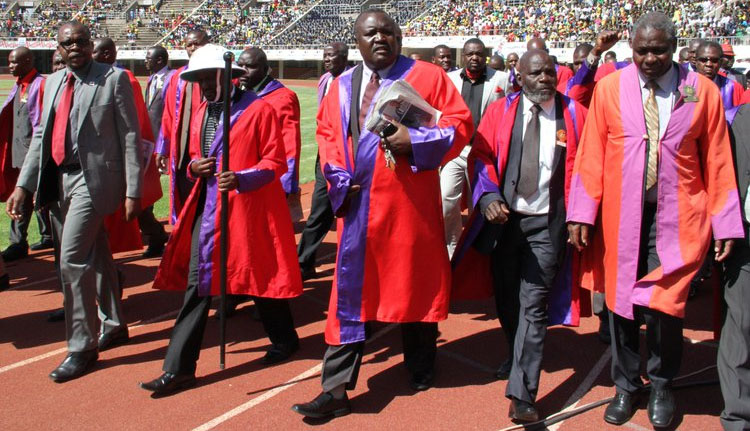
Rodgers Irimayi
Cultural Perspectives
ZIMBABWE is witnessing a renewed drive to restore traditional leadership institutions weakened, displaced or removed during the colonial era, a development that is also opening a new chapter in the debate and recognition of traditional territorial boundaries.
The revival of chiefs, headmen and village leadership structures is being presented as part of efforts to strengthen indigenous governance, preserve cultural identity and improve community participation in development.
But beyond restoring leadership positions, the process is bringing renewed attention to a sensitive question: where should the boundaries of traditional communities begin and end?
Traditional leaders have historically played important roles in resolving disputes, administering communal resources, protecting cultural heritage and maintaining social cohesion. Their authority was often closely linked to clearly understood territories, ancestral lands and relationships between neighbouring communities.
Colonial disruption
The origins of the current boundary debate can be traced to the colonial administration, which introduced new systems of governance and territorial administration that frequently displaced or altered indigenous arrangements. As the colonial white settlers grabbed rich soils and areas with precious minerals, the native blacks were moved to non-arable areas.
Traditional institutions that had previously exercised considerable authority were brought under colonial control. Some chiefs who resisted colonial policies were removed, while others were retained, but with significantly reduced powers.
The changes did not only affect individual traditional leaders. They also altered relationships between communities and the geographical areas over which traditional authorities exercised influence.
Colonial administrative boundaries were established primarily for purposes of administration and control rather than reflecting historical ethnic, cultural, ancestral or traditional territorial arrangements.
At independence in 1980, Zimbabwe inherited many of these structures. Traditional leadership survived, but its authority increasingly operated alongside the colonially established administrative systems involving provinces, districts, wards and local authorities.
Revival brings boundaries into focus
The current restoration of traditional leadership posts is consequently raising questions about the territories attached to revived positions.
Where a traditional leadership post is restored, communities may seek recognition of the historical area associated with that chief or headman. In other instances, new boundaries may have to be established where populations have expanded, settlements have shifted or historical territorial records are incomplete.
This means the revival of traditional leadership is not simply an administrative exercise.
It can have direct implications for land administration, community identity, cultural heritage and relations between neighbouring traditional authorities.
The creation or restoration of boundaries must therefore be handled carefully to prevent new disputes.
Historical evidence, oral traditions, ancestral settlement patterns, natural landmarks and existing administrative records can all help determine the extent of traditional territories.
Communities seek recognition
For many rural communities, the restoration of traditional leadership represents recognition of an identity that they believe was weakened during colonial rule.
Traditional leaders are often regarded as custodians of local history and customs. Their knowledge can be particularly important when communities attempt to establish where traditional boundaries existed before colonial administrative systems changed them.
In many cases, boundaries were traditionally understood through rivers, mountains, forests, roads, grazing areas and other prominent landmarks.
Oral histories passed from one generation to another can also provide evidence of historical territorial arrangements.
The restoration process therefore provides an opportunity to document such histories before they disappear. Supporters argue that clearly recognised traditional territories could strengthen local dispute resolution and help communities understand which traditional authority is responsible for particular matters.
Boundary disputes could emerge
The process also carries risks.
Where two communities claim the same territory, the restoration of a traditional leadership post could revive historical disagreements. Population growth and changes in land use may further complicate the situation.
There is also the possibility that traditional boundaries could overlap with modern district, ward or local authority boundaries.
A traditional territory may extend across an administrative boundary established by the modern state, creating potential confusion over jurisdiction.
Land is particularly sensitive. Traditional leaders have important responsibilities in communal areas, but their authority must operate within Zimbabwe’s Constitution and laws governing land, local government and national administration.
Clear legal procedures will therefore be necessary when determining or revising traditional boundaries.
Consultation is critical
The process of establishing new or restored boundaries requires extensive consultation with affected communities.
Traditional leaders, local authorities, government departments, historians, elders and community representatives can contribute different forms of evidence about historical territories.
Community consultation is particularly important because boundaries affect people’s sense of identity and belonging. Residents should have an opportunity to present historical evidence and raise objections before boundaries are formally recognised.
Independent verification may also be necessary where competing claims arise.
Such an approach could prevent the revival of traditional leadership from becoming a source of fresh conflict.
Balancing tradition with modern governance
The challenge facing Zimbabwe is to restore indigenous institutions while ensuring that they complement rather than undermine modern democratic governance.
Traditional leaders can contribute significantly to conflict resolution, cultural preservation, environmental protection and community mobilisation. At the same time, their responsibilities must be clearly defined in relation to elected councillors, government officials and other public institutions.
The recognition of traditional boundaries should similarly complement Zimbabwe’s existing administrative structures rather than create competing systems of territorial authority.
Capacity building will also be important. Traditional leaders increasingly deal with complex matters involving land, development, natural resources, human rights and environmental protection. Training in governance, mediation and legal responsibilities could strengthen their effectiveness.
A question of identity and development
The revival of traditional leadership posts is ultimately about more than restoring titles.
For many communities, it represents an opportunity to reconnect with ancestral history, restore cultural identity and recognise indigenous systems that were disrupted during colonial rule. The creation and recognition of traditional boundaries could reinforce this process by giving communities a clearer understanding of their historical territories.
Rodgers Irimayi writes in his personal capacity and can be contacted on +263778246098 or [email protected]. He can also be followed on his YouTube channel, Culture Views with Judah Kalispokaz