admin
admin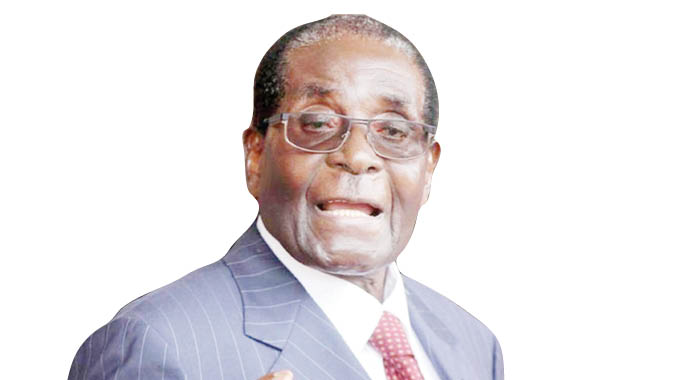
Dr Obert Mpofu
Keynote remarks by Cde Dr Obert Mpofu, Zanu-PF Secretary for administration at the 10th Session of the Secretaries General and Wings of Former Liberation Movements in southern Africa held in Victoria Falls last week.
IT is with sadness that this inordinate meeting is being convened at a time the continent and the rest of the world are mourning Cde Robert Gabriel Mugabe’s elevation to glory. His untimely departure has offered the world an opportunity to appreciate how he was an effigy of every voice and institution opposed to the asymmetrical global order. In his lifetime, Cde Mugabe became an ideological mantle of our centuries of resistance to colonial hegemony, plunder and exploitation. After independence, he gave a nod to Africa’s inaugural land reform programme. This substantiates the magnitude of loyalty he submitted to the liberation creed of this region and Africa at large. Therefore, the doyen pan-Africanist Mugabe here is not the person, but he is now an idea representing perennial aspirations to remodel Africa’s decolonisation project.
While his realistic response to sanctions and a neo-colonial sponsored opposition falsely and narrowly projects him as a dictator, to those of us who saw the golden age he was preparing for Zimbabwe, Mugabe remains the illustrious Founding Father. Cde Mugabe raises to the celestial as the bedrock of Pan-African memory; as a champion and think-tank of reframing the ontological density of Blackness.
Today Mugabe is the African force of ideological retention. He is the reclaimer of the unifying virtues of the late Julius Nyerere, Augustino Neto, Samora Machel, Oliver Tambo and Sir Seretse Khama. He is the embodiment of the African legacy and African heritage which slavery, apartheid and imperialism thought they had dismembered for good. His elevation to glory renders a permanent scar to the body of the pan-Africanist movement. May His Dear Soul Rest In Power.
The best service we can offer to Mugabe and other grandfathers of the African anti-colonial movement is to strengthen our return to the past in a bid to lay a solid philo-praxis foundation to our hallmark neo-colonial fight.
As the people of Zimbabwe, we are greatly honoured to have been led by this notable liberation stalwart and giant pan-Africanist. It is the credence of his revolutionary leadership which informs our affiliation to the fraternity of Former Liberation Movements. Furthermore, the convening of this meeting in Zimbabwe fortifies the mandate of the Second-Republic under His Excellency President Emmerson Mnangagwa to engage and re-engage the international community.
Zimbabwe’s mandate to host this meeting symbolically articulates two policy pillars of envisaged national and continental development which are capsuled in the country’s Vision 2030 and the African Union’s Agenda 2063. Zimbabwe’s Vision 2030 offers a preliminary foundation for re-crafting our domestic policy to guarantee sustainable multi-dimensional foreign policy interests emanating from the Sadc region, the African Union (AU) and the world at large.
Our Second-Republic’s Vision 2030 will be of no essence if it is not set in tandem with the AU’s Agenda 2063 — aimed at enriching the socio-economic and political instruments of Africa’s development. This comes at a time we are also calling for the widening of Foreign Direct Investment opportunities in our country so as to further activate our subscription to the African Continental Free-Trade Area Protocol.
Our zeal to contribute to initiatives which advance the unification of Africa such as the FLMs is grounded on the Julius Nyerere’s Uhuru na Ujamaah doctrine. This very same creed has been revitalised and redesigned in Thabo Mbeki’s call for African renaissance.
Therefore, I ride on the shoulders of the successive merits of critical African thought to invite a reasoning among ourselves which is embedded in “African Solutions for African Problems”. The uninterrupted dialectic premise to understanding the personality of liberation movements is dissected by Amilcar Cabral (1966) who notes that:
“Although the colonial and neo-colonial situations are identical in essence, and the main aspect of the struggle against imperialism is neo-colonialist, we feel it is vital to distinguish in practice these two situations. In fact the horizontal structure, however, it may differ from the native society, and the absence of a political power composed of national elements in the colonial situation make possible the creation of a wide front of unity and struggle, which is vital to the success of the national liberation movement.”
Cabral benchmarks the inter-generational motive of the FLMs which is anchored on the true aspirations of the founding fathers. From the founding nationalists to the millennials the FLMs institution is an inter-generational confluence between the aspirations of yesterday and those of today. In full acknowledgement of the need for posterity of the liberation movement the late Cde Robert Mugabe’s wisdom still echoes the need for regional integration as he once said:
“Unity is in fact more than mere harmony. It is an active bond of aspirants who share common given political beliefs. Unity is integrative of constructive or progressive or revolutionary forces in the direction of set goals. Unity is equally disintegrative of destructive or retrogressive or counter revolutionary forces that operate against progress and against unity itself.”
The words of these two revolutionaries validate the theme of this gathering as our critical mass must be perpetually biased towards “Uniting Former Liberation Movements Against Neo-colonialism Through Total Economic Co-operation, Development and Independence”.
Therefore, it is my hope that our deliberations will redirect our thoughts to the shared burden of collectively grappling with neo-colonialism. The neo-colonial project has fastened its levers through championing subtle means of subjugating Africa through neo-liberal expediencies. Frantz Fanon in his seminal publication, The Wretched of the Earth warns today’s FLMs not to be ideologically incomplete and lifeless in order to debunk a dismembered past characterised by Africans’ deprivation of the means to provide either capital and refined economic leadership to the new republic. Consequently this has subjected many of our member-states investing faith in colonial bankers’ loans — their counsel and aid. This systematic tragedy of dependency has forced the new nation to remain hooked on its former coloniser just as it was during the colonial period. The realisation of this global power imbalance agitates the need for us to foster total economic freedom and re-align the discourse of democracy to the aspirations of our founding fathers. Moreover, the desire to end this material and ideological dependence on the colonial powers inspires the much needed collective path to rapidly develop a pragmatic, organic, pan-African — nationalist form of capitalism that is thoroughly diversified for the purpose of sustainable regional economic and political stability. This inevitably calls for strategic counter-measures to the clandestine manoeuvres of modern-day colonial realism.
Therefore, the establishment of the Julius Nyerere School of Ideology is a timely move which speaks to retooling the ideological facet of the FLMs. Likewise, our respective Party schools must re-tool all our wings with the much needed ideological tutelage aimed at dismantling the neo-colonialist threat to the Former Liberation movements.
Advancing and incentivising our ideological predisposition in all organs of our Parties will strategically circumvent the post-colonial repetition without change and capitulation of Anglo-Americanising our systems of state-craft. While globalisation is paraded as the trusted model for pursuing sustainable socio-economic and political development, we need to be more discerning of its linear and exploitative manoeuvres which disenfranchise the continued enhancement of enduring nationalist interests. Our interaction with Western realist modernity has taught us that our Ubuntu humanism has been met with resistance of the perpetual matrix of colonialism.
You will all recall that this gathering is a sequel of the 9th General Meeting of our Heads of State which was held in Namibia. This shows the region and the continent’s commitment to curating frameworks which consolidate the incumbency of the nationalist movement in pressing towards a collective resistance to modern day imperial hegemony.
We are also grateful of the recent resolutions by the Sadc to call for the immediate and unconditional removal of sanctions on Zimbabwe by the West. It is clear that Africa is now speaking together in one corner and thus reigniting the “Injury to one and is Injuring to all” principle. We are optimistic that the Sadc Anti-Sanctions resolution of setting 25 October, 2019 as the day with which Southern-Africa will express its displeasure on the continued imposition of sanctions against Zimbabwe will also become a historical subject of reference to the African-Union.
Fellow Comrades, today we coalesce on the pan-African nationalist ethos of our mandate to tackle the ever-changing complexities and complexions of colonialism. We have noted in our countries how neo-colonialism has repackaged itself through narrow Western anchored democracy and human-rights discourse in African politics. The prescriptive inclination of this democracy and human-rights ignores the existence of our regional protocols and municipal institutions which are predicated on the preservation of constitutionalism and good governance in Africa. We have also seen how sanctions have been used as a diplomatic missile to injure our self-confidence and subjecting us to unilateral terms of dictated democracy aimed at impelling regime-change and the consequent obliteration of the Former Liberation Movements.
Neo-colonial propaganda masked through the ambit of foreign-backed opposition which crudely instigates a clear agenda for change-politics in Africa. Not that there is any evil about political transitions, but there is everything wrong when the change sought is influenced by external forces with clear vendettas linked to decimating African nationalism.
Validating any change which disparages the aspirations of our shared struggle is tantamount to washing away the sacrifice of African revolutionaries. Our weapon of unity against neo-colonialism in pursuing the region’s aspirations for collective socio-economic advancement and political freedom should be hinged on the monumental ethos of pan-Africanism and historically grounded nationalism. Therefore, ‘‘by any means necessary’’ we are mandated to ‘‘organise and centralise’’.



 Online Reporter