Luckmore Safuli
Throughout a nation’s conservation journey, there are some moments that rise above mere policy and statistics.
These moments are steeped in emotion, almost carrying a spiritual weight, and they become significant milestones in our shared history. For most of us, witnessing the triumphant return of the black rhino to Matusadona National Park a few weeks ago was one such extraordinary moment.
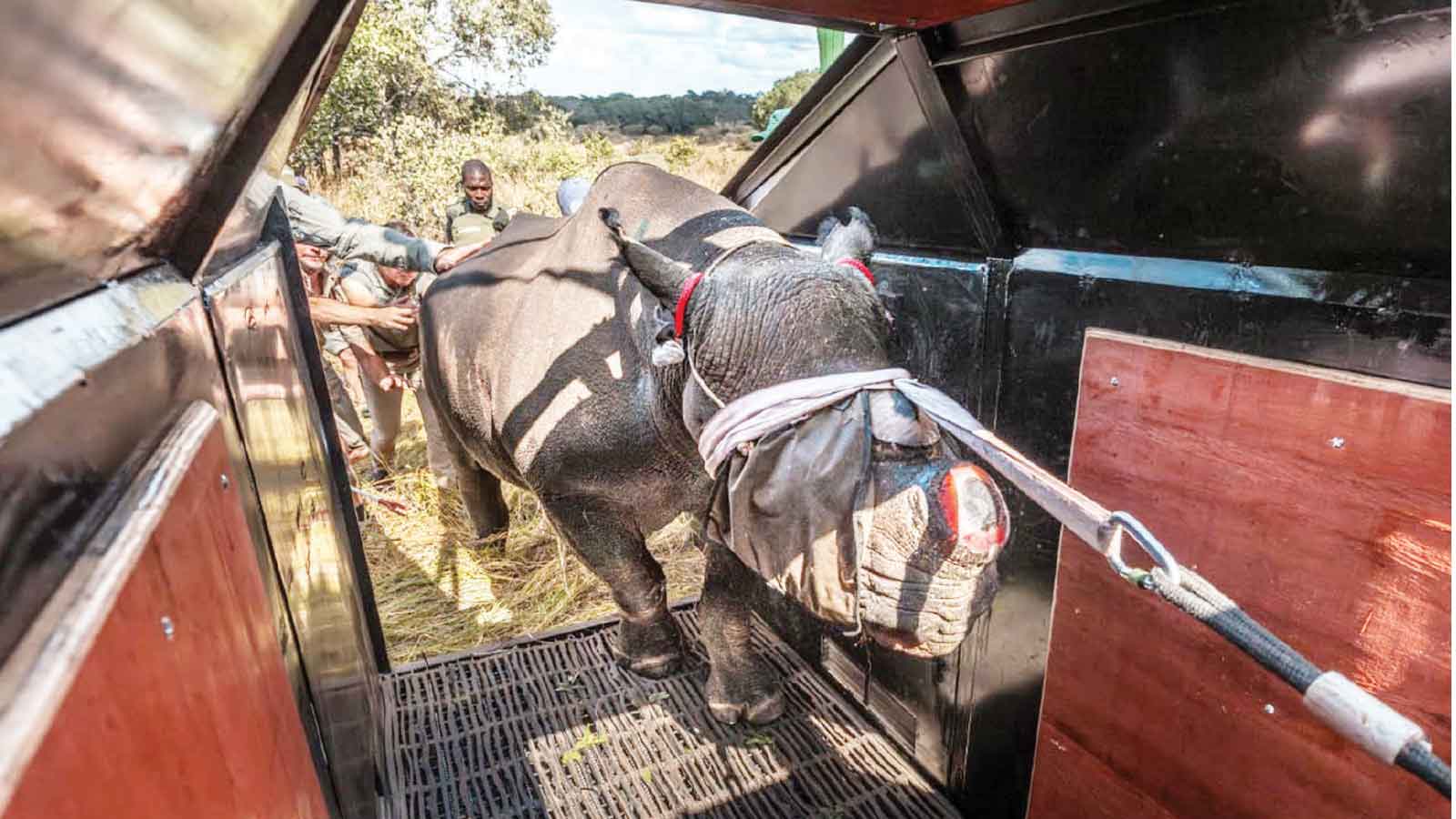
It reminded us of nature’s resilience, the power of hope and our collective responsibility to protect Zimbabwe’s precious wildlife heritage. Standing on the Matusadonha airstrip, watching crates carrying the descendants of animals that had been desperately airlifted out three decades ago, a feeling of closing a painful chapter permeated the landscape.
Matusadona — a 140 700-hectare landscape on the shores of Lake Kariba — was historically synonymous with black rhino.
In the late 1980s and early 1990s, the Sebungwe region (where Matusadonha belongs) held Zimbabwe’s largest contiguous population of these majestic creatures.
Then came organised poaching.
It was brutal, sophisticated and relentless. The Zimbabwe Parks and Wildlife Management Authority (ZimParks) was at a crossroads and needed to make a critical choice: whether to leave the rhino to its fate or capture the survivors and move them to safer grounds.
It chose the latter. Eyewitnesses remember the stress associated with those days — loading crates, flying out animals and wondering if they would survive and return to their original habitat. The dilemma did not stop with the rhino. African wild dogs — already among the continent’s most endangered carnivores, with fewer than 700 breeding pairs left globally — vanished from the park’s landscape.
Matusadona, once a wilderness jewel teeming with diverse wildlife, had become a shadow of itself.
A partnership forged in crises
That dark period, however, gave birth to a radical idea.Peter Fearnhead, now the CEO of African Parks, and others were in Matusadona in the early 1990s and witnessed the loss of rhinos firsthand. That experience, together with ZimParks re-engineering of conservation, helped shape the vision for a new kind of conservation reorganisation, one that takes long-term, full management responsibility for protected areas in partnership with governments.
In 2019, ZimParks signed a 20-year management agreement with African Parks, creating the Matusadona Conservation Trust (MCT).
Sceptics called it a gamble, but the results have been apparent.
Within a few years, poaching dropped dramatically. The ranger force was boosted, retrained, equipped and motivated.
A 175-square-kilometre Intensive Protection Zone was established, complete with real-time tracking technology.
That same technology now serves as ZimParks’ eyes on the lake, curbing illegal activity and reducing the costs of physical patrols.
In that regard, more drones and surveillance tools are being deployed.
The comeback
The most visible fruits of this partnership are the species reintroductions.
A week-long reintroduction operation saw a group of critically endangered black rhinos airlifted back to Matusadona.
These were not foreign animals; they were direct descendants of those ZimParks had moved out decades ago.
The reintroduction directly supports Zimbabwe’s National Rhino Strategy by establishing a founder population that should, over the next 15 years, contribute to another metapopulation in the country.
Sourced from Imire Rhino and Wildlife Conservancy, Matobo National Park and another secure location, the rhinos will be soft-released in phases into the Intensive Protection Zone. The reintroduction of rhinos at Matusadonha not only reinforces the country’s position as a global leader in biodiversity conservation but also highlights the significance of strategic partnerships within the conservation sector.
Under the visionary leadership of His Excellency, President Mnangagwa, and guided by the “Zimbabwe is open for business” mantra, the Second Republic has prioritised public-private partnerships in its conservation efforts.
ZimParks partners, including Imire, Dambari Wildlife Trust, the European Union, Global Wildlife Fund, Thomas and Sara de Swardt, and the Rhino Recovery Fund, among others, were instrumental in the successful reintroduction of the rhinos.
Their sustained investment enabled this return, which could have remained a dream. ZimParks is also equally grateful to traditional leaders — Chiefs Mola, Masampakaruma, Nebiri and Negande — who championed the rhino’s return from the very beginning.
Even before the rhino came home, MCT announced the successful translocation of 20 African wild dogs in February 2026.
These 20 animals, flown in on a stress-free two-hour flight, now roam Matusadona’s valleys and escarpment, restoring the park’s full predator guild. Wild dogs are hyper-social, requiring meticulous boma preparation and post-release monitoring. The team pulled it off flawlessly. But the restoration does not stop there. In 2025, ZimParks introduced 10 eland, 14 sable and 50 buffaloes.
In 2026, roan and more eland will follow.
Enhancing tourism A recovered park must also be accessible. MCT entered into an agreement with Mack Air for direct flights into Kanjedza Airstrip, creating a circuit from Victoria Falls via Hwange to Kariba and beyond. A new 10-seater speedboat now transfers clients from Kariba to Tashinga, and soon, a ferry capable of carrying four to six vehicles will be commissioned, opening the park to self-drive tourists connecting to Sebungwe and beyond.
Accommodation options have diversified. Jenje Bush Camp, an exclusive semi-luxury camp at the confluence of the Jenje and Biriwiri Rivers, offers professional guides, bush walks, game drives and boat safaris.
The Tashinga Cottages, hybrid tent-and-concrete units including Mopane Cottage and the twin Mahogany A and B provide comfortable stays. For the truly adventurous, eight Wilderness Campsites (five in the escarpment, three on the valley floor) offer unserviced, self-sufficient experiences.Wildlife viewing has also improved.
A US$140 million game drive contract signed with France-based Croisi Europe is a vote of confidence from international markets. Walk-in customers now enjoy game drives, fishing and cruises, with feedback indicating they are finally getting value for money.
Improved fish catches, thanks to reduced illegal gill-netting, have been a particular highlight and draw card.
Community benefits
Conservation that excludes communities cannot succeed. This is why the new Parks and Wildlife Act is so transformative.
Already, MCT has established benefit-sharing agreements with local communities.
Trial floating cages for fish farming reduce pressure on the lake’s wild stocks while supporting livelihoods. A cold chain facility at Kings Camp, operational from the second quarter of 2026, will handle fish cleaning and processing, adding value and creating jobs.
The most exciting community-linked development, however, is at the former Ume Crocodile Farm. Following Padenga’s closure, MCT has initiated negotiations to take over the site.
The plan is to convert crocodile ponds into fishponds for a joint venture with communities, while utilising the existing Rokari Airstrip, a long runway capable of handling larger aircraft.
These are not handouts.
They are economic opportunities rooted in a healthy ecosystem.
When tourists come to see rhinos and wild dogs, they hire local guides, buy local produce and pay park fees that fund schools and clinics through our revenue-sharing mechanisms.
Blueprint for Zimbabwe
Matusadona’s rebirth is not an isolated success. It is a blueprint. What has been achieved here, with black rhino, wild dogs, enhanced tourism and community benefits, can be replicated across Zimbabwe’s protected areas. But it required three ingredients: Government will (ZimParks never gave up on Matusadona), a committed long-term partner (African Parks) and a legal framework that enables innovation (the new Parks and Wildlife Act).
Those iconic animals are back.
The wilderness value is rejuvenated and Zimbabweans from the Nyaminyami communities to our international partners can be proud.
Luckmore Safuli is the public relations manager of ZimParks