Oliver Kazunga
SANDAWANA MINE is steadily emerging as one of the country’s most significant lithium development projects.
Expanding mining activities, a mulled US$330 million investment in mineral processing and more than US$65 million committed to infrastructure are all expected to transform the site into a major industrial and economic hub in rural Mberengwa.
The wholly owned Zimbabwean mine — operated by Mutapa Energy Resources, a unit of Mutapa Investment Fund — has this year mined a staggering 2,9 million tonnes of lithium ore from its starter pit.
This development marks significant progress in the mine’s operations as it races to establish domestic processing capacity ahead of the Government’s December deadline for ending exports of raw lithium concentrates.
Development of the mine is beginning to reshape the surrounding communities, with investments in roads, electricity and water infrastructure, modern housing, agriculture and income-generating projects expected to create lasting economic opportunities for more than 18 000 villagers.
At the centre of the expansion is a proposed US$330 million concentrator plant with an annual processing capacity of three million tonnes.
This plant will enable Sandawana to process its lithium ore locally rather than rely on external processing arrangements.
The mine has already processed 310 000 tonnes of lithium concentrate through a toll-processing arrangement with Gwanda Lithium Company as it mobilises resources to establish its own facilities.
Mutapa Energy Resources chief executive officer Mr Innocent Rukweza said the company was also engaging potential partners to establish a lithium sulphate plant next year.
Under the Government’s policy, lithium producers are expected to stop exporting concentrates by December this year and begin exporting lithium sulphate from January 1, 2027, as Zimbabwe intensifies efforts to capture more value from its finite mineral resources.
Mr Rukweza acknowledged that Sandawana was behind schedule in establishing its processing facilities, citing funding and capacity constraints.
“As you are aware, in line with NDS2 (National Development Strategy 2), we are expected to stop the export of concentrates in December 2026.
“On that basis, we are also in talks to make sure that we try to erect and build a sulphate plant, which we will do sometime next year, but we are very much aware that we are behind time,” he said.
The company has so far raised about US$20 million from the local market against a US$200 million target for the concentrator plant, highlighting the financing challenges confronting the ambitious expansion programme.
However, the mine’s long-term prospects have been strengthened by a US$15 million exploration programme undertaken in 2022 and 2023, which established the resource base for the planned processing facility.
Mr Rukweza described the exploration as arguably one of the biggest undertaken in the country.
The investment in processing capacity is being complemented by more than US$65,3 million in supporting infrastructure, positioning Sandawana for expansion while creating important economic enablers for surrounding communities.
These include a 52-kilometre service road linking the mine to York Business Centre, a 52-kilometre power line and a 16-kilometre water pipeline drawing water from Mundi River in Mataga.
The infrastructure is intended to support mining and processing operations through improved transportation, electricity and water supply, while also opening up opportunities for agriculture, commerce and other economic activities.
The company is also planning another road linking Sandawana to West Nicholson in Matabeleland South province through a consortium loan facility, a development expected to improve connectivity and open up a new economic corridor.
Livelihoods
For communities surrounding the mine, the investments are beginning to have an impact on lives and livelihoods.
According to a company survey covering four immediate wards, average annual household income stands at just US$118, a situation Mr Rukweza says the company wants to change significantly over the next five years.
The company is pursuing several income-generating initiatives, including cattle farming, irrigation-based agriculture, brickmaking and the establishment of cooperatives.
A US$150 000 brick-making machine has already been deployed, while the company is identifying quarry sites where local cooperatives can participate in construction-related businesses.The initiatives are intended to ensure that communities participate directly in economic activities arising from the mine’s expansion rather than relying solely on employment opportunities.
The relocation of families affected by the mine’s expansion is another important component of the development programme.
A total of 104 families are affected, with 28 already resettled and 76 awaiting relocation.
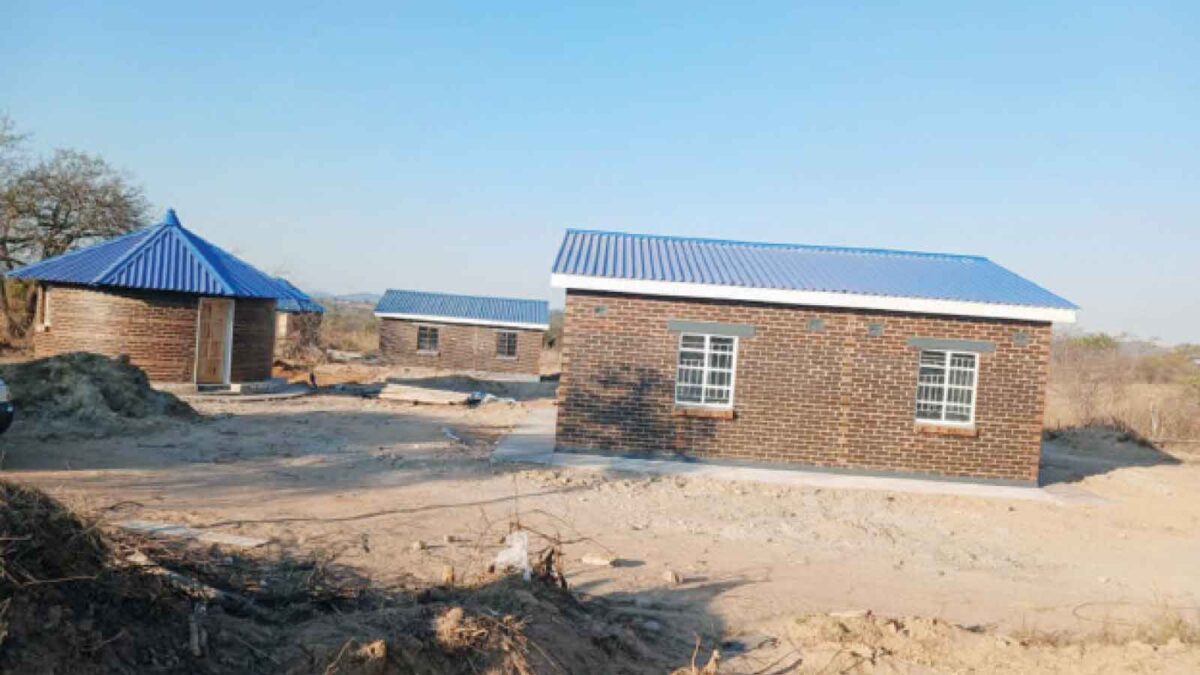
Each relocated household is being provided with a modern three-bedroom house and a brick-built round hut at an estimated cost of US$28 000 per homestead.
The company has also completed the exhumation of human remains from 69 graves and is identifying sites for boreholes to support irrigation activities on land allocated to relocated families.
Mr Rukweza said the new houses had been well received by beneficiaries, with some families moving into their homes before construction was fully completed.
“We have people who have actually seen our houses and they have liked them so much that they have even settled in before they are complete,” he said.
Opportunities
Traditional leaders have also welcomed the investments, particularly their potential to improve infrastructure, employment and economic opportunities in rural communities.
Chief Mudavanhu, whose jurisdiction covers Mberengwa, said the mine’s development should create opportunities for villagers to participate in agriculture, business enterprises, cooperatives and formal employment.
He said communities were already beginning to benefit through employment, while the proposed irrigation schemes and brick-making cooperatives would further broaden their participation in the local economy.
The traditional leader also said the company had promised to establish a new health facility and schools.
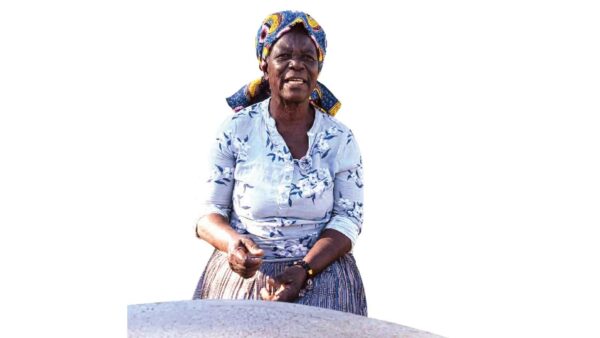
For workers such as Ms Priscilla Ncube, the mine’s expansion is already translating into improved livelihoods.
Employment at Sandawana, she said, had provided her with a reliable income after previously depending on subsistence farming.
Her salary has enabled her to support her children’s education, purchase food and meet other household expenses.
Meanwhile, the Parliamentary Portfolio Committee on Mines and Mining Development has urged the mine to ensure that its expansion delivers meaningful benefits to affected communities.
Committee chairperson Mr Remigio Matangira, who led a familiarisation tour of the mine last week, said Parliament expected fair compensation for displaced families, taking into account the sentimental value of their properties.
He also emphasised the need for the mine to prioritise local people in employment and contribute meaningfully to community development through corporate social investment.
Zimbabwe, which holds Africa’s largest lithium reserves and ranks fifth globally, is seeking to strengthen domestic mineral processing as part of broader efforts to maximise earnings from its natural resources.
The mining industry remains one of the country’s major economic drivers, with the Government projecting US$12 billion in mineral earnings this year, underpinned by increased production, value addition and beneficiation.
Sandawana’s gradual rise represents an important test of how Zimbabwe can translate its mineral endowment into industrial growth and rural economic transformation.
Its progress will ultimately be measured not only by the tonnes of lithium extracted or the processing capacity established, but also by the jobs created, businesses sustained, infrastructure developed and improvements in household incomes across Mberengwa.