Online Reporter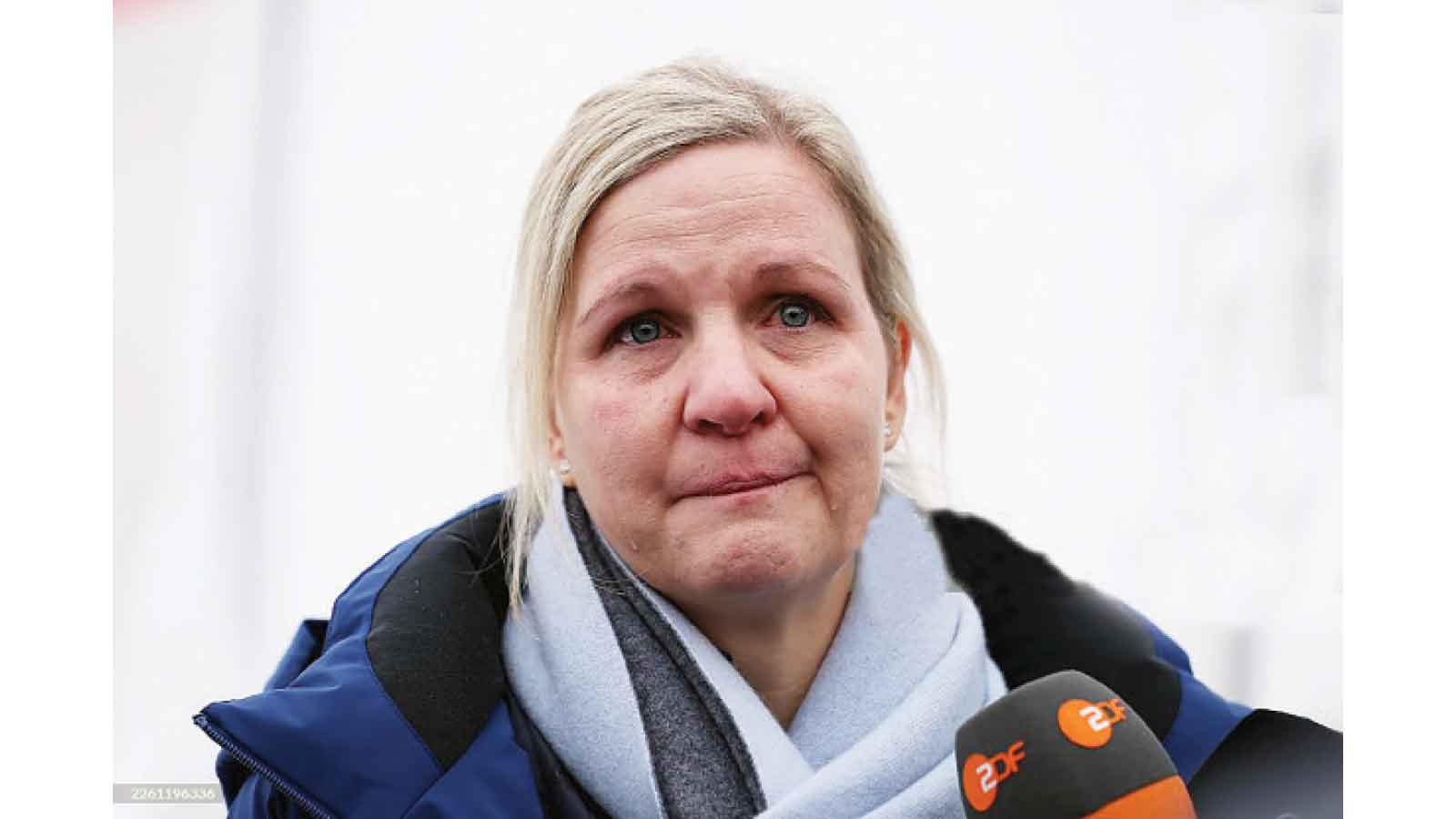
IN the past days the International Olympic Committee president Kirsty Coventry has had to deal with one of the most difficult challenges of her nine-month presidency — the fallout of Vladyslav Heraskevych’s expulsion from the skeleton competition.
According to The Irish Sun, it’s a situation that left her in tears.
And she was forced both to explain and visit the athlete, explaining why she had banned a Ukrainian’s “helmet of memory” from the Milan-Cortina Olympics.
For the Zimbabwean, the world’s most powerful woman in sport, if this does not break her, then nothing will.
Defiant Heraskevych (27), wore headgear in training that depicted images of compatriots killed during the Russia-Ukraine conflict.
Heraskevych wanted to wear it last Thursday during the opening two runs of the skeleton event, but half an hour before the start time, it was announced that he would be disqualified.
A few hours later, it was confirmed that he would be given his accreditation back, which had initially been withdrawn — so he could return to the Athlete Village — but he is not going to be reinstated to the Winter Olympics.
Coventry, a two-time Zimbabwean Olympic swimming champion, made a personal trip to Cortina to meet with Heraskevych and his dad face-to-face to explain that he had broken IOC athlete expression guidelines.
The news has attracted mixed feeling across the world.
In a six-minute chat with reporters at the ski resort in the Italian Alps, Coventry had to stop at one point to compose herself as she tried to explain the IOC’s stance, The Irish Sun reported.
Coventry (42), said, “I wasn’t meant to be here but felt it was really important to come and talk to him.
“I was chair of the Athlete Commission at the time in 2020 when we really understood that the athletes have strong views on many messages and topics globally.
“They asked us to find space for them during the Games to share those views with the world.
“They also asked us to keep certain areas — the field of play, the podium and Olympic Village — as safe zones.
“We have allowed him to use his helmet in training. No one, especially me, disagrees with the messaging.
“The message is powerful, a message of remembrance and memory.
“The challenge that we are facing is that we want to ask or come up with a solution for just the field of play.
“Not to wear the helmet on the field of play. I proposed to him to find ways because he also said, when he goes down, it’s blurry, you cannot see it.
“I said maybe we could pay homage to his helmet before he races. And then bring it into the mixed zone.
“Could we find another solution where the memories could be honoured in a wonderful way? Sadly we have not been able to come to that solution.
“I really wanted to see him race today. It has been an emotional morning . . .
“We were not in tears (when we met). But I was not speaking to him in that room as a president, I was speaking to him as an athlete.
“We have these rules in place to try and be fair and try to allow for us to do both things — to allow athletes to express themselves but also allow athletes to be safe.
“I truly believe him and his dad believe that. I think this is a difficult situation that we are all in.”
Coventry added that she would look towards helping Heraskevych and his dad to get governments and sports leaders to pay for generators for sports venues that had been destroyed during the war. — The Irish Sun / Zimpapers Sports Hub