Rutendo Nyeve, Victoria Falls Reporter
ZIMBABWE’S employment landscape is undergoing a seismic shift, driven by the rapid rise of the gig economy, a burgeoning trend that is transforming traditional definitions of work, workplaces and employment boundaries.
This new mode of work is not only reshaping how Zimbabweans earn a living but is also injecting vitality into the nation’s economy, particularly through technological advancements and digital platforms.
These insights emerged at the recently held 2025 Institute of People Management of Zimbabwe (IPMZ) Annual Human Resources Convention in Victoria Falls, where human resources experts unpacked the implications of this evolving landscape.
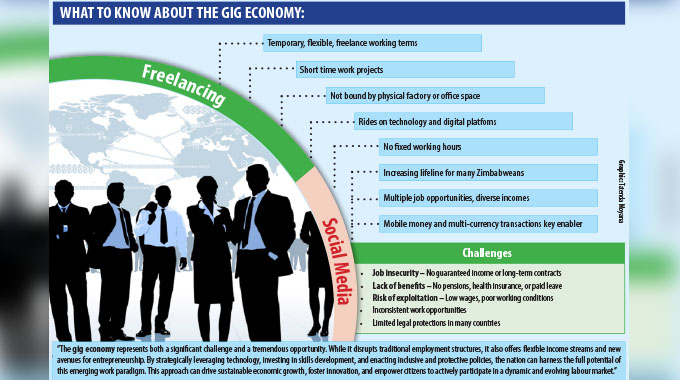
The gig economy, characterised by temporary, flexible and freelance work arrangements, is challenging long-standing notions of employment. Seasoned human resources management practitioner Ms Auxilia-Oma Mafura, who boasts 36 years of experience across both public and private sectors, including leadership roles at CMED, NicozDiamond and ZETDC, spotlighted this transformative shift.

“The definition of an employee has expanded from the traditional full-time model to include gig workers, freelancers and independent contractors who are hired on a project basis and paid solely for their services,” she said.
This evolution mirrors a global trend in which workers increasingly prioritise autonomy and flexibility over the stability of permanent roles.
Ms Mafura added that the workplace, once defined as a physical office or factory, is now wherever the gig worker chooses: a home office, a co-working space, or even a café.
“Gig workers create their own workspace and choose when and where to work, unlike those in traditional employment whose workplaces are physically defined,” she explained.
Similarly, boundaries such as fixed working hours are dissolving, replaced by flexible schedules tailored to individual preferences. This shift is particularly evident in sectors like ride-hailing, content creation and digital services, where platforms such as Upwork, Fiverr, and local networks like Zimbuddy are flourishing.

The gig economy has become a lifeline for many Zimbabweans, particularly the youth, amid high unemployment rates. According to the 2024 ZimStat report, 58,7 percent of unemployed individuals are aged between 15 and 24, while 57 percent of the population lives below the poverty line.
In this context, gig work is emerging as both a survival strategy and a catalyst for economic participation.
“Gig work offers opportunities in ride-hailing, content creation and remote tutoring, among others,” said Ms Mafura.
She noted that platforms like inDrive and Bolt enable Zimbabweans to earn between US$30 and US$50 daily as drivers, while freelancers on Upwork and Fiverr offer services such as graphic design, programming and content writing to international clients. This not only provides income but also brings much-needed foreign currency into the country.
“Mobile money and multi-currency transactions, facilitated by EcoCash and PayPal, are helping mitigate local currency instability and enabling gig workers to thrive,” Ms Mafura added.
Moreover, the gig economy is fostering skill development and entrepreneurship. Young content creators on platforms like TikTok and YouTube are monetising their creativity, earning between US$15 and US$30 per hour through adverts and sponsorships.

This entrepreneurial energy aligns with Zimbabwe’s National Development Strategy 1 (NDS1), which aspires to achieve upper-middle-income status by 2030 through digital transformation and innovation.
As the gig economy grows, technology and artificial intelligence (AI) are playing pivotal roles in enhancing productivity and efficiency. Founder of the Zimbabwe Innovation and Legal Technology Association (ZILTA), Mrs Rutendo Mugadza-Mugwagwa, emphasised the importance of embracing digital tools in modern workplaces.
“Technology-driven solutions such as AI-powered dispute resolution platforms and electronic case management systems are revolutionising how labour disputes are handled, making processes faster and more transparent,” she said.
AI is also streamlining talent-matching, enabling gig workers to connect with opportunities that match their skills. For instance, algorithms on platforms like Upwork and MyJobMag Zimbabwe analyse user data to recommend suitable gigs, reducing the time spent searching for work.
Mrs Mugadza-Mugwagwa urged human resources professionals to lead the integration of technology into workplace processes, invest in continuous training and cultivate a culture of innovation to stay competitive in this dynamic environment.
Mr Tichafara Viriri, a senior designated agent at the NEC for Commercial Sectors of Zimbabwe, echoed this call for digital transformation in labour management.
“NECs should adopt electronic case management systems to efficiently store and retrieve critical data. Such systems are vital not only for policymaking but also for national development,” he said.
Mr Viriri also stressed the importance of upskilling, noting that technological competencies are evolving faster than any other skillset and organisations must align their future needs with emerging trends.
However, despite its many benefits, the gig economy also presents challenges. These include inconsistent income, lack of traditional employment benefits such as health insurance and unclear employment boundaries.
“Gig workers face employment insecurity and lack access to conventional benefits, which calls for innovative human resources strategies to safeguard their rights,” said Ms Mafura.
To address these gaps, experts advocate for hybrid models that combine the flexibility of gig work with the protections of traditional employment.
For Zimbabwe, the gig economy represents both a challenge and a tremendous opportunity. By leveraging technology, promoting skill development and enacting inclusive policies, the nation can unlock the full potential of this emerging work paradigm to drive economic growth and empower its citizens. — @nyeve14