

 admin
admin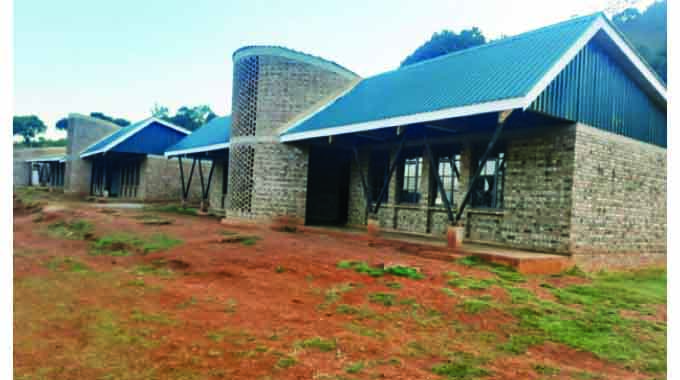
Elliot Ziwira-Senior Writer
SHIELDING herself from the unrelenting September heat with a broad-brimmed cream sunhat, 41-year-old Takemore Mufuya sits on a massive boulder under the scant shade of a Mupfuti tree, her eyes betraying the emotional struggles she has endured.
It is a Wednesday mid-afternoon, as foreign and local journalists are on a media tour of Chimanimani, in Manicaland Province, arranged by DanChurchAid (DCA) recently, to witness the devastation firsthand, and hear stories of resilience and adaptation from some of the victims.
A community shattered
To the north-east, Nyahode River swirls, promising residents of Kopa Growth Point and the vicinity new beginnings. The scorching rays beat down unperturbed, baking the rugged landscape.
Curiously, this was once a thriving community of 70 households, including those for Government employees, now transformed into a maze of colossal boulders, uprooted trees, and scattered debris carried in an avalanche of dreams from far-and-wide.
In March 2019, Cyclone Idai ravaged Mozambique, Zimbabwe, and Malawi, leaving a trail of destruction and heartbreak. Chimanimani, a picturesque district in eastern Zimbabwe, was among the hardest-hit areas.
Chimanimani, which is prone to heavy rains, has an area of 3 450 square kilometres, and shares boundaries with Mutare, Buhera and Chipinge districts.
According to the Zimbabwe Rapid Impact and Needs Assessment (2019) report done by the World Bank in collaboration with the Government, Cyclone Idai caused 344 deaths, while 257 people went missing, and 60 000 were displaced in Manicaland, Mashonaland East and Masvingo provinces.
While emotional loss cannot be quantified in monetary terms, the RINA report assessed damages at between US$542 million and US$616 million across nine districts, with Chimanimani and Chipinge most affected.
At least 90 percent of the damages were in transport at US$163,8m, agriculture ($155,3m), and housing (US$131,5m). About 865 kilometres of roads, and 20 354 metres of bridges were damaged. Full recovery across sectors in the short to medium term requires between US$557 million and US$767 million, the report estimated.
Approximately, 50 000 farming households were affected, and 1,4 million hectares of arable land were destroyed. Compounded by the El Nino-induced drought, the cyclone exacerbated existing food insecurity and economic shocks, potentially accelerating outmigration.
In Chimanimani, 8 000 households were displaced, 95 percent of the road network, and at least 10 critical bridges were either damaged or destroyed, rendering the district inaccessible.
Between 6 324 and 6 795 housing units were damaged.
Estimated costs of damage in the district are between US$66 million and US$71 million. More than 60 houses were buried under boulders in Ngangu Extension, while 70 households were swept away at Kopa Growth Point.
Takemore relives the night of terror
Cyclone Idai had swept away everything from Takemore, leaving only remnants of the life she once knew. Her thoughts drifted to her husband, Brain, and her six-year-old youngest son, Blessing, lost in the pandemonium.
With a gentle shift on the weathered boulder, and her eyes clouding over, she smooths her dotted black and white dress, her right hand coming to rest on her lap as she settles in her story. The other hand, adorned with a simple bracelet of earthy brown beads, finds a resting place on the adjacent rock.
Crossing her red-slippered feet, she pauses, gathering her thoughts, before beginning her recollection.
“Death separated my husband and I on March 15, 2019 when Cyclone Idai hit,” she says, her voice barely above a whisper.
As she speaks, her gaze wanders to passers-by leisurely strolling to the business centre at Kopa, then to the women doing their laundry by Nyahode River, their laughter and chit-chatter hugging the breeze. All this starkly contrasts the devastation surrounding them.
“Before the cyclone, I was married and had three sons, Tonderai, aged 16, 11-year-old Brain Jr, and Blessing (6). We lived happily in a rented house in Kopa. Now, I am just an empty shell,” she says, tearfully.
Takemore’s story unfolds like the combined currents of Nyahode, Rusitu and Chipita rivers, which, five years ago, converged on Kopa Growth Point with their cargo, including dead human and animal bodies, swelling their wombs; twisting and turning through pain, determination and regret.
Painfully, it was only a week after her husband, youngest son and herself had returned from South Africa where he worked.
“We had joined him there earlier on, and came back together,” she says.
Agony rolling on her tongue, she intimates how she was separated from her family, and the way disaster dealt her a heavy blow. Although word of the approaching heavy rains spread, they dismissed it as a passing phase, “just like other disasters in the past, like Cyclone Eline, and Cyclone Japhet”.
Holding her hubby’s hand, and Blessing securely strapped on her back, they navigated the rope provided for rescue. Tonderai and his younger brother had disappeared. When the rope snapped, they kept on holding hands.
“Suddenly, I was swept off my feet, my child still tucked on my back. That’s how we were separated. The shawl loosened along the sweeping tide, prompting me to instinctively hold on to my son’s leg,” she narrates.
Momentarily, a great force swept the shawl and child away.
“I prayed for death,” she whispers, her voice trembling.
By Divine Providence, Takemore found herself spread-out on a platform above the banks of Nyahode River, naked and bleeding from her injuries, yet feeling no pain.
Eluded by closure
In the morning, disaster dawned in Takemore’ eyes. In a demonstration of community oneness, she was taken to a homestead in Ndima Village, then to a relative’s place, before being carried to a clinic in Mutsvangwa Village. Since the roads were washed away, Councillor Ndima, and other residents, carried her.
“I am grateful to the doctors and nurses, who assisted me, until my recovery. I could neither walk nor visit the toilet unassisted for three months,” she says, the scars on her hands and legs in silent confirmation.
For a week, she was unaware of her family’s fate.
“I am struggling to find closure. My husband and son’s bodies were never found. We hear that some bodies were found in Mozambique, but we aren’t sure if theirs could be also among them,” her words hit like a deluge.
Rising from the rubble
Takemore pauses, collecting her thoughts. The boulder beneath her appears to absorb the emotional words, urging her on, even silently witnessing the community’s shattered dreams under the weight of nature’s weaponry.
After initially venturing into poultry, she now has a clothing stall at the growth point. She has built two rooms at their small plot in Vheremu Village, Dzingire, in Chief Muusha’s domain—the same area Kopa falls under.
Through support of the Government and other developmental and humanitarian partners, Takemore has been able to weather the storm, although she is yet to be fully established. Higherlife Foundation provided Tonderai with a scholarship for his Advanced-Level, having been helped through Ordinary-Level by the church.
Despite the deeper emotional pain within, Takemore’s eyes sparkle with determination, as she says: “Life has changed since I used to rely on my husband, but I won’t let Cyclone Idai, or any other natural disaster define me. My only prayer is finding assistance to boost my stock.”
Clinging onto tree branches: Majiva’s agony
As Takemore’s nightmare breaks into a new dawn, thirty-six-year-old Majiva Magweva’s agony begins. Hers is a heart-wrenching and powerful tale that remains etched in her memory like a scar.
“On March 15, 2019, I was with my widowed mother and children at our family’s eight-roomed house in Kopa, near the raging Nyahode River,” she recalls. “Around 8 pm, the angry waters burst their banks. Panic set in as we scrambled for safety.”
Her voice breaking in trembles with emotion, Majiva relives the doomed-day: “I strapped my barely two-year-old, Tanatswa, to my back. But in the turmoil, the shawl loosened, and he was gone. I’ll never forget his tiny hands, and his innocent face.”
She pauses, her eyes far-gone, then she continues: “I clung to a tree, traumatised by fear. Then, I heard a faint cry: ‘Mother!’ It was Tariro Kazembe, Teacher Kazembe’s daughter. Together, we helped each other up the tree, where we weathered the night, shivering, and praying.”
As dawn broke, they found themselves on an island where the Chipita and Rusitu rivers converged.
“We were rescued around 5pm on Saturday. My jaws numbed with cold, I couldn’t eat for three days. I asked for my mother, Sarah Sunduza (62), but she was claimed by the floods. My children, Tanaka (8) and Tanatswa, only a week short of his second birthday, and my sister’s child, whom I lived with, all perished,” Majiva says, tears welling up in her eyes.
“Their bodies were never found. As a Christian, I find solace in God, but closure eludes me.”
Rebuilding from the debris
Recounting the aftermath, Majiva says they lost their house, household property, three tonnes of maize, poultry pens and 350 broilers, her business stock, as well as passport and other documents.
Like Takemore, with aid from the Government and partners, Majiva has begun to rebuild. She is rebooting her clothing business and finding solace in her faith.
“My late mother got a house in Runyararo Community established by the Government for internally displaced persons (IDPs), which I took over,” she says. “I was a single mother when the cyclone struck, now I am married, and have a child to care for.”
As the sun takes another lap towards the western rim, she holds tightly to her son, who has been braving the searing heat beside her.
“Although I will never forget my children’s faces, I must move forward, despite the pain. I am running a clothing stall at Kopa, which has great potential to thrive. All I need is capital to rebuild my business — my life,” she says, determination glittering in her eyes,
Although the trauma of that fateful night still lingers, and challenges persist, as she still awaits death certificates for her loved ones, Majiva can only look ahead—towards the future.
Rosemary’s tale of loss and guilt
Unlike Takemore and Majiva, Rosemary Musungo (50), lost neither husband nor child in the devastating cyclone of 2019, although she believes she emotionally lost more.
Her eyes overflow as she recalls how Cyclone Idai ravaged her life: “Before the cyclone, I lived in the Agricultural Research and Extension (AREX) section of Kopa, surrounded by loved ones.
“Earlier in the week, my married younger sister had come to help me with household chores, bringing her youngest child along. It didn’t occur to me that it would be her last days.”
Her memories flood back, as she narrates, “We had finished constructing our six-roomed main house and were electrifying the cottage. My husband had passed away, leaving me to care for our two sons.”
Her voice cracks when she recounts how her sister, aged 41, was joined by her other three children, two daughters who were in secondary school and the other in primary school, that fateful Friday.
“I wished for death. I blamed myself for the deaths. My sister, her four children, my tenant and his two children, and my male helper, were all swept away,” she says.
Like Majiva and Takemore, Rosemary’s pain is palpable, for she finds it difficult to find closure without burying her loved ones. The guilt constantly tugs on her. Aware of the essence of family and how society perceives her, she blames herself for not taking heed.
“We were informed of impending heavy rains, but we didn’t think much of it. That night, the rains changed direction, confusing us. The children were moved to the main house, but it was too late,” she unfurls the tragic tapestry clogging her mind.
“My children were away, safe in South Africa, the youngest of whom having moved there a week earlier with the assistance of my sister. Her husband works there, so I find it hard to shake the feeling of responsibility for the lives lost.”
Her gaze drifting off, Rosemary unburdens her soul: “I grew up with my mother’s people. I never knew my father, and my mother is late. Now, I am being blamed for my sister and her children’s deaths; they ask why my children were not home.”
Having been allocated a new house in Runyararo, she feels that she has a fresh start, even though the weight of guilt and grief lingers.
“I was there yesterday. It is a big place, about three hectares. It is a good starting point. At the moment, I am leasing a house close-by awaiting the house’s completion,” she says.
As the sun totters agonisingly towards the western womb, Rosemary’s words hang in the air, leaving an emotional tinge of Cyclone Idai’s devastating impact, testifying to the fragility of humanity’s endeavours in the wake of climate change.
Response and recovery efforts
Following Cyclone Idai, the Government and partners, like DanChurchAid, the Zimbabwe Council of Churches, Welthungerhilfe (WHH) Zimbabwe, as well as the United Nations agencies, such as United Nations Development Programme (UNDP) and the United Nations Children’s Fund (UNICEF), supported recovery efforts.
However, with the world, particularly, Global South countries, requiring at least US$100 billion to decisively mitigate impacts of climate change, funding remains an issue.
Nonetheless, demonstrating regional cooperation in the Southern African Development Community, the South African National Defence Forces and sniffer dogs aided search efforts, and the South African Government donated two bailey bridges, constructed with the Zimbabwe National Army’s assistance.
Moreover, St John’s Catholic Church in Ngangu served as a temporary mortuary and refuge, while the Zimbabwe Defence Forces deployed helicopters for rescue, relief food, and clean water.
Drawing from its own coffers, the Government constructed a new bridge on Nyahode River, and rehabilitated roads and schools in Chimanimani. The 23km Kopa-Jopa Road, a key route in the district, was commissioned by President Mnangagwa in November 2021. Other roads earmarked for refurbishment include Kopa-Machongwe, Machongwe-Rusitu Mission, Chimanimani-Cashel Valley, and Kopa-Vumba.
To promote climate-resilient infrastructure, three classroom blocks, which are yet to be commissioned, were constructed at Dzingire Primary School.
Although progress has been impeded by funding constraints, coordination and communication gaps, the Government has committed to investing in climate-resilient infrastructure, supporting sustainable livelihoods and entrepreneurship, and providing psychosocial support for trauma survivors to mitigate future disasters.
Lessons were also drawn on the importance of disaster preparedness, value of regional cooperation (SADC), and pliability in the face of adversity.
Concerning closure, in June this year, the Government commenced processing death certificates for Cyclone Idai victims, following a legal process to declare them dead. However, the process may need to be expedited.
A new beginning
Notwithstanding the trauma and other setbacks brought by Cyclone Idai, Takemore, Majiva and Rosemary are hopeful of a brighter future.
For Takemore, life may have changed, but she will not allow Cyclone Idai or any other natural disaster to define her, or take more than she has already given. And, Majiva, vows to “move forward, despite the pain”, while Rosemary declares: “I have a fresh start, though guilt remains.”
Around them, signs of determination and adaptation emerge. Women tame the ever-flowing Nyahode River, laundering in its belly and tending to makeshift gardens, coaxing life from the rocky soils. Children play among the boulders, oblivious of their symbolism, laughter echoing through the valley.
To complement the vibrancy, new buildings are rising from the rubble at Kopa, particularly around the area least affected by the cyclone, demonstrating humanity’s resilience in the face of climate change.
Indeed, Cyclone Idai shattered Chimanimani, but its people’s unyielding spirit prevails. Through determination and support, they rise from the rubble, rebuilding their lives and community.



 Online Reporter