


 Vusumuzi Dube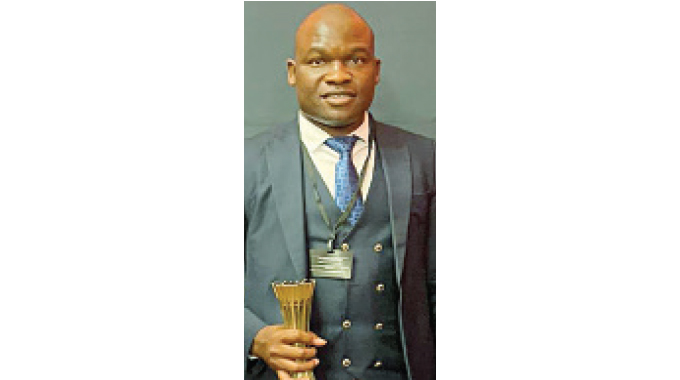
Patrick Chitumba, Midlands Reporter
INFRASTRUCTURE development expert Dr Tinashe Manzungu was honoured with “Excellence in Leadership and Global Corporate Enterprise in Africa” accolade for his business acumen at the African Achievers Awards Ceremony in the United Kingdom last Friday.
Dr Manzungu, who has active local investments in construction, microfinance, medical insurance, and real estate was in the UK for the 13th African Achievers Awards ceremony and International Summit at the House of Lords, UK Parliament in the United Kingdom.
The African Achievers Awards is an annual awards ceremony that celebrates African excellence by recognising and honouring notable individuals and organisations in Africa across multiple industries that contribute immensely to the growth and development of the continent.

Those honoured before include the late South African Cleric Archbishop Desmond Tutu, South African Minister and former African Union Chairperson Nkosazana Dhlamini-Zuma, former Tanzanian President Jakaya Kikwete, the Bill and Melinda Gates Foundation, African Development Bank among several others.
The Africa Business Council (ABC) board director who is a former Zimbabwe National Chamber of Commerce (ZNCC) president was part of global business people who were invited by Lord Simon Wooley who hosted the event.

The ceremony took place at the House of Lords, UK Parliament, United Kingdom and was running under the theme, “Unlocking Sustainable Trade and Investment Opportunities in Africa-the Public-Private Partnership (PPP0 Approach.”
The International Summit included a broad range of discussions by top facilitators from Africa and Europe bringing theoretical and practical experiences to guide how various sectors can work together to promote sustainable development across Africa.
Dr Manzungu dedicated his recent achievement to President Mnangagwa and the Second Republic who have opened avenues for indigenous players to shine locally, regionally and on the international stage in terms of socio-economic growth of the country.
“I am dedicating the top international honour to His Excellency Mnangagwa’s vision as it made it possible for me to stand solid and firm on engaging investors to South of Africa and consider investing,” he said.

Earlier, while giving a public lecture at the London School of Economics and Political Science, Dr Manzungu said Zimbabwe has a strong foundation and a willingness to accelerate future economic growth and development with real estate being the primary driver for the development.
“Zimbabwe has a strong foundation and a willingness to accelerate future economic growth and development with real estate being the primary driver for development,” he said.
Dr Manzungu said real estate development has gained popularity with investors, which has seen the acceleration spread to rural areas. He said the distinction between urban and rural setups in Zimbabwe is slowly blurring out as urban facilities and amenities are being constructed and introduced in rural areas.
“Industry rebirth is at the core of the government’s fundamental structure in line with the National Development Strategy (NDS1). Real estate development has shaken off the Covid-19 cloud in Zimbabwe with the increase in demand for rental space, suburban offices and industrial properties at 5.4 percent year on year from 2022,” said Dr Manzungu.
He said in the national budget, the construction sector is expected to achieve a growth of more than 15 percent, adding that the Government has committed towards environmental sustainability, supported by the accreditation of the Green Building Council of Zimbabwe, and the UN’s launch of a sustainability fund in Zimbabwe, particularly in the built environment which single-handedly generates almost 40 percent of the world’s carbon footprint.

“ Africa is emerging as a potential hotspot for real estate investment due to its rapid urbanisation, rising middle-class population, increased foreign direct investment, and improving business environment. Statistics show promising opportunities and strategies that can accelerate Africa’s growth in the real estate sector,” he said.
Dr Manzungu said Africa is experiencing significant urbanisation, with its urban population expected to double by 2050. This urban growth, he said, creates a demand for housing, commercial spaces, and infrastructure, making it an attractive investment opportunity for real estate developers.
“By 2030, Africa’s top 18 cities will collectively have a combined spending power of $1.3 trillion. In Lagos, Nigeria, the demand for residential properties is projected to reach 700 000 units annually until 2030. In Nairobi, Kenya, the demand for office spaces is expected to grow by about two million square metres over the next decade,” he said.
Dr Manzungu said Africa’s middle class is expanding, bringing about increased disposable incomes and a desire for improved living standards. He said this growing middle class is driving demand for quality housing, retail spaces, and leisure facilities.
“Africa’s middle class is projected to reach 1.1 billion people by 2060, representing a significant consumer base for real estate developers. The retail sector in Africa is expected to grow at a CAGR of 7.3 percent between 2021 and 2026, driven by the rising middle-class population,” he said.
Dr Manzungu said Africa has been attracting increasing Foreign direct investment (FDI) in recent years, including in the real estate sector. He said international investors are recognising the untapped potential and attractive returns offered by African real estate markets.
“FDI flows into Africa’s real estate sector increased by 14 percent in 2019, reaching $3.3 billion. South Africa, Nigeria, and Kenya have been the top destinations for real estate FDI in Africa. FDI in African real estate is expected to continue growing, driven by infrastructure development, urbanisation, and government initiatives,” he said.
Dr Manzungu said strategies to accelerate Africa’s growth in real estate, investing in infrastructure is crucial for unlocking the potential of Africa’s real estate market. He said developing quality transportation networks, power supply, and other essential amenities will attract more investors and drive economic growth.
“Partnerships between the public and private sectors can facilitate real estate development. Governments can provide policies, land, and infrastructure support, while private investors bring capital and expertise,” he said.
Dr Manzungu said promoting affordable housing projects can address the housing deficit in African cities and provide opportunities for real estate developers. He said Governments, with the support of the private sector, should provide incentives and remove regulatory hurdles to encourage affordable housing development.
“Adopting technology solutions such as digital platforms, smart cities can enhance efficiency and transparency in the real estate sector. Technology can streamline property transactions, facilitate property management, and attract tech-savvy investors,” he said.
Overall, he said, Africa’s real estate sector offers significant opportunities for growth.
“By focusing on infrastructure development, fostering public-private partnerships, promoting affordable housing, and leveraging technology, Africa can accelerate its real estate sector’s growth and attract more investment,” he said — @pchitumba1


 Online Reporter