

 dyton mupawaenda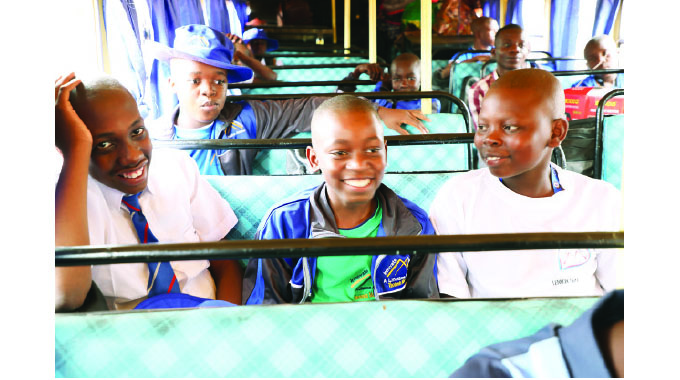
Tatenda Chinoda-Correspondent
Schools are opening tomorrow January 9, 2024. Use of the road is unavoidable. Once again, we will witness an increase in the volumes of both vehicular and human traffic, particularly school children.
It is necessary that we be our sister’s and brother’s keeper and alert each other of the known risks associated with using the road in this milieu.
The bigger picture is for everyone to be a conscious road user. This is a road user who ceaselessly actively engages the mind on how best to use the road in a safer way.
We can call such a crop of road users active road users. The ultimate desired outcome is an inculcation of a national road safety culture characterised by pervasive collective national road safety consciousness.
From 15 to 29 December 2023, the number of people who lost their lives while using the road is 101.
It can be life-saving to be proactive and reflect on what must be done to avert preventable road traffic deaths during this back to school season.
Using motor vehicles is one most common and popular mode of ferrying children back to school, and to and fro school.
In Zimbabwe, buses, pirate taxis and private [family] vehicles are used. Most boarding and private schools have own buses. They make arrangements to transport their children at agreed fees and pick-up points in specified major cities.
Common risks associated with type of travelling include:
Overloading of both passengers and goods is prevalent. Taking advantage of the laxity by road traffic enforcement agents about checking road traffic rules compliance by school buses, overloading is not uncommon. It is also associated with the illegal behaviour of mixing goods with passengers.
When a collision occurs, loose objects and baggage inside the vehicle cause a second collision. First collision is when vehicle hits against another or a tree or embankment. Second collision is when the crash force / sudden evasive manoeuvre throws occupants of the vehicle against its interior and any loose items.
This is usually the cause of death or serious injury. When a passenger is hurled out of a vehicle, upon collision impact, and crashes on the exterior, researchers opine that a third collision occurs — brain collision.
The hurling effect can cause a stretch of the brains, hence collision. This might explain why some victims of such collisions may appear disoriented, psychotic and can even commit suicide soon after the crash.
This risk of overloading and mixing goods with passengers can gang up with negligent children passenger behaviour of inciting the driver to increase speed out of sheer back to school euphoria.
In some rare, but dangerous cases, the driver may not be compliant with Public Service Vehicle [PSV] driving requirements [valid medical certificate, valid defensive driving certificate, valid re-test and 25 years and above].
In such cases, the illegal driver may be related to one of the top school administrators, having been recruited through nepotism and hence the sheer negligence associated with entitlement. Such risks must be done away with. Life is a non-renewable precious gift.
There are some designated commuter mini-buses which transport children to school. The same requirements of PSV driver apply. Taking advantage of the minors, the temptation to maximize on a single trip is very high resulting in children (especially ECD A, ECD B, Grades 1 & 2) being packed in the Kombi like sardines in a tin.
When a road disaster happens, the public is shocked to hear the massive number of casualties. Drivers and operators alike must shun overloading, including perching children at any free space (kutsokera vana pa Kadoma’).
Pirate taxis (especially Honda Fit & Toyota Wish models) are illegal but some parents make illegal arrangements with these to ferry their children to school, obviously, at owners’ risk. In most cases the driver and the vehicle won’t have fitness to be on the road. It might be the case of an unlicensed driver driving an unroadworthy vehicle. In other instances, such illegal passenger carrying vehicles are associated with crime; kidnapping, robbery, rape or even ritual murders.
Some families may opt to use their own vehicles for school runs. It is a road safety pre-requisite for the family head to ensure fitness of both the vehicle and the driver. I highly recommend that the family driver trains in defensive driving too.
Even if it is not a legal requirement, it is a safety requirement. Some high school students drive themselves to school. If not properly trained and socialised into a robust road safety culture, fatal road traffic collisions have been known to occur which may be attributed to teenage euphoria, drunk-driving, drug and substance abuse and speeding.
Pedestrian children are the most vulnerable of the back to school road users. Their safety must be guaranteed too. In a holistic road safety model, there are no short cuts. There are strict pedestrian rules to be observed. Children who are Grade 2 and below must always be accompanied to and from school. When accompanying them, an adult must hold their right hand using their left hand while walking on pavement or sidewalk on the right side of the road facing oncoming vehicles [in a two-way traffic system. Many adults accompanying children make the mistake of walking the child on their right side, closest to the on-coming stream of traffic instead of shielding them off the kerb to the left where danger is farther away.
While walking along the road, concentration is key. Avoid distracted walking which is characterised by use of ICT gadgets [use of phones, earphones etc], playing along the road, jay-walking or reading books or magazines. Crossing the road must always be done at proper crossing points or where the road is straight after religiously following the kerb drill: STOP; CHECK RIGHT; CHECK LEFT; CHECK RIGHT AGAIN; LISTEN; then CROSS if safe to do so.
Compliments of the new season and remember to be safer of our roads.
Tatenda Chinoda is a veteran defensive driving instructor and Roads4Life Champion for the African Region. +263772966075 email: [email protected]


 Peter Tanyanyiwa
 Online Reporter