Online Reporter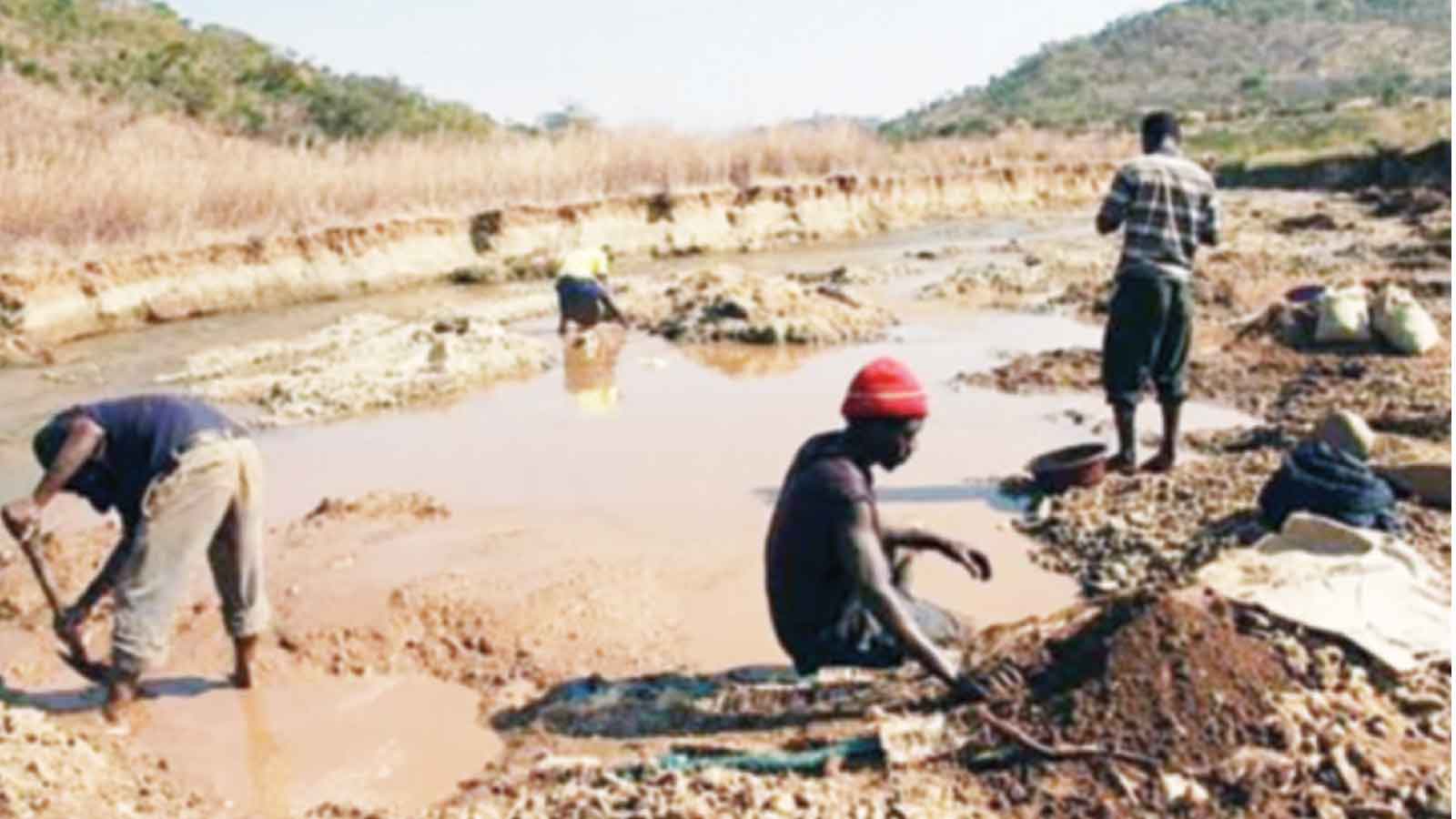
Sam Matema in ULAANBAATAR, Mongolia
The 17th Conference of the Parties to the United Nations Convention to Combat Desertification takes place here from today to 28, 2026, under the theme “Restoring Land, Restoring Hope,” which is as telling as it is instructive.
It gathers 197 Parties to address drought resilience, rangelands, soil health, and global land restoration.
The Zimbabwean delegation in Ulaanbaatar, Mongolia, for this bi-annual conference of the parties, needs to be alive to the urgency of the threats that desertification is posing to the survival of humankind — natural resources, and the downstream effects finding expression in food insecurity, land degradation, national insecurity and threat to livelihoods.
According to the Environmental Management Agency (EMA), 36 percent of Zimbabwe’s total land area is degraded. This costs the country up to 6,3 percent of its total annual gross domestic product (GDP) on account of the costs associated with overgrazing, deforestation, veld fires, illegal mining, streambank cultivation and siltation of water bodies.
And that figure, in the absence of deliberate mitigation measures, is heading north, getting worse by each passing day. The overall biodiversity loss is estimated at 13percent because of anthropogenic activities. This speaks to how man is the key driver of the state and health of the natural environment as well as how he is central to the solutions desperately needed going into the future.
Operation Restore Hope
Predicated on deliberate mitigation efforts meant to restore our land, there is hope for the future. There is a lot that we need to do covering our legislation, administration, politics and way of life at a micro scale.
How do we restore hope?
First and foremost, we should be true to ourselves; that we are our worst enemies, the authors of the sad statistic — 36 percent environmental degradation that defines our country. This is a bad reflection on every one of us. Therefore, we have a collective charge and duty to stop and reverse the tide for the sake of posterity. That we have not been good stewards of the environment cannot be denied.
At a micro level, we should move away from the river beds and streambanks, where we are cultivating, risking the flow of most of the country’s inland rivers. Studies show that, at the current rate, most rivers risk stopping flowing in the next 10 years because of siltation.
We should stop dumping waste anyhow. There is a need for lifestyle change at household level so that people prepare meals they can consume and finish. This ensures that nothing finds its way into drainage systems. India is a success story on this one, and can be benchmarked on.
Administratively, the existing legislation (Environmental Management Act 20:27) should be enforced, and going into the future, improved and aligned to respond to the current circumstances. For example, the Polluter Pays Principle (PPP) should be accompanied by punitive penalties.
On the other hand, EMA should be capacitated for their district officers to be on the ground doing the needful. One district officer and an office orderly manning the office is too thin. The administrative and governance structures at local level must be activated so village heads, headmen and local chiefs enforce laws for the good of the environment.
There is also a need to focus on the informality taking root across urban areas, and to some extent, rural areas, where fragile and important ecosystems have been degraded because of human activities. Land barons have been around for far too long, and this scourge must be stopped if any hope of sustainable growth and development is to be entertained.
Theology and land
The church must take its space in this conversation as a key stakeholder and a steward.
Because of the huge following that different denominations have, it is strategic that the church is properly aligned on environmental conservation issues, especially on community-based natural resources management.
In Genesis 2 v 15, man is charged with taking care of the environment other than working the land for his own sustenance. To that end, the church is a key player, if capacitated, to spread the good news of land restoration and the hope for a great future.
Why land restoration?
Land is the economy and the economy is land. All these are anchored on an environment that is healthy. Land is a security issue. When one tries to reconcile this with a growing world population against a finite resource, in the absence of restoration of the degraded land, the future looks gloomy, especially in the face of vagaries of climate change.
The southwards expansion of the Sahara Desert, in the Sahel, has given rise to climate wars in that part of the world. From the foregoing, the need arises to deploy a security lens on matters of environmental degradation.
The risks of land degradation and desertification are many: food shortages, hunger, malnutrition, starvation, climate wars, siltation of water bodies, threats to infrastructure — roads, railway lines and buildings, energy generation for hydro-powered sources; shortages of raw materials along the value chain.
In the Zimbabwean context, over the years, we have witnessed biodiversity loss at alarming rates. We have seen, across all the seven major catchment areas, Manyame, Mazowe, Runde, Sanyati, Save, Mzingwane and Gwayi, serious siltation of water bodies occasioned by unfriendly human activities, ranging from alluvial gold panning, cultivation on river banks and deforestation in catchment areas.
As a result, holding capacities of the 117 major dams under the supervision of the Zimbabwe National Water Authority (ZINWA) have significantly declined, with Mazowe Dam and Manyame being major victims.
The Mazowe, Save, Runde and Sanyati catchment areas bear the biggest scars of environmental degradation. Some small earth dams and weirs have completely disappeared.
Watekama ‘Dam’ in Ward 11, Buhera District, is a case in point. In Mwenezi District, 13 such small water bodies have disappeared due to siltation. Save River and all its tributaries are in a sorry state. The sediment load is choking them.
Is COP17 the answer?
No, the answer does not reside in Mongolia, but in Zimbabwe. COP17 is just a reminder on two fronts; that environmental degradation is a global problem; and that this is an urgent matter calling for attention with the urgency of the moment. We, therefore, need to act local and domesticate our mitigation and adaptation efforts.
From river rehabilitation, afforestation and reforestation, nature-based agroforestry activities and so on, more needs to be done and better. Existing laws should be enforced and improved upon to reflect the obtaining circumstances.
Attending UN conventions alone is not enough. The resolutions made and the outcomes of deliberations at UN conventions, and any other such for a, are meaningless, unless they are translated into action and tangible results.
As the Zimbabwean team deliberates in Mongolia, led by the head of delegation, Environment, Climate and Wildlife Minister, Dr Evelyn Ndlovu, it must be reminded that they will be judged, not by the outcomes in Ulaanbaatar, but by arresting and reversing the degradation of the local environment, which is getting worse by the day under their watch.
There is a need for serious political will and capital to make this happen. That was on full display when the ZANU PF Political Commissar, Cde Munyaradzi Machacha, made a pronouncement on land barons. And the jury is still out!
Honourable Sam Matema is the National Assembly Member for Buhera Central constituency, ZANU PF Manicaland Province Secretary for Administration, Climate Parliament Zimbabwe Chapter chairman and chairperson of the Parliamentary Portfolio Committee on Environment, Climate and Wildlife. He writes here in his personal capacity.