Online Reporter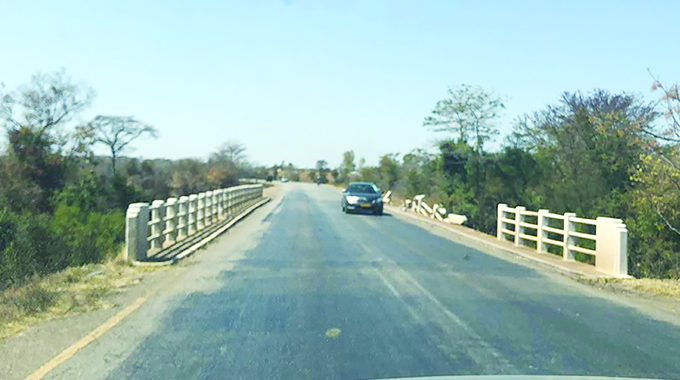
Mthabisi Tshuma, Features Correspondent
EMBARKING on an extensive journey along the country’s highways reveals stunning landscapes.
However, one soon observes a troubling trend— bridges with damaged guardrails.
After being hit by vehicles, in most cases during road traffic accidents, these guardrails are not repaired.
A regular highway user can tell offhand what river they are driving over, by simply looking at the guardrails.
Motorists drive past these bridges with care, as a slip off the pedal may result in one crushing over the bridge.
Mr Mthandazo Sibanda, a bus driver, who is frequently on the country’s highways said he is disturbed by the state of the guardrails, especially when heavy vehicles meet along the bridges.
“I drive along the Bulawayo-Harare highway almost on a daily basis and I struggle with the bridges, which are open and have no guardrails. The lack of maintenance is not only an eyesore but also a safety hazard.
“I urge authorities to take immediate action to repair or replace these guardrails. It’s not just about aesthetics; it’s about the lives of motorists and passengers who use these roads daily. Zinara needs to step up and take responsibility for maintaining our infrastructure,” said Mr Sibanda.
Another motorist, and frequent user of the Bulawayo-Tsholotsho Road, Mrs Tjebukani Makora said the state of the bridge guardrails is getting worse by the day.
“It’s like no one is paying attention. I’ve seen debris hanging off the sides and it’s only a matter of time before someone gets hurt,” she said.
Even when careening off the road, it becomes a scare.,
The bridges are not safe.
A vehicle losing control or veering off course could easily crash through the weakened barrier, resulting in potentially catastrophic consequences.
The risk is not limited to the occupants of the vehicle; pedestrians, cyclists and other road users are also vulnerable to the dangers posed by these damaged structures.
While accidents are the prime culprit resulting in these damaged guardrails, some bridge guardrails are now susceptible to wear and tear, poor maintenance and possibly design or construction flaws.
Quite telling is the number of accidents that have occurred along bridges. One of the most prominent ones was along the R2 (A5 + A7) (Harare-Bulawayo-Plumtree) highway in 2004 when former Zimbabwe Warriors player Blessing Makunike and his teammates Shingirai Alron and Gary Mashoko died after their car had an accident near a bridge.
They had been traveling together after leaving their team bus in Bulawayo.
Manyame River Bridge between Harare and Norton is another concerning site.
In July this year, there was a traffic standstill for over three hours at the Kuwadzana Extension bridge along Bulawayo Road after a car reportedly fell off the bridge.
Bridges with dilapidated guardrails are not limited to Mupfure bridge (between Selous and Chegutu), Munyati bridge (between Battlefields and Kwekwe), Khoce bridge (between Ntabazinduna and Bulawayo) and Gwayi River (between Bulawayo and Tsholotsho).
Other bridges which have dilapidated guardrails include the one at Saruwe River, which is located in Mashonaland West province along the Harare- Bulawayo highway. The river flows between the towns of Halfway and Norton.
A villager only identified as MaGumbo who stays near Khoce River said they have had to ensure they settle away from rivers which are the source of water. They also have to walk long distances to access bridges that link their homes with essential services.
“We live in constant fear of these rickety bridges and guardrails. We need to access clinics, schools, and shops and these bridges are our only route.
“It’s a daily gamble, hoping we’ll make it safely. If only the authorities could fix them, we’d be grateful. We’re not asking for much, just a safe passage for our children and livestock,” said MaGumbo.
Regular maintenance and inspections should be implemented to prevent the dilapidation of these guardrails and in the process safeguard the safety of the travelling public.
Engineer Reason Moyo, who specialises in construction said there is need to restore the guardrails using the same materials.
“As an engineer, I think concrete guardrails are more suitable for our roads, especially in areas with high traffic volumes. They’re more durable and require less maintenance compared to metal guardrails, which can rust and corrode over time. “Concrete guardrails also provide better impact resistance and can withstand harsh conditions.
That said, metal guardrails have their own advantages, such as being easier to install and repair. But if I’m being honest, I’d prefer concrete guardrails for their safety and durability benefits,” said Eng Moyo.
Motorists and the general travelling public have a right to safe passage on the highways, therefore the need to repair these damaged guardrails is imminent.
Permanent Secretary in the Ministry of Transport and Infrastructural Development, Engineer Joy Makumbe said her Ministry acknowledges the deteriorating state of some bridge guardrails along the Harare–Bulawayo highway and has already incorporated their rehabilitation into the broader road infrastructure maintenance programme.
“Assessments are being carried out to identify priority sections where guardrails pose the highest safety risk. The Ministry plans to begin phased repairs and replacements starting with the most critical bridges in the 2025/26 financial year.
“The timeline will align with ongoing highway rehabilitation works to minimise disruptions to traffic flow and ensure that all bridges on the Harare–Bulawayo corridor meet modern safety standards within the next two to three years,” said Eng Makumbe.
There’s commitment to pool financial resources to the fix, she added.
“A portion of the road maintenance budget administered through the Zimbabwe National Road Administration (Zinara) has been earmarked for bridge safety works, including the repair and replacement of guardrails. While funding has traditionally come from fuel levies and tollgate collections, the Ministry is engaging the private sector through Public–Private Partnerships (PPPs) and exploring concessional loans and grants from development partners to supplement existing allocations.
“Proposals to increase the annual allocation for bridge maintenance are also under review to ensure sustainability of the programme,” said Eng Makumbe.
She said to prevent future deterioration, the Ministry is strengthening its bridge asset management system.
“This includes conducting routine inspections of all major bridges at least twice a year; introducing preventive maintenance programmes such as rust-proofing and timely replacement of damaged guardrail sections; and training local road authorities and contractors in modern bridge safety standards to ensure consistency in maintenance.
“We also intend to develop a digital monitoring system to track the condition of bridges in real time, enabling faster response to damage. These measures are intended to establish a cycle of regular inspections, preventive repairs, and timely replacements so that the guardrails remain in good condition and road users are protected at all times,” said Eng Makumbe.
Follow on X :@mthabisi_mthire