


 Online Reporter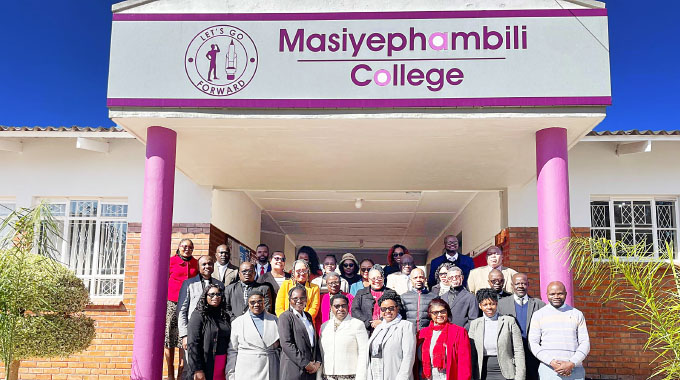
Trish Mukwazo
MASIYEPHAMBILI College has consistently demonstrated its commitment to educational excellence, as evidenced by the college’s recent achievement where it attained the “Prestigious Creative Engineering Award” at the Pan-African Robotics Competition (Parc) held at the Dakar American University of Science and Technology in Senegal.
The award, coupled with the college’s participation in the Robotics for Good Youth Challenge in Geneva, underlines the institution’s dedication to preparing the next generation of innovators and problem solvers.
In an era where technology and innovation, such as artificial intelligence (AI), are redefining the boundaries of what is possible, the college’s recent achievements in robotics are a testimony to its commitment to promoting a culture of creativity, critical thinking and technical skill among its students.
By 2030, AI is expected to contribute significantly to Africa’s GDP, with estimates suggesting a potential $1,2 trillion boost to the global economy, a sizable chunk of which could flow to African markets.
The continent’s youthful population, which is projected to constitute 42 percent of the world’s youth by 2030, will drive AI adoption, leveraging mobile penetration (over 80 percent in many regions) to deploy AI-driven solutions.
In Zimbabwe, robotics education is crucial for revolutionising Stem learning to empower thousands of young learners to become scientists, engineers and tech leaders of tomorrow.
The integration of robotics and coding into school curricula is a strategic manoeuvre, designed to equip the younger generation with indispensable skills vital for navigating a future dominated by technology.
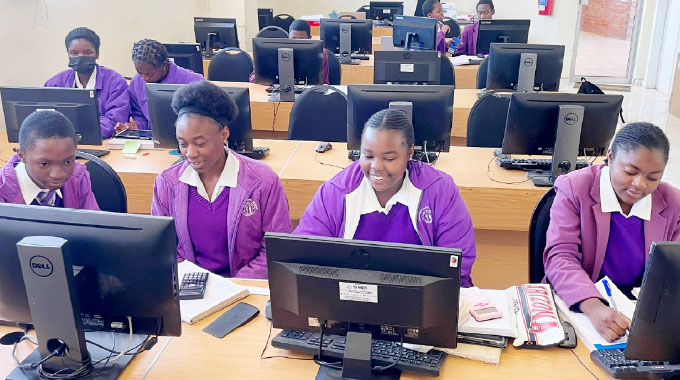
Adapting to this transformative change, Masiyephambili offers hands-on learning where robotics learning combines Science, Technology, Engineering and Mathematics (Stem) in a practical hands-on environment where students apply theoretical concepts to real-world challenges.
The college boldly promotes critical thinking and problem solving in students, challenging them to think critically where they devise innovative solutions, troubleshoot issues and skills that are essential in today’s technology-driven world.
The focus on innovation and technology is meant to up skill and reskill the youth, who make up a large part of the population that is likely to suffer a decline in job opportunities due to the rise of artificial intelligence in the coming years.
Also, given that the continent stands at the cusp of a technological revolution, with AI poised to redefine its economic, social and cultural landscapes.
As the continent embraces AI, the next decade promises transformative advancements. From healthcare to agriculture, governance education, the adoption of tech and innovation are of paramount importance.
At the heart of robotics education is a strong emphasis on teamwork and collaboration.
Through hands-on group assignments, interdisciplinary team competitions and collaborative research initiatives, students learn how to effectively communicate their ideas, delegate responsibilities and resolve challenges together.
Robotics education at the college also serves as a gateway to high-demand careers in rapidly evolving technological fields by preparing students for future careers.
With industries increasingly relying on automation and technology, robotics education prepares students for future careers in engineering, computer science and related fields. It equips students with future-ready skills that set them apart.
Creativity and innovation are aspects that are adopted through robotics education and offered within the colleges. Students are mentored in designing and building robots.
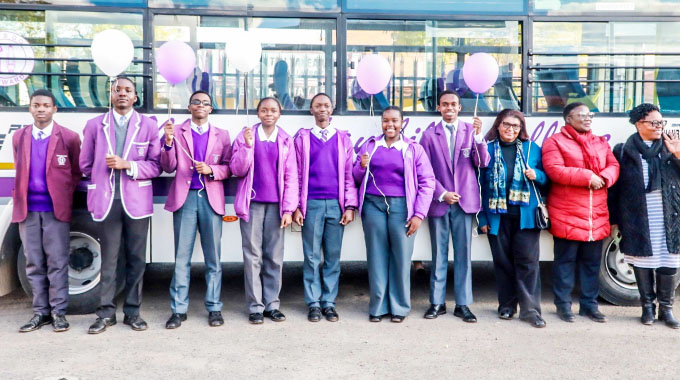
The college head, Dr Khesiwe Phuthi, said the college nurtures an environment where experimentation is welcomed and failure seen as a stepping stone to discovery, ultimately preparing students to be, not just skilled technicians, but inventive problem solvers and thought leaders.
“At Masiyephambili College, we believe in nurturing the next generation of innovators and problem solvers. Our achievements in international competitions reflect our commitment to excellence and the importance we place on equipping our students with the skills they need to succeed,” she said.
The college, a private school based in Bulawayo’s Montrose suburb, runs classes from Form One to Form Six.
“A wide range of traditional, technical, technological, mathematics and science subjects are on offer, with a strong bias towards Stem subjects. All the subjects are examined mainly by Cambridge International Education, Zimbabwe School Examinations Council and other professional boards like the Computer Society of Zimbabwe for our ICDL programme,” said Dr Phuthi.


