


 Andrew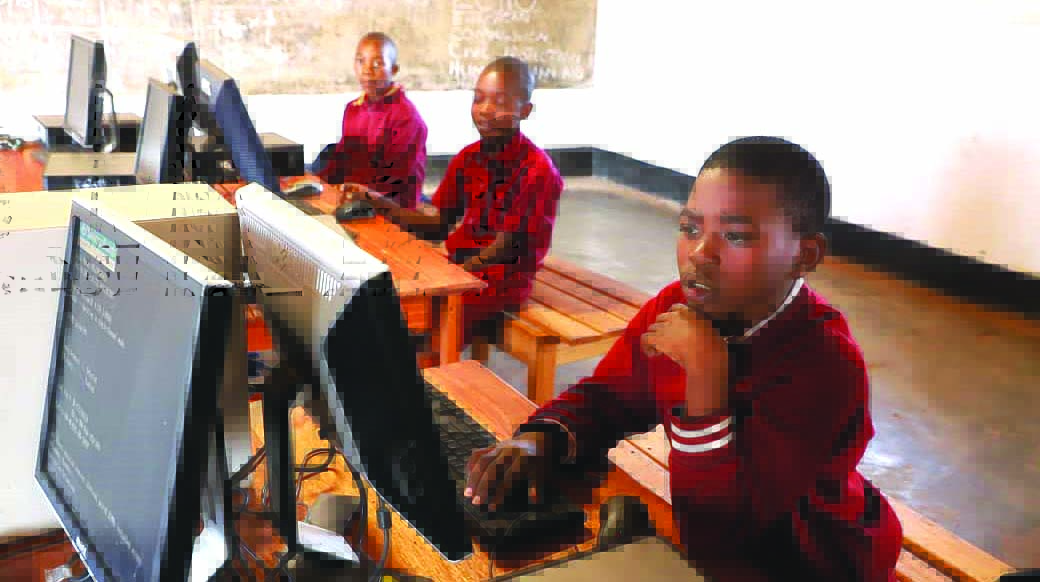
Rudo Mandiro
WHEN Covid-19 hit Zimbabwe, learning migrated to digital platforms such as Zoom and Microsoft Teams, among others.
Instead of teachers and learners physically interacting in a classroom, schools tried to ensure lessons were conducted through digital platforms.
This became the new normal.
However, learners like Tapfuma Ngaruno, who was doing Grade Seven at Ngaone Primary School in a rural area in Chipinge, were at a disadvantage.
The only option was for Tapfuma and his colleagues to rely on hardcopy books and physical interaction, but doing so was difficult in the wake of the raging pandemic.
Ngaone Primary School’s challenge was not the lack of hardware needed for learners to access the digital platforms, but lack of uninterrupted electricity supply.
The Government acted with speed to ensure Tapfuma and other learners in rural areas were not denied access to digital learning materials due to lack of power.
Ngaone Primary School was selected for a pilot project that involved installation of solar power systems at educational institutions by the Government.
The school’s head, Mr Chimina Chakanyuka, said the intervention allowed learners who were affected by Covid-19-induced interruptions to catch up on their studies.
“This helped us to ensure that our pupils did not lag further behind,” Mr Chakanyuka said.
The solar energy project — which is being implemented by the Ministry of Primary and Secondary Education through the United Nations Children’s Fund, with funding from the United Kingdom government’s Foreign, Commonwealth and Development Office — has changed the face of Ngaone Primary School. It also promises to transform more rural schools in the country, as it is backed by a US$2 million grant.
“Under the project, the school received an 8.5KV solar system worth US$24 000 to power the ICT (information and communications technology) lab, the administration block and teachers’ houses,” said Mr Chakanyuka.
The Government last year launched the National e-Learning Strategy aimed at expediting the adoption of ICTs through connection of schools to the internet.
The strategy is two-pronged.
On one hand, there is a programme to ensure access to hardware as well as the requisite broadband, while, on the other, there is a plan to ensure enough electricity.
Furthermore, the Ministry of Information Communication Technology, Postal and Courier Services intends to ensure free internet for 3 200 schools in rural areas.
The ministry’s Permanent Secretary, Dr Beulah Chirume, said the project includes access to power.
Ministry of Primary and Secondary Education’s director of communications and advocacy, Mr Taungana Ndoro, said the solar power projects in schools are a fulfilment of the Government’s digital learning strategy.
“The solar power projects we are bringing to rural schools provide a huge boost to learning institutions in marginalised areas. It is a double joy for them. Learners in rural areas are not only getting solar solutions and uninterrupted power supply, but can now access information on the internet as well,” said Mr Ndoro.
The UK’s Foreign, Commonwealth and Development Office education adviser, Ms Tanya Zebroff, said the programme will improve the learning environment at the recipient schools in rural areas.
“We are excited to partner Government. This work will be completed by March next year, enabling teachers and students to have access to a reliable power source and internet connectivity, when they had none in the past. This will definitely improve learning in rural areas,” she said.
For Ngaone Primary School, the solar project could not have come at a better time, as it was recently awarded some funds from the School Improvement Grant, which were used to sink boreholes after years of water woes.
With water and power, the school can now implement various projects, including horticulture.
Due to an improved learning environment at Ngaone, the institution made it on to the list of 10 best performing primary schools in Manicaland in 2021.
The school had an 86 percent pass rate, which was attributed to the implementation of e-learning packages, among other factors.
One of the ICT teachers, Mr Alec Mupambwa, explained how life had been made easier at the school.
“Before the school had a solar power system, learners relied on textbooks and radio lessons. In the afternoon, they had additional lessons since they were lagging behind owing to Covid-19 lockdowns,” he said.
Mr Mupambwa said the intervention means there is no difference between learners at Ngaone and those in urban schools.
“We were connected to the electricity grid but due to frequent power outages, our learners never really had practical computer lessons.
“We focused more on theory. Now, we have reliable solar power. This means more time in the computer lab.
“Now that the school has benefited from the solar power project, we expect our pass rates to continue improving.”
Lavina Ngweyarudza, a Grade Four learner, said she now enjoys going to school.
“I enjoy reading things on the computer. These gadgets are convenient to work with and they make learning a whole lot of fun,” she said.



 Bongani Ndlovu
 Online Reporter