admin
adminneighbouring villages make a beeline to their nearest borehole to fetch water.
“We have to be at the borehole early otherwise we will find a long queue and by the time we get to the tap the water will be finished,” Miriam Muzika explained.
The villagers rely on the boreholes for water to use in the homes for cooking and washing utensils.
“If we wake up late we end up fetching water from unsafe sources such as Dande River,” said Mrs Nyikadzino.
More than 80 households in Muzika fetch water from one borehole after two others broke down nearly five years ago and remain unrepaired.
With each household comprising an average of five people it means Muzika’s sole borehole caters for around 430 people.
In some cases the women who are often overburdened by other domestic chores walk up to 5km to get to the borehole and often wait in a long meandering queue for their turn to fetch the scarce liquid.
And, on an unlucky day they return home without water or with only half-filled buckets.
Winford Nyafesa of Nhamoyebonde village said he is sometimes left with no choice but to use an ox-drawn cart to ferry water from Dande River, more than 5km from his home, even when he knows fully well the water from the river is not safe.
“Our survival is at stake as we have resorted to unclean sources of water like wells, rivers and dams,” Nyafesa said, gasping for breath after unloading buckets of water from the cart.
“We risk contracting diarrhoeal diseases as we do not have water purification tablets and it is also time consuming to boil it.”
He warned that the villages could have disease outbreaks if the situation is not addressed.
Outbreaks of diarrhoeal diseases such as cholera and typhoid have become common in Zimbabwe in recent years due to the poor water sanitation.
Urban areas especially high-density suburbs which sometimes go for days or weeks without running water, are the most vulnerable because of the high population density.
Many rural communities across the country are now at risk as most of the communal boreholes that used to be their source of clean water are not functioning due to poor maintenance, neglect and vandalism.
Villagers have been crying out to the responsible authorities to address the problem and avoid loss of lives from preventable causes.
Village head Mr Obert Muroiwa blamed the situation on the District Development Fund and the Guruve Rural District Council saying the two authorities have neglected maintaining the boreholes.
“We always maintain the boreholes as a community without any help from the responsible authorities mandated to do so,” Mr Muroiwa said.
“The DDF usually requests the community to contribute towards the buying of new equipment for maintenance purposes, which we cannot afford as we are living in abject poverty.”
Families in Mr Muroiwa’s village use ox- drawn carts to travel around 5km to fetch water at Eureka Gold Mine.
Sometimes they travel the long journey in vain as the single borehole used by the mine has no capacity to serve two villages as well as residents at the mine.
The chief executive officer of Guruve Rural District Council, Mr Tinos Marisa, urged the villagers to make their own initiative and take responsibility for facilities that benefit them rather than wait for help from the Government and local authorities.
“People must have a sense of ownership and fully participate in the maintenance of water facilities like boreholes,” Mr Marisa said. “They must meet the Government halfway as it is faced by several challenges that were borne out of years of economic meltdown.”
He said the council would soon launch a campaign to raise awareness on the need for self-reliance among rural communities and encourage a shift from dependence on donors.
“Communities need to be organised so that they play a crucial role in the development of their areas and stop playing the blame game or waiting for non-governmental organisations to come to their aid,” he said.
Access to clean water is among the most fundamental rights for everyone in the world but the situation in rural areas across the country and in Guruve district in particular proves otherwise.
Access to clean water is a daily struggle rather that a universal right to be taken for granted.
On March 22 the world commemorated World Water Day, a day to remind responsible authorities of their obligation to make clean water accessible to all.
But for most communities the day came and passed like any other without any pomp or fanfare.
This year’s WWD commemoration was used as a platform to pay “lip service” to the plight of rural communities especially the woman who bears the brunt of lack of easy access to clean water.
The Minister of Water Resources Development and Management Samuel Sipepa Nkomo delivered a speech that painted a picture of the prevailing dire situation.
“Water is a human right and my ministry has an obligation to ensure that all people have access to water all the time,” Minister Nkomo said.
“However, as reality will show, not all people have access to water all the time.”
On June 27 2012, the Ministry of Water Resources Development and Management launched a US$53 million project which is specifically targeting the rural community.
Perennially dry provinces such as Matabeleland North and South, Midlands, Masvingo and Mashonaland West are being prioritised.
Ministry of Water Resources Development and Management hydrology technician Michael Kurai Baureni, speaking for the Secretary of Water Resources and Management, said the problem of boreholes breaking down has been a major concern to the ministry.
He said among the factors that have contributed to the breaking down of boreholes were careless handling of the pump, borehole depth, lack of technical capacity and quality of bush pump and its spares.
“Eight-five percent of these breakdowns are underground works which include cylinders, foot valves, leather cups and loose rods,” Baureni said.
“The other 15 percent lies in the poor installation, collapsed water points, vandalism and a new scenario of cracked headworks leading to contamination of boreholes.”
Around the period 1982-1983, the Government through the DDF deployed pump minders from the DDF to maintain boreholes for a respective ward.
The pump minder was a qualified technician who was responsible for the operation and maintenance of all the pumps in the designated area. “This system was effective during that time but because of major economic challenges experienced from the early 90s, the system was no longer sustainable which has grossly contributed to the high numbers of breakdowns,” said Baureni.
More attention is being given to urban areas which have been experiencing water shortages in recent years while rural areas which are similarly affected receive little attention.
The responsible authorities are still preoccupied with solving water problems in urban areas at the expense of the lives of the rural population.
Zvipozvashe Zhou is a freelance journalist based in Harare. She can be contacted on [email protected]


Online Reporter
- Herald
- July 25, 2026
- 2 views
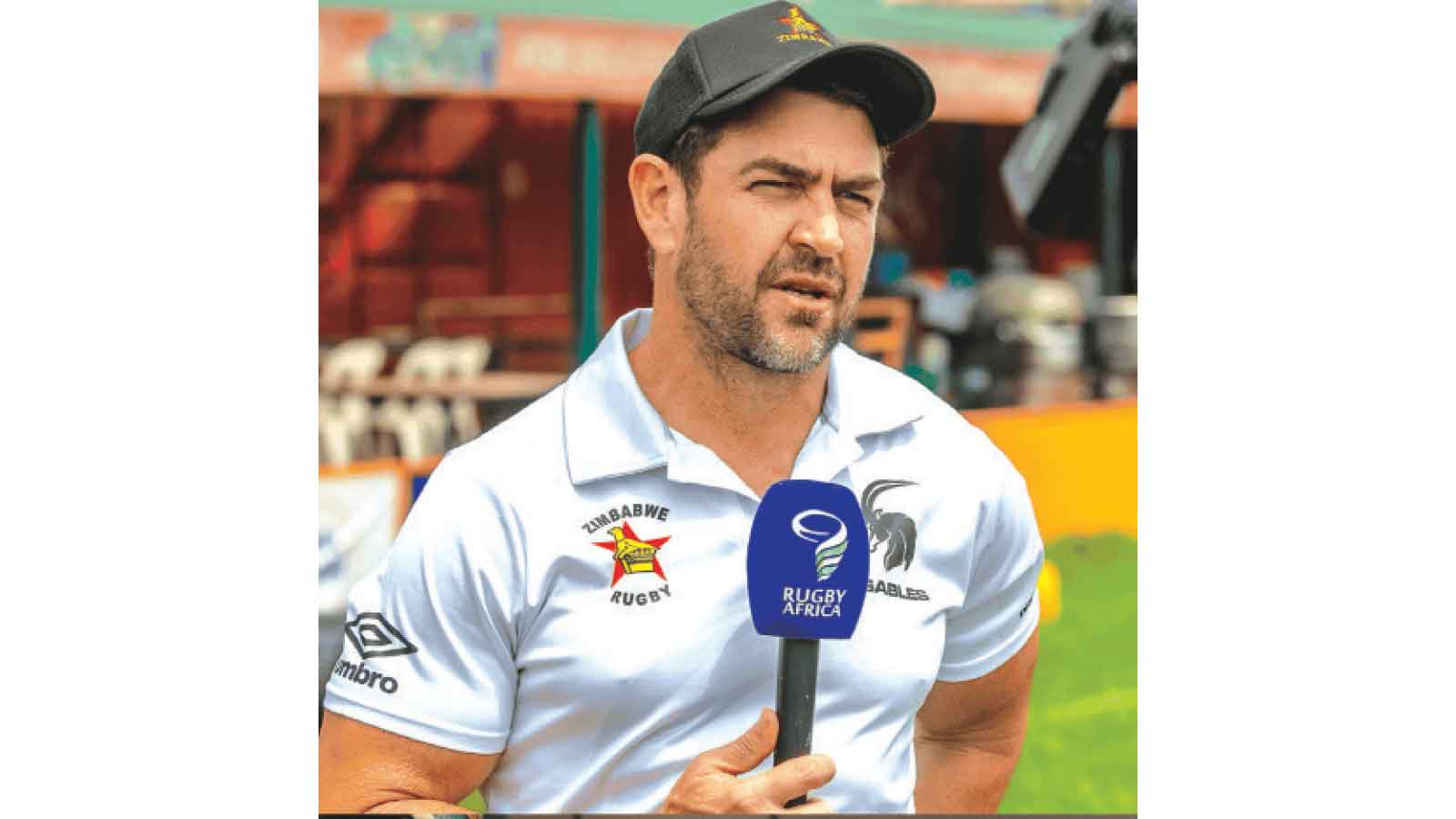
COMMENT: With the Nations Cup, the Sables are now preparing to compete
THERE is an old saying in sport that you never truly know your level until you play someone better than you. Zimbabwe’s rugby Sables have just spent three weeks discovering…